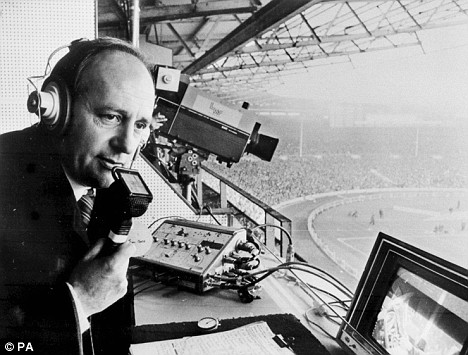
Projecting our commentary and our moods….

commentator

We are each living in our own soap opera. We do not see things as they really are. We see only our own interpretations. This is because our minds are always so busy. When we try to look into the mind itself, we cannot see anything below our surface consciousness. But when the mind calms down it becomes clear. This mental clarity enables us to see things as they really are, instead of projecting our cometary onto everything.

Ani Tenzin Palmo, Reflections on a Mountain Lake

Staying solid and enduring

tree

The strong winds in Ireland this morning remind me of this teaching on being shaken and standing firm

When you look at a tree in a storm, you see that its upper branches move more violently in the wind. But if you look at its trunk, you see that it is very solid and still. Your belly is the trunk of your being. It is important to allow everything in your head to move down to your abdomen. Place your hands on your abdomen and practice your breathing.  After five, ten, fifteen minutes the storm will pass and you will be ok.

Nguyen Anh-Huong and Thich Nhat Hahn, Walking Meditation

Doing less

dog-walking3

There are two different acts of patience: the first is to stand firm against the activity of another person, the second to stand firm against one’s own activity. Not to resist the activity of another person is an act of patience of the former sort, and to control oneself when one wishes to do or say a certain thing is an act of patience of the latter sort. It is the nature of activity to tend to increase its speed, and if this increase is permitted, very soon a destructive element comes about. The stronger this faculty of control becomes in a person the stronger the person becomes, and the more one loses the power of control the weaker one becomes.

Hazrat Inayat Khan, The Wisdom of Sufism: Sacred Readings from the Gathas

Movement in the mind

wind

It takes time to really see that thoughts and emotions are mere movements of the mind. They are, after all, the fabric of who we think we are, and everything we do is an expression of thought and emotion. We take them so seriously. But take a closer look, test this against your own experience, and see for yourself. If we can gain this recognition, we are on our way to freedom,  for instead of being sucked into the contents of our mind and acting out everything that arises within it, we will watch those contents melt like snowflakes on a hot rock.

Andrew Holecek, The Power and the Pain.

Where we do not wobble

lake  woods1

A succinct teaching on practice – developing a space which does not wobble –  and how we work with changing moods.

Through meditation practice we can access a core presence, which feels like an ‘inner’ state, where things are not happening, and the flow of events has receded. Thoughts quieten down, and we feel firmly grounded. There is a sense of singularity, of ‘just being here.’  This is a valuable basis from which we can look into the roots of mental/emotional behaviour. So meditation is not about getting into that inner state just for its own sake, but about using quiet firmness as a base from which to contemplate moods and mind-states. This entails not sticking to ideas of what I want and what should be, but really relating to what is present without reactions and bias. In this way we learn and develop non-attachment. 

Ajahn Sucitto

Dont grasp the snake

File:Flickr - DVIDSHUB - Snake Handler.jpg

If we don’t grasp hold of the snake

it won’t bite us.

If we don’t grasp onto the moods,  the feelings,  the thoughts

they won’t bite us.

Ajahn Jayasaro.

photo DVIDSHUB