Lost in our heads

File:Head of statue of John of Nepomuk in Třebíč, Czech Republic.jpg

Meanwhile, here we are, missing the fullness of the present moment, which is where the soul resides.  It’s not like you have to go someplace else to get it.  So the challenge here is, Can we live this moment fully?   Over a lifetime, you may wind up in the situation where you are never actually where you find yourself.  You’re always someplace else, lost, in your head, and therefore in a kind of dysfunctional or non-optimal state.  Why dysfunctional?  Because the only time you ever have in which to learn anything or see anything or feel anything, or express any feeling or emotion, or respond to an event, or grow, or heal, is this moment, because this is the only moment any of us ever gets.  You’re only here now; you’re only alive in this moment. The past is gone, and I don’t know what’s coming in the future.  It’s obvious that if I want my life to be whole, to resonate with feeling and integrity and value and health, there’s only one way I can influence the future:  by owning the present

Jon Kabat Zinn

photo : frettie

Thought as judgments

When resolutions cause dissatisfaction

When you say “I think,” it is often not you who think, but “they” –

it is the anonymous authority of the collectivity speaking through your mask.

Thomas Merton

Richness of life

colours

Practice will not eliminate negative emotions. Emotions are part of the palette of life, part of the way consciousness moves. Not only can’t you get rid of them, but you’d feel empty and impoverished if you did. Practice can change your relationship to emotions, so that instead of being swamped by certain feeling states, you can hold them, contain them, see into their essence, and ultimately, use emotions in the service of your liberation.

Sally Kempton

Our real destination

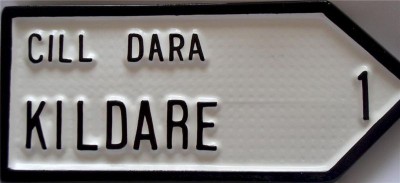
kildare

It is not a matter of looking for happiness

or trying to avoid suffering

but of going to the place beyond happiness or suffering

Ajahn Chah


….And keeping our faces toward change

imageLife is either a daring adventure, or nothing.

To keep our faces toward change and behave like free spirits in the presence of fate is strength undefeatable.

Helen Keller

In a general sense we seem to prefer things to remain the same and dislike too much uncertainty (except  maybe when the normal dull Irish Summer has been replaced by warm sunny days).  Change unsettles and can prompt an almost instant movement towards turning away or tightening up.  So it is a challenge to “keep our faces towards change” –  as Helen Keller says-  by going against our instinct for once and staying with something that our fears tell us to avoid.  When we consistently buy into our fears and strengthen fearful  thoughts, we can forget some of the larger truths of life, or  lose sight of our essential confidence and strength. An avoidance mentality leads us to expect trouble and weakens our ability to live with how the present moment is unfolding.

One of the fundamental truths of existence is that life changes, and changes in ways that we cannot expect. So developing this capacity to turn towards change is a necessary skill for working with life. It is probably best to practice it in smaller matters, so that it is somewhat developed when the bigger changes happen. So it is good to sometimes look at some small things we avoid and see what we can learn from them. We could practice with something like some paperwork we have been putting off, a contact we have been delaying, or staying in the presence of  someone who disturbs us instead of running away.  In this way we can be curious about  what happens when we  move towards something rather than moving away.

photo of dawn at Dunmore East Co. Waterford, Ireland

On being gentle

push and pull

The most difficult times for many of us

are the ones we give ourselves

Pema Chodron, When Things Fall Apart