Cultivating mental skills

Inner conflicts are often linked with excessive rumination on the past and anticipation of the future. You are not truly paying attention to the present moment, but are engrossed in your thoughts, going on and on in a vicious circle, feeding your ego and self-centeredness. This is the opposite of bare attention. To turn your attention inside means to look at pure awareness itself and dwell without distraction, yet effortlessly, in the present moment.

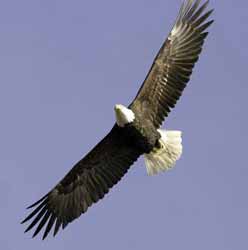
If you cultivate these mental skills, after a while you won’t need to apply contrived efforts anymore. You can deal with mental perturbations like the eagles I see from the window of my hermitage in the Himalayas deal with crows. The crows often attack them, diving at the eagles from above. But, instead of doing all kinds of acrobatics, the eagle simply retracts one wing at the last moment, lets the diving crow pass, and then extends its wing again. The whole thing requires minimal effort and causes little disturbance. Being experienced in dealing with the sudden arising of emotions in the mind works in a similar way.

Matthieu Ricard, This is your Brain on Bliss

Photo: Janis Ringuette

Taking charge of how we experience life

I have written before about Jill Bolte Taylor who suffered a severe hemorrhage in the left hemisphere of her brain in 1996. After this stroke  she could not walk, talk, read, write, or recall any of her life. It took  her eight years  to completely recover all of her functions and thinking ability, and in that time she observed closely the action and functioning of her brain. She noticed that it was possible to choose whether to hook into a feeling as it arises in the brain and prolong its presence in my body, or just let it quickly flow right through.  As a result she now encourages people to practice this brain development and to “Step to the Right” of  their – often judgmental –   left hemisphere brain chatter in order to live a more balanced life. This can be done by setting aside time for meditation, yoga or other activities. In this way we can take control over a lot of what passes through the mind and not over-identify with it.

As my left brain became stronger, it seemed natural for me to want to “blame” other people or external events for my feelings or circumstances. But realistically, I knew that no one had the power to make me feel anything, except for me and my brain. Nothing external to me had the power to take away my peace of heart and mind. That was completely up to me. I may not be in total control of what happens to my life, but I certainly am in charge of how I choose to perceive my experience.

Jill Bolte Taylor, My Stroke of Insight

Searching outside ourselves

Because we don’t always understand what it means to be in relationship to the present moment, we search. […] What are we searching for? Depending on our particular life, our background and conditioning, what we search for may seem different from one person to another; but really we’re all looking for an ideal life.  Something seems to be missing right here, so I’m interested in searching for the missing part. What if we cease this looking, searching? What are we left with? We’re left with what’s been right there at the center all the time. Underneath all that searching there is distress. There is unease. The minute that we realize that, we see that the point isn’t the search, but rather the distress and unease which motivate the search. That’s the magic moment – when we realize that searching outside of ourselves is not the way.

We begin to see that it isn’t the searching that’s at fault, but something about where we look. And we return more and more to the disappointment, which is always at the center. We’re in pain and we use the search to alleviate that pain. We begin to see that the pain comes because we are pinching ourselves. The very peace we’ve been searching for so hard lies in recognizing this fact: I’m pinching myself. No one’s doing it to me.

Charlotte Joko Beck

The moment that is now

Drop into the moment that is now.

No need to judge, no need to have an agenda as to what will be, no need to say, “I am meditating”.

Just be here, drink in all that this moment has to offer as if it is the only one that you have – because it truly is

Jon Kabat Zinn

Being fully where we are

Ego could be defined as whatever covers up basic goodness. From an experiential point of view, what is ego covering up? It’s covering up our experience of just being here, just fully being where we are, so that we can relate with the immediacy of our experience. Egolessness is a state of mind that has complete confidence in the sacredness of the world. It is unconditional well-being, unconditional joy that includes all the different qualities of our experience.

Pema Chodron.

What we think we need for happiness

On one of the few sunny days recently, I was walking  along the lanes near our house and took this photograph of the cows happily eating in the farm next door. It reminded me of the old Buddhist tale which I have posted about before, but because it follows some of the themes of the last few days I will return to it again here. Mindfulness practice helps us see that our sense of wellbeing can be increased if we stop trying to hold onto our idea of what life should be like, and instead move towards what life actually is like. So this leads to another meaning in the words “let go” – letting go what we think we need for happiness and the conditions we feel must be fulfilled in order for happiness to come.

The story is here told by Thich Nhat Hahn, and like all parables can speak to us in different ways at different moments in our lives. Hopefully it may speak to you in some way today:

One day the Buddha was sitting in the forest with some monks when a farmer approached them. The farmer said, “Venerable monks, did you see my cows come by? I have a dozen cows and they all ran away. On top of that I have five acres of sesame plants and this year the insects ate them all up. I think I am going to kill myself. It isn’t possible to live like this”

The Buddha felt a lot of compassion toward the farmer. He said “My friend, I am sorry, we did not see your cows come this way”. When the farmer had gone, the Buddha turned to his monks and said “My friends, Do you know why you are happy? Because you have no cows to lose”

I would like to say the same to you. If you have some cows you have to identify them. You think they are essential to your happiness, but if you practice deep looking, you will see that it is not these cows that have brought about your happiness. The secret of happiness is being able to let go of your cows.