Balance in life

In the Christian Calendar, the three most important days of the year begin, ones which give meaning to sustain  the rest of the year. They are days for reflection, punctuated by old familiar rituals of water and fire. We all need rhythms in our lives, moments of celebration  – religious or otherwise –  allowing us time to pause and take a break from the rush of our working lives. Ritual days like these, which mark the passing of time are very important, especially in this modern age which blends each day and each season into periods of work and possibilities for more shopping. We need to ensure that there are real moments of non-work in our lives where we celebrate other realities and other rhythms, not just evenings where we crash, tired from work, trying to recharge before it starts again the next day. These rhythms are indispensable for balance and for nourishing our deepest self. We take time off, we slow down, we rest and reflect.  In doing so we find that each element  in the familiar patterns becomes, even though they are known through repetition,  fresh and meaningful again. The messages that come around again in the great cycle of things are always new.

Wherever the arts are nourished through the festive contemplation of universal realities and their sustaining reasons, there in truth something like a liberation occurs: the stepping-out into the open under an endless sky, not only for the creative artist himself but for the beholder as well, even the most humble. Such liberation, such fore-shadowing of the ultimate and perfect fulfillment, is necessary for man, almost more necessary than his daily bread, which is indeed indispensable and yet insufficient. In this precisely do I see the meaning of that statement in Aristotle’s Nichomachean Ethics, ‘We work so we can have leisure.’

Josef Pieper Only the Lover Sings: Art and Contemplation

Our inner drama department

When we examine our thought stream with mindfulness, we encounter an inner sound track. As it plays, we can become the hero, the victim, the princess or the leper. There is a whole drama department in outr head, and the casting director is indiscriminately handing out the roles of inner dictators and judges, adventurers and prodigal sons, inner entitlement and inner impoverishment. Sitting in meditation we are forced to acknowledge them all. As Anne Lamott writes “My mind is like a bad neighbourhood: I try not to go there alone” . When we see how compulsively these thoughts repeat themselves, we begin to understand the psychological truth of “samsara”, the Sanskrit word for circular, repetitive existence. Samsara describes the unhealthy repetitions in our daily life.

Jack Kornfield, The Wise Heart

Bare attention is difficult

As this morning’s quote reminds us, in meditation we practice giving bare attention to the breath, just noticing,  without adding anything. We try to extend this to life, slowing down the continual pre-judgments or commentary in our heads. However, it is not easy just to let things be, without the immediate adding of a word or evaluation. The mind quickly adds words, positive ones like, “This is good, I like it here”, or more likely spontaneous negative ones, such as ” This is not for me, This is boring” or “She always says the same things”. Fixed ideas mean that we lose curiosity about what is unfolding each day. So our practice includes getting the balance between knowing and not-knowing, trying to know fully what is actually happening and losing some of our stories about people or about how our life is going. 

[In the beginning,] … the photographer was thought to be an acute but non-interfering observer — a scribe, not a poet. But as people quickly discovered that nobody takes the same picture of the same things, the supposition that cameras furnish an impersonal, objective image yielded to the fact that photographs are evidence not only of what’s there but of what an individual sees, not just a record but an evaluation of the world.

Susan Sontag, On Photography

Not always putting labels on our experience

The disciples were absorbed in a discussion of Lao-tzu’s dictum:
“Those who know, do not say;
Those who say, do not know.”

When the master entered,
they asked him what the words meant.
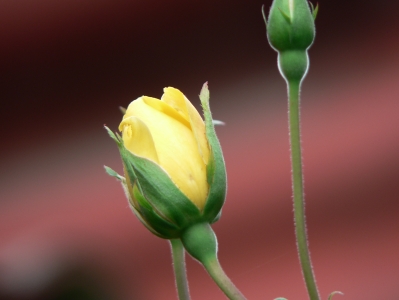
Said the master, “Which of you knows the fragrance of a rose?”
All of them indicated that they knew.
Then he said, “Put it into words.”
All of them were silent.

 Anthony DeMello, One Minute Wisdom

How to be in control of our lives

Basic goodness, the shimmering brilliance of our being, is as clear as a mountain lake. But we’re not certain about our own goodness. We begin to stray from it as soon as we wake up in the morning, because our mind is unstable and bewildered. Our thoughts drag us around by a ring in our nose, as if we were cows in the Indian market. This is how we lose control of our lives. We don’t understand that the origin of happiness is right here in our mind. We might experience happiness at times, but we’re not sure how we got it, how to get it again, or how long it’s going to last when it comes. We live life in an anxious, haphazard state, always looking for happiness to arrive.

 When we are confused about the source of happiness, we start to blame the world for our dissatisfaction, expecting it to make us happy. Then we act in ways that bring more confusion and chaos into our life. When our mind is busy and discursive, thinking uncontrollably, we are engaging in a bad habit. We are stirring up the mud of jealousy, anger, and pride. Then the mind has no choice but to become familiar with the language of negativity and develop it further.

Sakyong Mipham Rinpoche

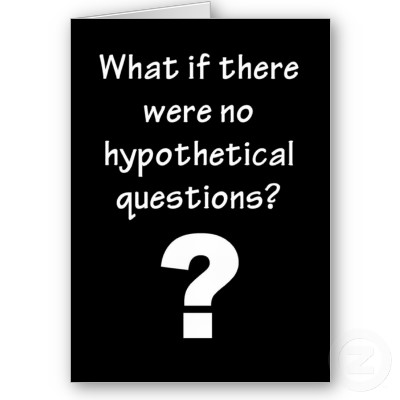
Don’t dwell on hypotheticals

The only place ever to work is right now. We work with the present situation rather than a hypothetical possibility of what could be. I like any teaching that encourages us to be with ourselves and our situation as it is without looking for alternatives. The source of all wakefulness, the source of all kindness and compassion, the source of all wisdom, is in each second of time. Anything that has us looking ahead is missing the point.

Pema Chodron,