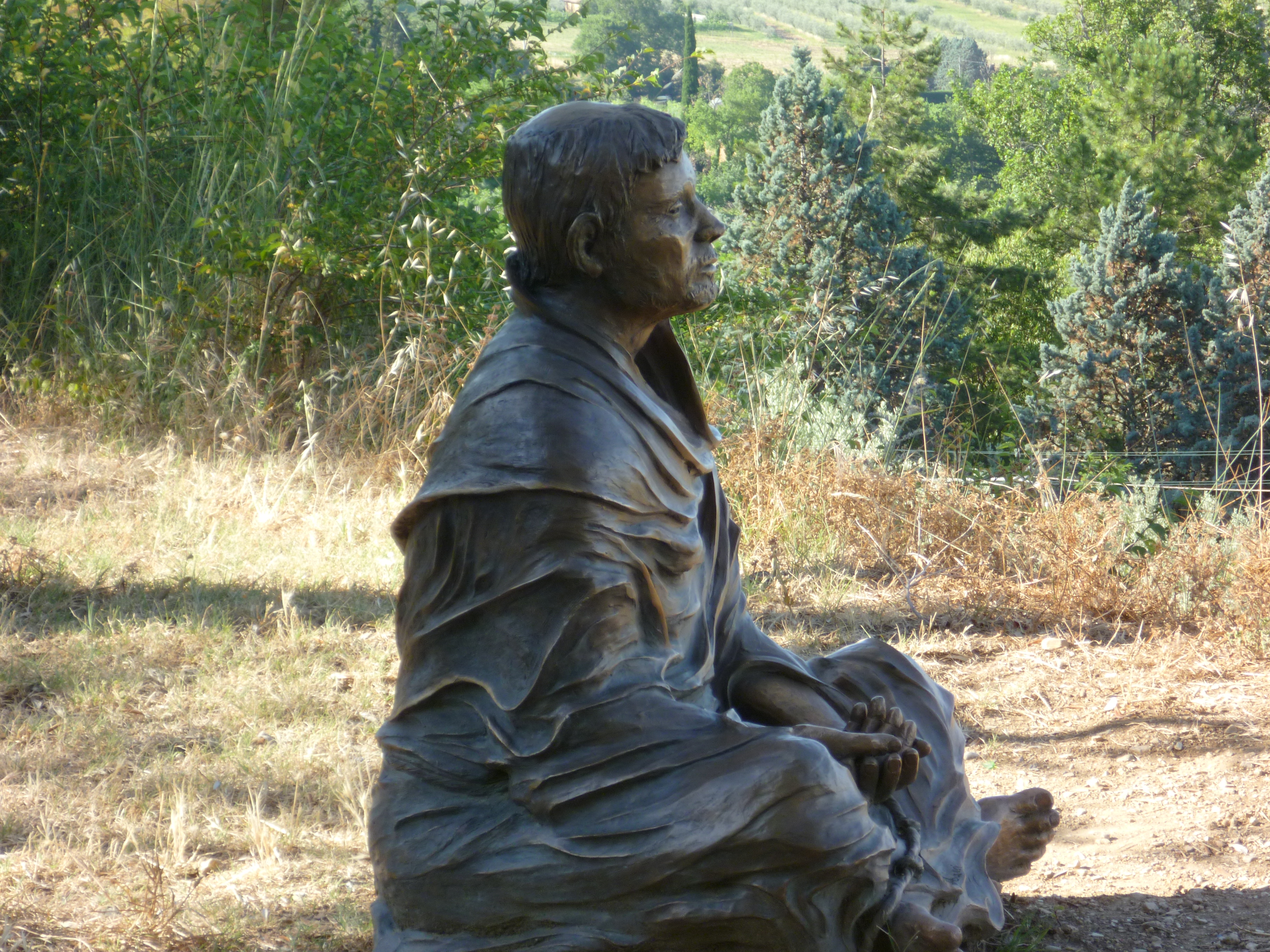
Waiting for us to make time

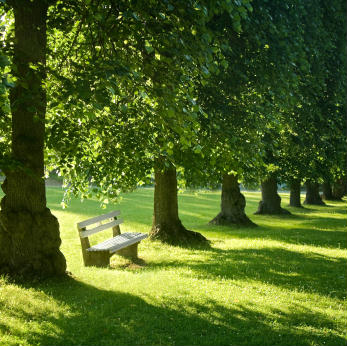
quiet_place

When I was a child in New York City in the 1940s there were laws that attempted to legislate the Biblical injunction “Remember the Sabbath and keep it holy.” Businesses were closed. Shopping stopped. There were no convenience stores. People needed to remember, in advance of the Sabbath, to provide for the upcoming day of rest and spiritual reflection so that, on that day, they could rest. The community collectively caught its breath. Family members spent time with each other. They renewed connections. They visited neighbors.  I like to imagine that, whether or not people went to religious services, there was the possibility in that period of a pause for reflection. “What am I doing with my life?” “Is what I am doing good for me?” “Is it good for other people?” “Does my life make a difference in the world?” “Could my life make more of a difference in the world?”

All of the important fundamental questions in life seem to be waiting, so to speak, next on-line at the top of the mind’s agenda, if only we give them the time and the space to present themselves.

Sylvia Boorstein

Like working with a committee

File:Senate budget committee.JPG

There are many different ideas of “you” in your mind, each with its own agenda. Each of these “you’s” is a member of the committee of the mind. This is why the mind is less like a single mind and more like an unruly throng of people: lots of different voices, with lots of different opinions about what you should do. Some members of the committee are open and honest about the assumptions underlying their central desires. Others are more obscure and devious. …One of the purposes of meditation is to bring these dealings out into the open, so that you can bring more order to the committee — so that your desires for happiness work less at cross purposes, and more in harmony as you realize that they don’t always have to be in conflict.

Thanissaro Bhikku

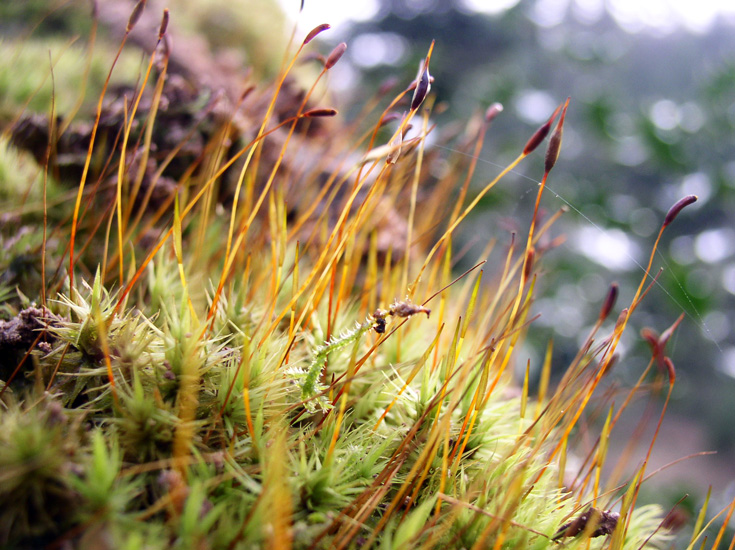
Making meditation hard

ChangeWhen one composes one’s mind and looks inwards, there is a sense of coming to one point. If we are not caught in the thinking process, we can be aware of the here and now, the body, the breath, mental states, moods; we can allow everything to be what it is. The attitude of many people in meditation is that there is always a need to change something. There might be an attempt to attain a particular state or some kind of blissful experience they have had before, or even if they haven’t had anything like that, they might hope that if they continue to practise, they will. When we practise meditation with this idea of getting something, then even the idea of practice, even the word ‘meditation’, can bring up this conditioned reaction of: ‘There’s something I’ve got to do. If I’m in a bad mood I should get rid of that mood. I’ve got to concentrate my mind.’ If the mind’s scattered and we’re all over the place, ‘I should make it one-pointed; I’ve got to concentrate.’ And so we make meditation into hard work and there is a great deal of failure in it because we’re trying to control everything through these ideas

Ajahn Sumedho, Developing an Attitude toward Meditation

When we live fully

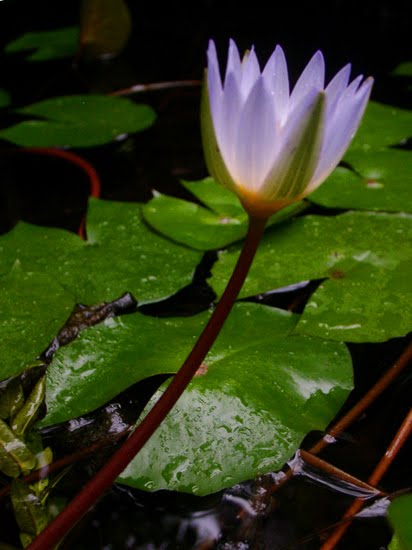
heathers

You should train yourself thus:

In the seen, there is only the seen,
in the heard, there is only the heard,
in the sensed, there is only the sensed,
in the cognized, there is only the cognized.
Thus you should see that
indeed there is no thing here;

…as you see that there is no thing there,
you will see that
you are therefore located neither in the world of this,
nor in the world of that,
nor in any place betwixt the two.
This alone is the end of suffering.

The Buddha, The Udana, 1.10

Always wanting more

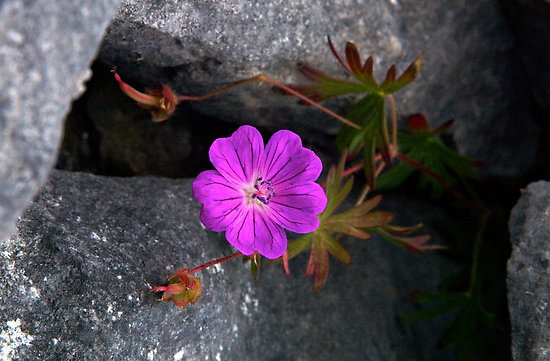
flower in rocks

I do not talk of the beginning or the end. 

There was never any more inception than there is now, 
Nor any more youth or age than there is now, 
And will never be any more perfection than there is now, 
Nor any more heaven or hell than there is now. 

Urge and urge and urge, 
Always the procreant urge of the world.

Walt Whitman, Song of Myself

Remembering our own goodness

st francis san damiano
The greatest thing you can do for another is not  share your riches,
but reveal to them their own.   Benjamin Disraeli
Today is the feast of Saint Francis, from Assisi in Umbria, a peaceful and beautiful place I have visited many times over the years, and where I took this photo on Easter Sunday morning after the dawn liturgy. Francis was a man deeply in touch with the beauty and wisdom of creation, and he demonstrated a great capacity for being with his experience, and honouring every element – the moon and the stars, the earth and water – go so far as to call each one his brother or sister.  As this lovely poem recounts, he showed a fundamental respect for all creatures. We often can find this easier than respecting and honouring our own selves. But meditation is essentially this – being gently present with, without judgment, honouring our experience – dropping into what Jon Kabat Zinn calls the “Being Mode”, where we can taste our original goodness. In that place we do not have add anything in order to be complete. And “mindfulness” is related to the verb “to remember”, remembering to be present, but also remembering the space that resides beneath the clutter of thoughts and worries. Doing this gives us a break from the busy, frequently judgmental,  doing and thinking mode, which often leans towards wanting more.
The bud stands for all things,
even for those things that don’t flower,
for everything flowers, from within, of self-blessing;   
though sometimes it is necessary
to reteach a thing its loveliness,
to put a hand on its brow of the flower
and retell it in words and in touch it is lovely
until it flowers again from within, of self-blessing;   
as Saint Francis put his hand on the creased forehead
of the sow, and told her in words and in touch   
blessings of earth on the sow, and the sow   
began remembering all down her thick length,   
from the earthen snout all the way
through the fodder and slops to the spiritual curl of the tail,   
from the hard spininess spiked out from the spine   
down through the great broken heart
to the sheer blue milken dreaminess spurting and shuddering   
from the fourteen teats into the fourteen mouths sucking and blowing beneath them:
the long, perfect loveliness of sow.
Galway Kinnell, Saint Francis and the Sow