Sometime today drop into the calm beneath


The nature of the mind is comparable to the ocean. The incessant movement of waves  on the surface of the ocean prevents us from seeing its depths.

If we dive down there are no more waves; there is just the immense serenity of the depths….

Pema Wangyal Rinpoche

Cultivating appreciation

Today was another beautiful day here, with early Spring sunshine. And in the afternoon I was fortunate to walk the lanes near my house and look over the fields at the Jura mountains nearby. It was another day where I was struck by the ordinary, simple, kindness of people and their support, as well as moved by the struggles and pains of others who are simply trying to make the best of life with the gifts and talents at their disposal. On days like this  it is easy to find space in one’s mind for kindness and spaciousness and practice appreciation for all the good things, big and small,  that come our way. This  wakens us up to all the gifts which are given to us.  When we do this we strengthen our capacity to be calm and relax with life as it is, not as how we want it to be. We are looking at the abundance that it already present in our heart and in our life, not  complaining about what we do not have.

Appreciation is a relaxing and peaceful state of mind. It creates a space in which we can accommodate the vicissitudes of life and even think of the welfare of others. Complaint, on the other hand, is frustrating and painful. There’s an element of anger and fixation involved. We are believing our thoughts, taking them to be real. Our attachment to the concept of how we want things to be is stressful, because that concept is always disintegrating. What we wanted to happen is not happening. We think complaining is going to get the world back on our track, but really it results in our being deaf, dumb and blind to the present moment. Narrowing our mind with complaint is unpleasant and claustrophobic, the opposite of contentment.

When we complain, we’re saying that the world needs to change in order for us to be okay. If only our parent or partner would behave differently, if only the food were better, if only there were less traffic, if only the service were quicker—then we’d be happy.

Sakyong Mipham Rinpoche.

Accepting what we are

Ultimately,
we are small living things
awakened in the stream,
not gods who carve out rivers.

Like human fish,
we are asked to experience
meaning in the life that moves
through the gill of our heart.

There is nothing to do
and nowhere to go.
Accepting this,
we can do everything
and go anywhere.

Mark Nepo, Accepting this

Creating space in our lives

Today is Ash Wednesday, the start of the season of Lent in the Christian Calendar. It begins a time of reflection, of creating more space in our lives. Traditionally this meant giving up some things to create more focus, dropping our own narrative for a while to have space for  other concerns. A season like this leads us to reflect on the priorities in our lives and challenges us to have the confidence to stop, to be just with ourselves, and to be content with what is there. To notice that we often have a need to distract and reassure ourselves with our plans, our projects, our reminders that we are needed.

In Lent we are encouraged to simplify things. Like the times we are on retreat, when we keep an exterior silence in order to look at our interior chatter, we are asked to reflect on nurturing our inner lives, to see if we are living with direction and with a real purpose.  We can get tired of  always running in our lives, or the way that we can fill our time with distractions such as going online, TV  and other forms of chatter. So even if we are not Christian we can find ways to create some space,  to create some distance from our concerns, to be silent, or maybe to listen to others more than speaking.  Silence has always been part of the world religions and wisdom traditions, as in the life of the Desert Fathers who simplified distractions in order to see what was really important.

To do this we need to get quite specific. Lent is a period of 40 days, so we can look on it as a challenge or an experiment. Try to set aside a  period of quiet at the start of each day, for ten to twenty minutes.  Maybe just sit in the early morning sun, or after some silence write down some thoughts in a journal. Consciously set aside a time of quiet before the activities of the day start and see what effect this has over the 40 days.

A man may seem to be silent, but if in his heart he is criticizing others, he is babbling ceaselessly. But there may be another who talks from morning till night and yet he is truly silent, because he says nothing that is not profitable.

The Desert Fathers, Abba Pimen

Somewhere we know that without silence words lose their meaning, that without listening speaking no longer heals, that without distance closeness cannot cure.

Henri Nouwen

When weakness becomes a place of joy

Today we had a beautiful early Spring morning,  and it was a lovely background for the second session of the MBSR Programme where the majority of participants are volunteers for the new Hospice soon to open in Geneva.  I was  reflecting on the type of presence we have with others, and how to create a space to tune into them, especially when they are weak. And later one I was reflecting in my own life how the fundamental lesson is learning to accept our own weakness and what a freedom it is  when we  see that we are accepted and loved. Sadly,  we often pick up the opposite message when we are little, that our worth comes from our competence and what we can do for others. It is great to let go of that and realize that we are accepted even when we are at our worst,  when we  make mistakes, even when we let others down. That is the greatest joy, a letting go and an end to striving.

Our lives are a mystery of growth from weakness to weakness, from the weakness of the little baby to the weakness of the aged. Throughout our lives we are prone to fatigue, sickness and accidents. Weakness is at the heart of each one of us. Weakness becomes a place of chaos and confusion, if in our weakness we are not wanted; it becomes a place of peace and joy, if we are accepted, listened to, appreciated and loved.

If we deny our weakness and the reality of death, if we want to be powerful and strong always, we deny part of our being, we live an illusion.

Jean Vanier Becoming Human

There is a deep restlessness inside us….and it is ok

I have written before on how there is a fundamental restlessness at the heart of our being, or a fundamental loneliness, as some writers like to call it. Many are the strategies we use to get away from this, such as over-working,  continually running, throwing ourselves into relationships. staying constantly distracted.   And when those things are working for us, loneliness  does indeed seem absent. However, what we come to see over time is that is that this loneliness, or restlessness,  is something essential to human nature; we may succeed in covering it over for a while but it  can never actually go away.  As we can see in these two quotes from different sources, most wisdom traditions say the same thing: this feeling of restlessness, of having no real ground to stand on,  is part of being human, because there is nothing in existence that can completely fill the human heart. And at the end of the day this shows us the core of our practice, nothing other than learning to stay.

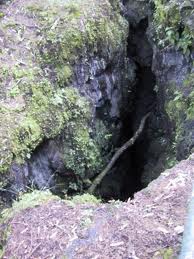
There is a deep hole in your being, like an abyss. You will never succeed in filling that hole, because your needs are inexhaustible. You have to work around it so that gradually the abyss closes.

Since the hole is so enormous and your anguish so deep, you will always be tempted to flee from it. There are two extremes to avoid: being completely absorbed in your pain and being distracted by so many things that you stay far away from the wound you want to heal.

Henri Nouwen

If we are willing to give up hope that insecurity and pain can be exterminated, then we can have  the courage to relax with the groundlessness of our situation.  This is the first step on the path.

Pema Chodron