Noticing the effects of a franctic age 1

Will put up one or two posts on the effects of our speeded-up world and social media on the human psyche, partly prompted by reading this address of Pope Benedict XVI to a group of contemplative monks. His remarks, although from a philosophical perspective, reflect the most recent scientific research on the fact that increased internet and social media usage seems to effect and change the very nature of the brain itself.

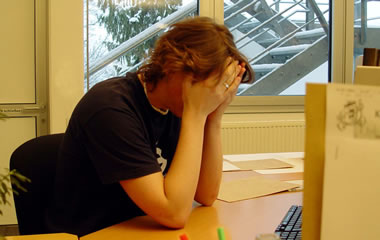
Technical progress, markedly in the area of transport and communications, has made human life more comfortable but also more keyed up, at times even frantic. Cities are almost always noisy, silence is rarely to be found in them because there is always a lingering background noise, in some areas even at night. In the recent decades, moreover, the development of the media has spread and extended a phenomenon that had already been outlined in the 1960s: virtuality that risks getting the upper hand over reality. Unbeknown to them, people are increasingly becoming immersed in a virtual dimension because of the audiovisual messages that accompany their life from morning to night.

The youngest, who were already born into this condition, seem to want to fill every empty moment with music and images, as for fear of feeling this very emptiness. This is a trend that has always existed, especially among the young and in the more developed urban contexts but today it has reached a level such as to give rise to talk about anthropological mutation. Some people are no longer capable of remaining for long periods in silence and solitude.
Pope Benedict XVI, Address to Carthusian Monks, Carthusian monastery of St. Bruno, Lamezia Terme, Italy, Oct. 11, 2011

Taking time to rest today

Resting is a very important practice; we have to learn the art of resting. Resting is the first part of meditation. You should allow your body and your mind to rest. Our mind as well as our body needs to rest. The problem is that not many of us know how to allow our body and mind to rest. We are always struggling; struggling has become a kind of habit.

When an animal in the jungle is wounded, it knows how to find a quiet place, lie down and do nothing. The animal knows that is the only way to get healed-to lay down and just rest, not thinking of anything, including hunting and eating.  What it needs is to rest, to do nothing, and that is why its health is restored.  In our consciousness there are wounds also, lots of pains. Our consciousness also needs to rest in order to restore itself. Our consciousness is just like our body. Our body knows how to heal itself if we allow it the chance to do so.

Thich Nhat Hahn

New Studies on the Effects of Mindfulness meditation 3

Sometimes the studies on MBSR can be quite small and therefore it is hard to make very solid claims based on the research. Different ways of doing research can be  used and this makes it sometimes difficult to compare results. In order to overcome this problem, a new study was conducted, looking at all the studies carried out on MBSR and MBCT in the past 30 years, but using only the more rigorous, randomized,  trials which used control groups,  and only those studies with a minimum of 33 participants.

The research team, led by Lone Fjorback,  who works at the Research Clinic for Functional Disorders and Psychosomatics, Aarhus University Hospital in Denmark,   performed a systematic review of all the articles published with these criteria. Using this type pf meta-analysis, they found that they showed that MBSR was beneficial for reducing stress and distress, alleviating depressive symptoms, and improving anxiety in both clinical and non-clinical populations.  Looking at MBCT, they found that it was shown to reduce the risk of relapse in depressive patients who had recovered from three or more previous episodes of depression.

The researchers concluded that Mindfulness Based Stress Reduction has a significant evidence base for its approach towards improving mental health for both clinical and non-clinical populations.

Fjorback, L. O., Arendt, M., Ornbol, E., Fink, P., & Walach, H.  (2011).  Mindfulness-based stress reduction and mindfulness-based cognitive therapy – A systematic review of randomized controlled trials.  ACTA Psychiatrica Scandinavica, Volume 124, Issue 2, pages 102–119, August 2011

Letting there be room

Things falling apart is a kind of testing and also a kind of healing. We think that the point is to pass the test or to overcome the problem, but the truth is that things don’t really get solved. They come together and they fall apart. Then they come together again and fall apart again. It’s just like that. The healing comes from letting there be room for all of this to happen: room for grief, for relief, for misery, for joy.

Pema Chodron, When Things Fall Apart

Who says that life should be straightforward?

When uncomfortable things happen to us, we rarely want to have anything to do with them. We might respond with the belief ‘Things shouldn’t be this way’ or ‘Life shouldn’t be so messy.’ Who says? Who says that life shouldn’t be a mess? When life is not fitting our expectations of how it’s supposed to be, we usually try to change it to fit our expectations. But the key to practice is not to try to change our life but to change our relationship to our expectations — to learn to see whatever is happening as our path. “Our difficulties are not obstacles to the path; they are the path itself. They are opportunities to awaken. Can we learn what it means to welcome an unwanted situation, with its sense of groundlessness, as a wake-up call? Can we look at it as a signal that there is something here to be learned? Can we allow it to penetrate our hearts? By learning to do this, we are taking the first step toward learning what it means to open to life as it is. We are learning what it means to be willing to be with whatever life presents us.

Ezra Bayda, Being Zen: Bringing Meditation to Life

The right response

Life is given to us; every moment is given.

The only appropriate response therefore is gratefulness. When we wake up to the fact that everything is a gift, it is only natural to be thankful and to look on everything that happens as a chance to respond to the Given Life.

David Steindl-Rast, The Music of Silence