Getting places, despite our fears

We could summarize the whole path into one word: relaxing – relaxing into the nature of your own mind. However when we start to relax, the repressed elements of the body/mind come up – it is like a Pandora’s Box. We discover there is a reason we repressed those elements in the first place – we did not want to deal with them. Meditation gives us a second chance to relate to unwanted experience in a healthy way based on equanimity and acceptance. These “regressive” elements,  such as your life falling apart, can be good news. You are starting to get someplace when you come up against barriers of fear and anxiety. What we have been doing in these situations our entire life is running away from them…What is continually whispered into the subconscious mind is to avoid fear at all cost. Unless we address that fear, everything we do is fear-based.  Actually, fear is the indicator of where we should go in order to grow. …We spend our entire lives running from this emotion. We need to get to know it, make friends with it. The root of the word fear is “fare”, a toll. Facing fear is the toll we have to pay to become fearless.

Andrew Holocek, Good News: Your Life is Falling Apart.
Running after our life

When I let go of what I am, I become what I might be.  Lao Tzu

At some point, our life can become machine like. We find ourselves running on automatic pilot, without any clear sense of purpose – our momentum fuelled by a chronic sense of need, a vague feeling that something is missing on our life. Nothing is enough to relieve the pressure that we feel. So we keep on with our superhuman efforts to design a life that looks like the happiness we imagine. But when it depends on material things or external valuations, happiness has a history of being short-lived.

Dzogchen Ponlop Rinpoche, Erring and Erring, we walk the Unerring Path

The freedom of letting some things go

I may not hope from outward forms to win, The passion and the life, whose fountains are within.    Coleridge

For some people, Ash Wednesday is a day of fasting.   These days  we are quite familiar with the latest diets and slimming fads  – and consequently put a lot of pressure on body conscious people – and they harmonize quite well with a culture preoccupied with image.  The idea of fasting, and the related notion of restraint or renunciation, however, seems somewhat alien. Because of this we lose a link to a deeper process than dieting, rooted in the unconscious. Fasting, like the silence and stillness of meditation, allow us let go of some of the normal practices of each day and we can see then what then arises in the mind. Ceasing some activities or changing routines which have become second nature can be a useful way of reminding  us to turn towards our inner life rather than distracting ourselves from it. We are challenged to declutter our busy life and see where our real priorities lie, to travel lighter.  So, “letting go”, in this sense, means not buying into automatic habits and patterns of mind, which limit us into kinds of contraction, and seeing what can be done differently. We become more fluid and can experiment with the space which this gives to act with greater creativity.

Sacrifice is an important concept for anyone interested in leading a religious life, but most people today seems to think that sacrifice means giving something up. This is how shallow our religious sense has become. Sacrifice really involves the art of drawing energy from one level and reinvesting it at another level to produce a higher form of consciousness.

Robert Johnson, Jungian Analyst

What holds us back

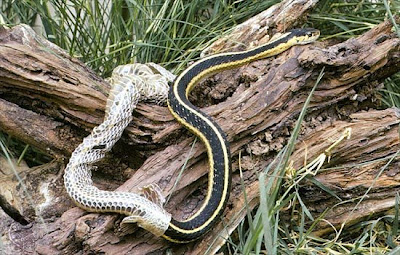
Just as a snake sheds its skin, so we should shed our past, over and over again.  The Buddha

Today is Ash Wednesday, traditionally the start of Lent – the season of preparation for Easter  The word “Lent” comes from the Anglo-Saxon word “lencten”,  referring to the lengthening of days in the Spring, thus placing the period in the context of growth and life. Lent became a time of reflection on freedom, seeing what the priorities in our life are and what needs to be let go of. As in other wisdom traditions,  it offers us a moment to enlarge our sense of things and go against the ways in which an unreflected life actually shrinks our heart. It reminds us to examine what is not essential, including the stories and habits which we have adopted over the years and which we come to see as fundamental to who we are.  It is an intensification of an insight that we see in our daily practice, namely,  that all things arise and pass away,  all things are impermanent.  So today, just as we begin to see Nature changing in the signs of Spring and new life, we try to internalize the understanding that we too are continually changing. This may mean that we need to let go of some elements of the past – which anyway is not happening any more except in the mind – in order for us to engage more fully with life in the present, in this moment.  It could be that we shed some aspects of what we hold as our solid self, and rather see  that we are more like a succession of selves.  Happiness in life comes not from holding onto the past but by living in the present with appreciation.

Detachment resembles the shedding of a number of coats of skin, until our senses are sharpened, or until “our inner vision becomes keen”. When we learn what to let go of, we also learn what is worth holding on to. Think of it in this way: it is simply not possible to share something precious or even to hold a lover’s hand, when we keep our fists clenched, holding tightly onto something. Detachment is not the inability to focus on things, material or other. It is the capacity to focus on all things, material and other, without attachment. It is primarily something spiritual; it is an attitude of life. And in this respect, detachment is ongoing, requiring continual refinement.

John Chryssavgis, In the Heart of the Desert

The one who knows

Every time I reacted negatively, pushing things away, that action implied that there was something to fear. That this feeling or this thought was dangerous; that it was going to really hurt me, or invade me; that it was something that was really me and mine. As I began to welcome it all I realised that when you accept everything, only then can you sense that, after all, there is nothing to fear. None of it really belongs to a self or comes from a self. It cannot touch the mind which knows, cannot affect its nature. Whatever shape of vessel you pour the water into, with this same total accommodation, the water changes to the shape of the bottle. It doesn’t say: ‘I will not be poured into a square bottle, square bottles are not my scene. Round bottles only, please!’  When there is complete acceptance, there is just the sense of being the knowing, being that which is aware of all that comes through the mind.

Ajahn Amaro

Lost in thoughts

Without a development or training of the mind, we find that much of our life is lost in thoughts and that we take these thoughts to be reality. How often do our thoughts condition reactions in the mind, as though the thought itself had substance? Yet the thought of a friend is not the friend; it is a thought. How many life scenarios have we created, directed and starred in and, for those moments, taken to be the experience itself? We also may get carried away by the intense nature of our emotions, swept up in a typhoon of the mind and body. To be lost in emotions is not to be mindful of their energy; and when there is a strong identification with them, there is no space in our mind for seeing clearly what is happening.

Joseph Goldstein and Jack Kornfield, Seeking the Heart of Wisdom