Fearlessness

When we slow down, when we relax with our fear, we find sadness, which is calm and gentle. Sadness hits you in your heart, and your body produces a tear. Before you cry there is a feeling in your chest and then, after that, you produce tears in your eyes. You are about to produce rain or  waterfall in your eyes and you feel sad and lonely and perhaps romantic all at the same time. This is the first tip of fearlessness, and the first sign of real warriorship. You might think that, when you experience fearlessness, you will hear the opening to Beethoven’s Fifth Symphony or see a great explosion in the sky, but it doesn’t happen that way. Discovering fearlessness comes from working with the softness of the human heart.

Elizabeth Lesser
Changing our relationship to our expectations

We can learn to recognize that the difficulty is our path instead of trying to escape from it. This is a radical yet necessary change in our perspective. When uncomfortable things happen to us, we rarely want to have anything to do with them. We might respond with the belief ‘Things shouldn’t be this way’ or ‘Life shouldn’t be so messy.’ Who says? Who says that life shouldn’t be a mess? When life is not fitting our expectations of how it’s supposed to be, we usually try to change it to fit our expectations. But the key to practice is not to try to change our life but to change our relationship to our expectations — to learn to see whatever is happening as our path.

Ezra Bayda

Letting go of knowing

One thing that we notice very quickly when we practice meditation is that our experience is always changing. Thus practice helps us develop a mental flexibility by keeping us in the present moment, accepting what is present in the body and in our lives. We work with life as it is, without always being able to see the overall picture. Sometimes things become clear  only long after the event. We come to see that there is a larger context in which our life is unfolding and accept change as being one of the great realities of life. When we understand the impermanence of things, as the old saying tells us, we cease to struggle.

Why do you want to persecute yourself with the question of where all this is coming from and where it is going? Since you know, after all, that you are in the midst of transitions and you wished for nothing so much as to change.

Rilke, Letters to a Young Poet

Becoming grounded in the wind

I spent the last ten days on retreat in England, where the weather was far from what could be likened to Summer. They are calling it a European Monsoon, and certainly,  one day,  the wind blew strongly, breaking branches from the trees and even making standing still quite difficult. A bit like our ongoing,  daily,  experience of the mind:

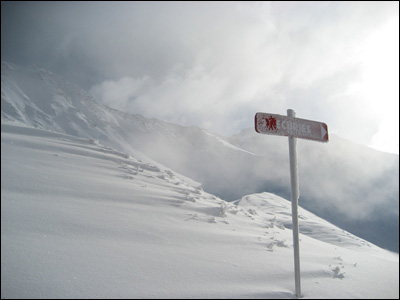
Our minds are like flags in the wind, fluttering this way and that, depending on which way the wind blows. Even if we don’t want to feel angry, jealous, lonely, or depressed, we’re carried away by such feelings and by the thoughts and physical sensations that accompany them. We’re not free; we can’t see other options, other possibilities. The goal of attention, or shamatha, practice is to become aware of awareness. Awareness is the basis, or what you might call the “support,” of the mind. It is steady and unchanging, like the pole to which the flag of ordinary consciousness is attached. When we recognize and become grounded in awareness of awareness, the “wind” of emotion may still blow. But instead of being carried away by the wind, we turn our attention inward, watching the shifts and changes with the intention of becoming familiar with that aspect of consciousness that recognizes “Oh, this is what I’m feeling, this is what I’m thinking.” As we do so, a bit of space opens up within us. With practice, that space—which is the mind’s natural clarity—begins to expand and settle.

Yongey Mingyur Rinpoché

Image from http://www.freeimages.co.uk

We become what we practice

The painful thing is that when we buy into disapproval, we are practicing disapproval. When we buy into harshness, we are practicing harshness. The more we do it, the stronger these qualities become. How sad it is that we become so expert at causing harm to ourselves and others. The trick then is to practice gentleness and letting go. We can learn to meet whatever arises with curiosity and not make it such a big deal.

Pema Chodron, When Things Fall Apart:Heart Advice for Difficult Times

Sunday Quote: The violence of our times

To allow oneself to be carried away by a multitude of conflicting concerns,

to surrender to too many demands,

to commit oneself to too many projects,

to want to help everyone in everything,

is to succumb to the violence of our times.

Thomas Merton