How we relate

File:Anastasia0274.JPG

It is a realization both simple and profound: genuine happiness does not come from accumulating more and more pleasant feelings. When we reflect on our lives and the many nice things we’ve experienced, have they provided us with lasting fulfillment? We know that they have not – precisely because they don’t last. The tremendous danger of this belief – that genuine happiness comes only from pleasant feelings – becomes a strong motivation to stay closed to anything unpleasant…. The transforming realization of meditative awareness is that happiness does not depend on pleasant feelings. In meditation  and in our lives, it is not so important what particular experience arises. What’s important is how we relate to it.

Joseph Goldstein, A Heart full of Peace

Don’t get carried away

wind tree

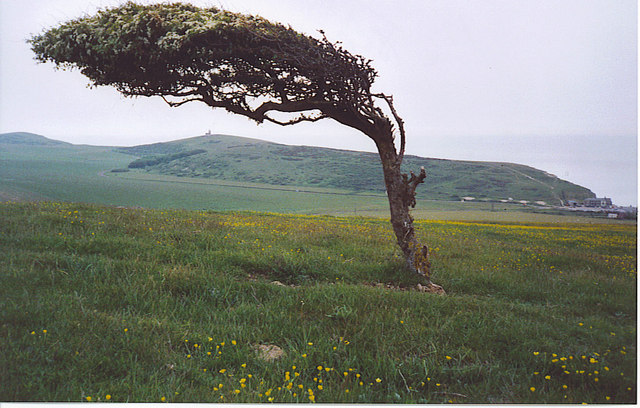
Awareness is the basis, or what you might call the “support,” of the mind. It is steady and unchanging, like the pole to which the flag of ordinary consciousness is attached. When we recognize and become grounded in awareness, the “wind” of emotion may still blow. But instead of being carried away by the wind, we turn our attention inward, watching the shifts and changes with the intention of becoming familiar with that aspect of consciousness that recognizes Oh, this is what I’m feeling, this is what I’m thinking. As we do so, a bit of space opens up within us. With practice, that space — which is the mind’s natural clarity — begins to expand and settle.

Yongey Mingyur Rinpoche

May 1st: Growth after a period of cold

File:Lily-of-the-valley.jpg

The month of May is called Bealtaine  in Ireland, after the ancient Celtic feast that was celebrated on May 1st. It marks the midpoint in the progress of the sun  between the spring equinox and the summer solstice, and announced the beginning of Summer. Hard to believe this year. Here in France it is the custom today to give as a gift the traditional flower for the first of May –  the  muguet, or lily of the valley.  This flower is a symbol of springtime and of beauty, used frequently in bridal bouquets,  and has traditionally been associated with the return of happiness after a period of darkness.   And yet this is despite the fact that its stalk, flowers, and berries are all extremely poisonous. A strange mix, but one that we find elsewhere in our lives. Often the places of greatest growth and energy, the places we learn most and reflect most upon,  are the places where we have been most hurt.  And frequently we find most freedom when we move from the places where we have been stuck, or the things that we feared most, without them being able to poison us any more.

Perhaps all the dragons of our lives are princesses, who are only waiting to see us once beautiful and brave. Perhaps everything terrible is in its deepest being something helpless that wants help from us. So you must not be frightened…..if a sadness rises up before you larger than any you have ever seen; if a restiveness, like light and cloud-shadows, passes over your hands and over all you do. You must think that something is happening with you, that life has not forgotten you, that it holds you in its hand; it will not let you fall. . . .

Rilke

Photo: Lily-of-the-valley, Gordon E. Robertson

Being non-aggressive towards ourselves

File:Reflection in a soap bubble edit.jpg

Coming back to the present moment takes some effort, but the effort is very light. The instruction is to “touch and go.” We touch thoughts by acknowledging them as thinking and then we let them go. It’s a way of relaxing our struggle, like touching a bubble with a feather. It’s a non-aggressive approach to being here.

Pema Chodron

Photo: brokeninaglory

More how than why

window dirt

The way of Wisdom is not the way of why, but the way of what. The Hebrew word [for wisdom] “chochma”  can be read as choch mah, “what is”. Wisdom will not tell you why things are the way they are, but will show you what they are and how you can live in harmony with them

Rabbi Rami Shapiro, The Divine Feminine in Biblical Wisdom Literature

Integrating light and darkness

moutain

Everything in life changes. The path to true happiness is one of integrating and fully accepting all aspects of our experience. This integration is represented in the Taoist symbol of yin/yang, a circle which is half dark and half light. In the midst of the dark area is a spot of light, and in the midst of the light area is a spot of darkness. Even in the depths of darkness, the light is implicit. Even in the heart of light, the dark is understood, acknowledged, and absorbed. If things are not going well for us in life and we are suffering, we are not defeated by the pain or closed off to the light. If things are going well and we are happy, we are not defensively trying to deny the possibility of suffering.

Sharon Salzberg