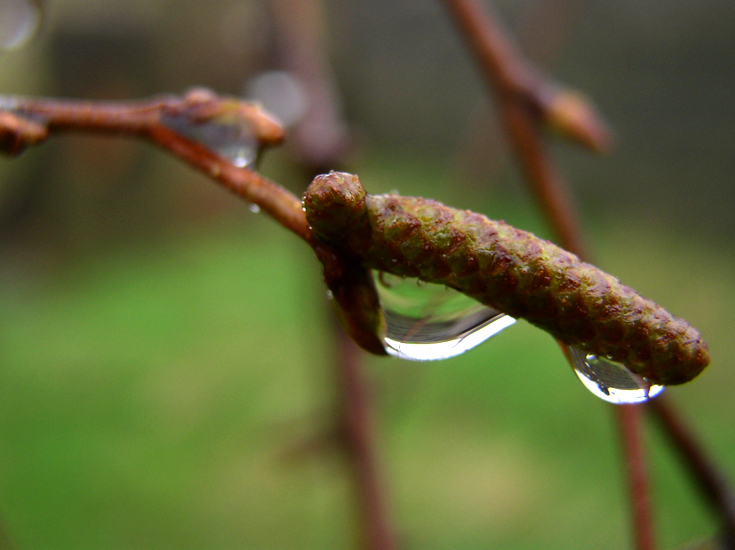
Do everything with a mind that lets go.
If you let go a little you will have a little peace; if you let go a lot you will have a lot of peace;
if you let go completely you will have complete peace.
Ajahn Chah
Do everything with a mind that lets go.
If you let go a little you will have a little peace; if you let go a lot you will have a lot of peace;
if you let go completely you will have complete peace.
Ajahn Chah

When we start to develop mindfulness, we are able to extend the sense of our domain beyond the seeming limitations of our body, of our immediate space. Try to understand that for most of human history, we have lived in larger spaces, like the wide valleys that occupy great physical space. We have the capacity to hear, see, smell, and taste and to know intuitively. We lived as communities. And it has been only a very short time that we have cut ourselves off from that, that we have lived in little separate boxes and have a very narrow sense of our mission and ourselves. We all still long for that connection. We all still yearn to have that more expansive sense of belonging and anchoring, spaciousness and connectedness. It is not that difficult to create. In meditation we create a sacred space, and the longer we abide in it, the more those old powerful urges and natural states of being emerge in us. And we begin to understand the nature of things and of change on a refined and profound level.
Steven Smith, Wise Navigating Through Change

Your mindfulness will only be as robust as the capacity of your mind to be calm and stable. Without calmness, the mirror of mindfulness will have an agitated and choppy surface, and will not be able to reflect things with any accuracy
Jon Kabat Zinn

These are the things we can contemplate. We can’t control what arises in the mind, but we can reflect on what we are feeling and learn from it rather than simply being caught helplessly in our impulses and habits. Even though there is a lot in life that we can’t change, we can change our attitude towards it. That’s what so much of meditation is really about—changing our attitude from a self-centered, “get rid of this or get more of that” to one of welcoming life as it is. Welcoming the opportunity to eat food that we don’t like. Welcoming wearing three robes on a hot morning. Welcoming discomfort, feeling fed up, wanting to run away. This way of welcoming life reflects a deeper understanding. Life is like this. Sometimes it’s very nice, sometimes it’s horrible, and much of the time it’s neither one way nor the other. Life is like this.
Ajahn Sumedho
 A painter or a musician, a composer, when they create a piece of art, they always sign their name. You also. You produce in your little life, the thinking, the speech and the action. If your thinking is the right thinking, that is a good work of art. It bears always your name.
Thich Nhat Hanh, Mindfulness of Anger
 Consider the lilies of the field,
the blue banks of camas opening
into acres of sky along the road.
Would the longing to lie down
and be washed by that beauty
abate if you knew their usefulness,
how the natives ground bulbs
for flour, how the settler’s hogs
uprooted them, grunting in gleeful
oblivion as the flowers fell?
And you — what of your rushed and
useful life? Imagine setting it all down—
papers, plans, appointments, everything,
leaving only a note: “Gone to the fields
to be lovely. Be back when I’m through
with blooming.”
Even now, unneeded and uneaten,
the camas lilies gaze out above the grass
from their tender blue eyes.
Even in sleep your life will shine.
Make no mistake.
Of course, your work will always matter.
Yet Solomon in all his glory
was not arrayed like one of these.
Lynn Ungar, Camas Lilies
 Mindfulbalance