Sunday Quote: Being content

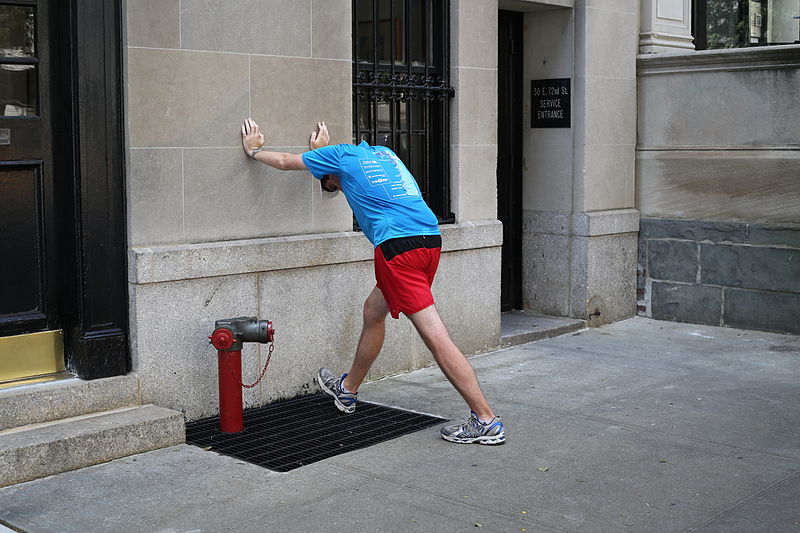
File:Stretching (7559234072).jpg

Contentment seems more about switching off, at source,  some of the driven aspects of our personalities,

rather than achieving that “more” which we think will fulfil them.

It is related to a quality of not-always-leaning towards something else:

A person is satisfied not by the quantity of food,

but by the absence of greed.

Gurdjieff

photo timothy krause

The place where we make meaning

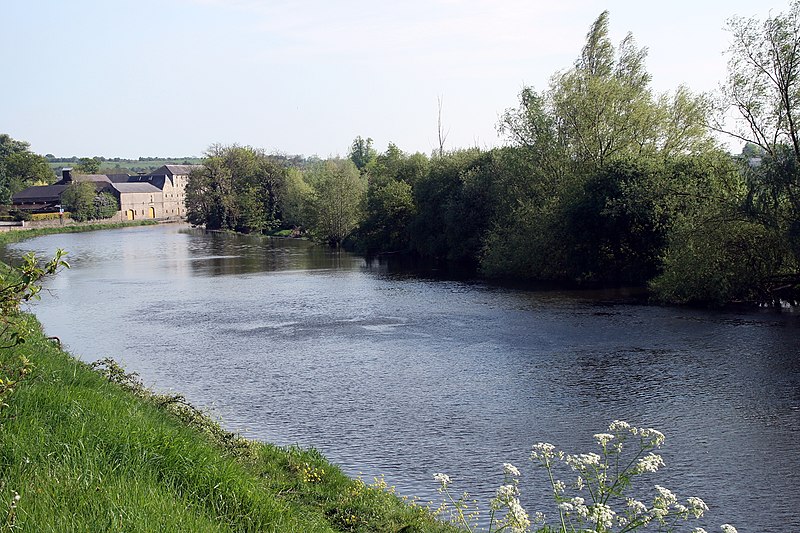
File:BarrowBagnel.jpg

I had one or two conversations this week which led me to reflect on how to live life where we find ourselves, when there are so many places elsewhere that seem more attractive, more lively, and have more to offer. Sometimes the place where we are can seem so small and limiting. Then I came across these thoughts from the always stimulating Parker Palmer and he sums up what I was thinking, and says them much better than I could ever do. So I simply offer them here for reflection: 

I love this poem, and it needs little commentary from me.

Behind it lies a question many of us ask ourselves from time to time: Given my small, ordinary, un-famous, and fleeting life, what can I do that’s of true worth and value? Then it offers an answer that I find simple, real, moving, and doable.

I re-read this poem occasionally and ask myself, “Using everything I have — including my own ‘costly gifts of hunger,  choice and pain’  — what can I do today to keep raising the ‘modest shrine to meaning’ I’d like to create with my life?”. Maybe it’s planting a tree, maybe it’s a random act of kindness to a stranger, maybe it’s offering comfort to someone who’s hurting, maybe it’s writing a thank-you letter to a mentor who saw your potential and drew it out…

There’s always something meaningful I can do to honor the gift of life in myself, others, and the world around us. Just do it!

Leonard Nathan, So

So…

you aren’t Tolstoy or St. Francis
or even a well-known singer
of popular songs and will never read Greek
or speak French fluently,
will never see something no one else
has seen before through a lens
or with the naked eye.

You’ve been given just the one life
in this world that matters
and upon which every other life
somehow depends as long as you live,
and also given the costly gifts of hunger,
choice, and pain with which to raise
a modest shrine to meaning.

Parker Palmer, Your Life is a Shrine to Meaning
Absence

File:Trafalgar Square (13070851465).jpg

The creator of the universe loves circles: time and space are circles, the day is a circle, the year is a circle, the earth is a circle. But when creating and fashioning the human heart, the creator only created a half-circle, so that there is something ontologically unfinished in human nature.

Absence and presence are sisters. The opposite of presence is not absence, the opposite of presence is vacancy. Vacancy is a void, a space which is hungrily empty, whereas absence is a space of spatial emptiness, but there is a trail of connection toward the departed one, the lost one, the absent one. To feel absence is to feel connection with the one who has gone.

John O’Donohue, The Presence of Compassion

photo: james petts

Posted in Uncategorized

Heaven is not in the future

File:Rainbow Gathering welcome home.jpg

Until you can forgive and include all of the parts, every part belonging, every part forgiven, even the tragic parts now seen as necessary lessons, you cannot come “home.”  

When you succeed at your real life task, or what I like to call “the task within the task,” then wherever God leads you, it doesn’t really matter.  Home is not a geographic place.  It is a place where everything belongs, and everything can be held, and everything is another lesson and another gift. “Hell” would be whenever life has come to a halt, where there is no rejoining, but all is exclusion, blaming, and denying.  We no longer need to believe in hell as a doctrine or a geographic place.  We see it in this world almost every day.

Saint Gregory of Nyssa (c. 335–394) – one of the Eastern fathers of the church, and one of my favorites – defined sin as “the refusal to keep growing.”  The saint and the true elder grow from everything, even and especially their failures.

Fr Richard Rohr ofm,  from the webcast The Odyssey:The Further Journey

Holding on and letting go

File:Let it go, let the new ones replace you.jpg

Today is the feast of All Souls when in the Catholic tradition we remember those who have died and gone before us. The arrival of a hard frost this cold November morning helps us understand how it became urgent to gather into the storehouses in a final harvest all that would help during the coming winter. The dark also made it easier to remember those who had died. However, what to let go of,  and what to hold on to,  are lessons we have to learn every day: 

At a gathering in San Francisco, I met Marco, a careful and patient photographer from Santa Clara. When asked what surprised him during the last year, his voice began to quiver. He’d witnessed two breaths that had changed his life. His daughter’s first breath. Then his mother’s last breath. As his daughter inhaled the world, it seemed to awaken her soul on Earth. As his mother exhaled her years, it seemed to free her soul of the world. These two breaths jarred Marco to live more openly and honestly. He took these two breaths into his own daily breathing and quickly saw their common presence in everyone’s breathing. Is it possible that with each inhalation, we take in the world and awaken our soul? And with each exhalation, do we free ourselves of the world, which inevitably entangles us? 

Is this how we fill up and empty a hundred times a day, always seeking the gift of the two breaths?

Perhaps this is the work of being.

Mark Nepo, Seven Thousand Ways to Listen

Everything is connected

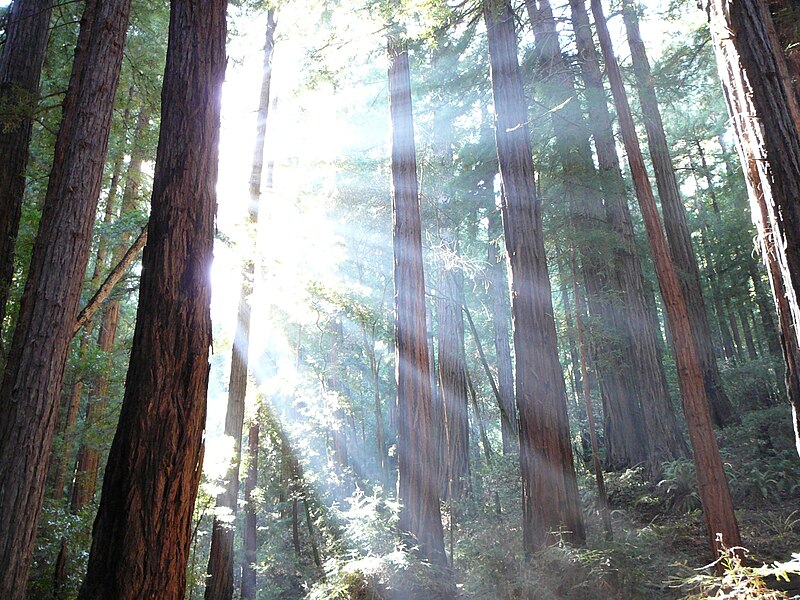
File:Trees and sunshine.JPG

Today is the Feast of All Saints, which traditionally began a month of reflection on letting go and endings, and remembering those who have gone before us.  One of today’s themes is the inter-connectedness between us and our ancestors, those who have shaped us – even over the centuries – into who we are today.  As Jung said, more than the lived parts, the “unlived parts” of our parents lives have a profound impact upon us. Another theme is that of thin places, the closeness between this world and the spiritual world, which gives rise to the sacredness of all reality, not just those moments or people who stand out. All of the places in our lives are temples, not just the ones which have candles and incense. Can we notice this in the simple things and moments of this day?

For a table to exist, we need wood, a carpenter, time, skillfulness, and many other causes to be. The wood needs the forest, the sunshine, the rain, and so on. The carpenter needs his parents, breakfast, fresh air, and so on. And each of those things, in turn, has to be brought about by other conditions. If we continue to look in this way, we will see that nothing has been left out. Everything in the cosmos has come together to bring us this table. Looking deeply at the sunshine, the leaves of the tree, and the clouds, we can see the table. The one can be seen in the all, and the all can be seen in the one.

 Thich Nhat Hanh

Photo rick harris