Grounded

Some of these old teachings are very beautiful. The fundamental insight is that we are always whole and alive, even right in the midst of difficulties. We thus loosen our identification with our story as something solid, as a permanent sense of agitation, weakness or illness.

A monk asked, “How can a person escape from birth, old age, sickness and death?”

Lingyun replied, “The green mountain is fundamentally unmoving,

But the floating clouds pass back and forth”

(Little is known of Lingyun Zhiqin, a disciple of Chinese Zen Master Guishan Lingyou (771 – 853). “Birth, old age, sickness and death” are shorthand for all the difficulties of life and its overall unsatisfactory nature).
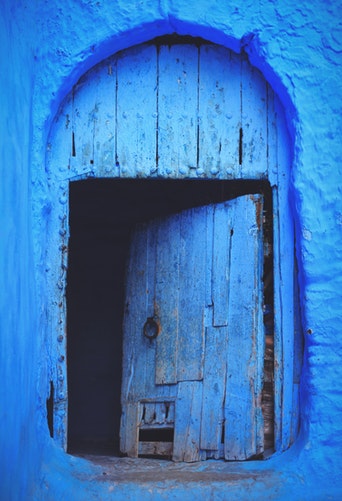
A swinging door

Came across this image in Tim Burkett’s book Nothing Holy about It: The Zen of Being Just Who You Are, one of the best books I read last year.  It is one of the most famous ideas of this great teacher… Easy to understand, not so simple to do.

We say “inner world” or “outer world,” but actually there is just one whole world. In this limitless world, our throat is like a swinging door. The air comes in and goes out like someone passing through a swinging door. If you think, “I breathe,” the “I” is extra. There is no you to say”I.” What we call “I” is just a swinging door which moves when we inhale and when we exhale. It just moves; that is all. When your mind is pure and calm enough to follow this movement, there is nothing: no “I,” no world, no mind nor body; just a swinging door.

Suzuki Roshi

Seeking awe in the ordinary

A dreary rainy day here in Ireland, after weeks of sunshine. The temptation is to keep ones head down, moving quickly from place to place. However,  positive emotions are linked to paying attention and appreciating whatever is around us –  grey or bright – noticing the small details in every moment.

God and the sacred, the enchanted and the luminous, are not “over there” somewhere. They are all right here, where we are.  May we get back to the ordinary, the breath by breath, and the living in each moment fully. Inhabiting each moment and seeking the wonder therein. The refusal to let life descend down to a cycle of the mundane, the insistence of seeking awe in the ordinary  –  this is the beginning of spiritual life.

This is the wisdom of Rabbi Abraham Joshua Heschel, among so many others, who said “Indifference to the sublime wonder of living is the root of sin”

Sin, for Heschel, is ultimately not about eating this or not eating that, praying in this temple or that temple, but a losing of that sublime wonder of being truly alive. That is the ultimate sin, the only sin. Yes, there are religious commandments to observe. But the goal of religion remains to cultivate that sense of wonder, awe, and radical amazement.

Omid Safi, The Spirituality of the Ordinary Is Luminous

The silent watcher

Be the silent watcher of your thoughts and behaviour.

You are beneath the thinker.

You are the stillness beneath the mental noise.

You are the love and joy beneath the pain

Eckhart Tolle


Excitement

We cannot live without excitement.  However, when excitement becomes the sole purpose in life that’s out of balance, that does not work.  It seems, we strive to be on a constant high all the time.  Having fun almost becomes an addiction.  But the craving for the extraordinary dulls the palate, and we lose our sense for the ordinary.

When our practice is calm and ordinary,  nothing is lacking and our everyday life itself is enlightenment.

Don’t engage disturbances, and emotional reachings gradually fade away.

Don’t engage distractions and spiritual practice naturally grows.

Wilbur Mushin May Sensei 

Holding our concepts lightly


Emptiness is the track on which the centered person moves.

Je Tsongkhapa, Tibetan Buddhist,  (1357-1419)

To know emptiness is not just to understand the concept. It is more like stumbling into a clearing in the forest, where suddenly you can move freely and see clearly. To experience emptiness is to experience the shocking absence of what normally determines the sense of who you are and the kind of reality you inhabit. It may last only a moment before the habits of a lifetime reassert themselves and close in once more. But for that moment, we witness ourselves and the world as open and vulnerable.

Stephen Batchelor, Buddhism without Beliefs