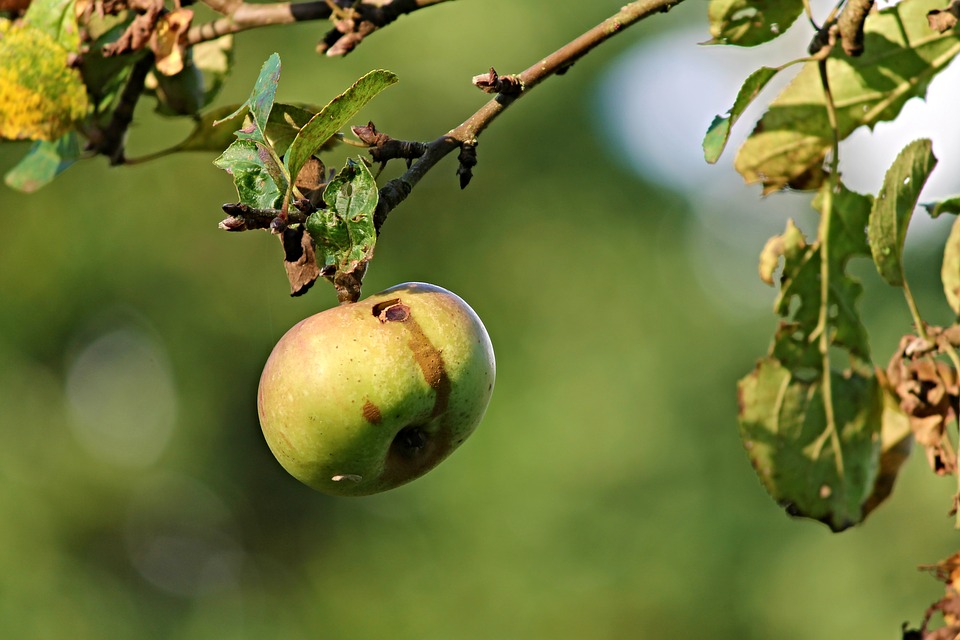
Not always pleased

So here is the ongoing question that is my gauge for measuring my level of confusion – “In this moment, am I able to care?”. Not “Am I pleased?”

There are all sorts of things I don’t like. And in response to what I find unpleasant I often feel dismayed or impatient or annoyed or disappointed or grieved. What I try to so is to keep my mind from fighting with my experience, confusing and isolating itself in self-centred despair. The contentious mind is, by definition, confused. It hasn’t remembered that struggle creates suffering and a grateful response creates clarity. I am trying to stay unconfused and connected to my own kindness. Whenever I do, I relax, see what my options are and choose the nest of them. I wont always be pleased, but I’ll be happy.

Sylvia Boorstein, Happiness is an inside Job

Sunday Quote: Limitation of words

Truly, we live with mysteries too marvelous
 to be understood.

Mary Oliver, Mysteries, Yes

What we cannot speak about, we must pass over in silence.

[Wovon man nicht sprechen kann, darüber muss man schweigen]


Wittgenstein, Tractatus Logico-Philosophicus

One-pointed

We are whole or have intimations of what it means to be whole when the entire being – spirit, mind, nerves, flesh, the body itself – are concentrated toward a single end. I feel it when I am writing a poem…..Wholeness does not, of course, necessarily mean being right in a deduction or an action. It does mean not being divided in spirit by conscience, by doubt, by fear. The Japanese call it being “one-pointed.”

May Sarton, Journal of a Solitude

Ripening

If as you age you become more still, you will discover that stillness can be a great companion. The fragments of your life will have time to unify, and the places where your soul-shelter is wounded or broken will have time to knit and heal. You will be able to return to yourself. In this stillness, you will engage your soul. Many people miss out on themselves completely as they journey through life. They know others, they know places, they know skills, they know their work, but tragically, they do not know themselves at all. Aging can be a lovely time of ripening when you actually meet yourself, indeed maybe for the first time. 

John O’Donohue, Anam Cara

Recognize, Accept and Refer

A wise way of working with difficult emotions

Rather than think about a problem and why you have it, and what you should do to get rid of it, the first piece of advice is to connect to how it feels, a careful process which has three aspects: Recognize, Accept and Refer. First, recognize: instead of a creating a long story about me and her and how things should be, turn your attention to the impact the event is having on you. You try to recognize the tone of the thought – say as ‘irritated’ or ‘prickly’ or ‘weighed down’. That simplifies matters and gets you out of your head and into your heart. Then: accept the presence of a quality that you don’t like and shouldn’t have – but do have! That relaxes the grip on the issue as well as the self who is struggling with it. This does leave you with some emotional turbulence – but you refer that to your body. As in: ‘How is my body feeling with this?’ ‘Where is this in my body right now?’ or even ‘Where is my body now?’ ( No, not your address, but are you conscious of your body as it feels, rather than thinking about it, or yourself.) 

With these steps, you put aside the strategy of solving and understanding – all that is psycho-code for aversion and getting rid of and is based on the view that these phenomena are me and mine, and that me and mine can fix them. And that’s not so, otherwise you would have done so by now. Instead connect – only spread a patient and sympathetic awareness over the stress, only connect the mental to the embodied aspect; only feel the feeling directly as a feeling.

Ajahn Sucitto, Only Connect – the wise angel

Don’t know

What is precious
inside us does not
care to be known
by the mind
in ways that diminish
its presence. 

David Whyte, The Winter of Listening [extract]