Some instructions for working with inner fears

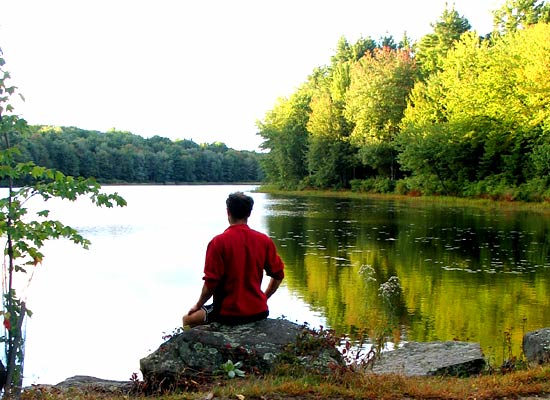
Our lives are not just on the surface; their greater part is concealed from casual observation. If we would like our obscure fears come into the open and dissolve, the conscious mind must be somewhat still, not everlastingly occupied; then, as the fears come to the surface, they must be observed without let or hindrance, for any form of condemnation or justification only strengthens fear. To be free from all fear, we must be awake to its darkening influence,a and only constant watchfulness can reveal its many causes.

Krishnamurti, Education and the Significance of Life

On shaky ground

We often find ourselves blown by this wind or that, unsettled, subject to varying emotions.  Inside ourselves we are restless, uncertain, or can feel entangled. This experience is nothing unusual, but rather is at the heart of the human condition.  In most moments, even after periods when  things go well, there is an underlying hum of  disquiet, of shifting ground.  Some writers call this ongoing feeling  “groundlessness”, others “loneliness”. Our first thought is to consider this as negative and it often leads us to feel disturbed. In today’s culture, the idea that one is unsettled or not completely happy is often considered a sign of failure.  It does not harmonize with the media insistence on happy people or the myth of easily established social relationships. So we can react to this inner sense by doing more, seeking to improve ourselves, or by keeping ourselves busy and distracting ourself or by looking to a relationship to take the feeling away. However, at the heart of mindfulness practice is the understanding that  life is always shifting and changing, that this change is unpredictable,  that we always have some inner sense of incompleteness and that this is ok. It does not mean that there is something wrong with us or our life. It can be a liberation to use this as our starting point. Life has a changing and unsatisfactory character. It is hard to establish a consistent  oneness of mind and heart that remains stable in such a way that there is never any disappointment. Accepting this truth opens the way to wisdom.

And this is the simple truth –  that to live is to feel oneself lost.

He who accepts it has already begun to find himself to be on firm ground.

José Ortega y Gasset, Spanish Philosopher, Who Rules the World.

No need to go far today

I often suggest that my students ask themselves the simple question: Do I know how to live? Do I know how to eat?  How much to sleep? How to take care of my body? How to relate to other people?….Life is the real teacher and the curriculum is all set up. The question is: Are there any students?

Larry Rosenberg, Breath by Breath

The difficulty of getting a real day of rest

And so we are, daily, becoming more enslaved to and more compulsive in our use of mobile phones and the Internet. For many of us it is now existentially impossible to take off a day, let alone several weeks, and be on a genuine holiday. Rather, the pressure is on us to constantly check for texts, e-mails, phone messages and the like. The expectation from our families, friends, and colleagues is precisely that we are checking these regularly. The sin du jour is to be, at any time, unavailable, unreachable or non-communicative.

Ron Rolheiser

Sunday quote: Creating space

What I most want
is to spring out of this personality,
then to sit apart from that leaping.

I’ve lived too long where I can be reached

Rumi

Under our feet

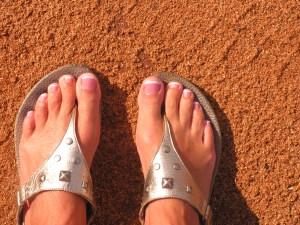
At the entrance to some Zen Temples in Japan one finds a sign, saying simply kyakka-sho-ko. One way of translating this is Look under your feet. Like most zen sayings it is open to numerous interpretations, but the one I like to consider is the way that meditation, or entering any sacred space, begins right where we are standing, in the circumstances of our ordinary life. We may not even consider this as being worthy of attention or deserving special notice. We can find our daily life so distracted and drab that we may think that our real life lies elsewhere, or our happiness lies when we get some of the elements that are missing now. How often we do this – undervalue our actual life, or the opportunities presented for love in actual daily tasks, thinking that a more special version of life exists elsewhere. We are not helped by that fact that modern culture encourages dissatisfaction with what we have, always presenting something new and something better. And that this culture is a powerful narcotic. So we can find that we are not interested on what is under our feet, but prefer to look around or elsewhere, to live with our head in the clouds, planning or worrying, waiting…… anywhere other than just in this moment

So this phrase says to me – Look around, notice, appreciate, take care of what you have. This life, this place, this family, this relationship, this time. It reminds me that every moment – even ordinary activities such as eating, walking, shopping or cleaning the house  –  is where I can cultivate my attention. It carries an echo of that famous phrase – when we are eating,  we give our full attention to our eating, while walking we pay full attention to the sensation of walking.  The sacred is found in the ordinary; the ground of our growth is deep within our own being. Mindfulness practice in its simplest, is essentially developing the capacity to sit –  to be with ourselves –  and to be happy there.