Our changing mind

blossom falling2

What could be more unpredictable than our thoughts and emotions: do you have any idea what you are going to think or feel next? Our mind, in fact, is as empty, as impermanent, and as transient as a dream. Look at a thought: It comes, it stays, and it goes. The past is past, the future not yet risen, and even the present thought, as we experience it, becomes the past.

The only thing we really have is nowness, is now.

Sogyal Rinpoche, The Tibetan Book of Living and Dying

Whatever the weather

Appreciation is a relaxing and peaceful state of mind. It creates a space in which we can accommodate the vicissitudes of life. Complaint, on the other hand, is frustrating and painful. There’s an element of anger and fixation involved. We are believing our thoughts, taking them to be real. Our attachment to the concept of how we want things to be is stressful, because that concept is always disintegrating. What we wanted to happen is not happening. We think complaining is going to get the world back on our track, but really it results in our being deaf, dumb and blind to the present moment. When we complain, we’re saying that the world needs to change in order for us to be okay. If only our parent or partner would behave differently, if only the food were better, if only there were less traffic, if only the service were quicker—then we’d be happy.

Sakyong Mipham Rinpoche, No Complaints

Back to Basics

IMG_3037-790507

The present moment, the only moment we have to feel or to think, is a hidden dimension for most of us. We are so absorbed with planning for the future or blaming people for what is over and done with that we lose the lives we are living. We die a thousand deaths wasting our energy on what was or what will be. We need to wake up a little more and liberate ourselves from our self-destructive habits — greed, hatred, racism and selfishness.  There is no reason to starve for well-being.

Jon Kabat Zinn

How we relate

File:Anastasia0274.JPG

It is a realization both simple and profound: genuine happiness does not come from accumulating more and more pleasant feelings. When we reflect on our lives and the many nice things we’ve experienced, have they provided us with lasting fulfillment? We know that they have not – precisely because they don’t last. The tremendous danger of this belief – that genuine happiness comes only from pleasant feelings – becomes a strong motivation to stay closed to anything unpleasant…. The transforming realization of meditative awareness is that happiness does not depend on pleasant feelings. In meditation  and in our lives, it is not so important what particular experience arises. What’s important is how we relate to it.

Joseph Goldstein, A Heart full of Peace

Take what is given

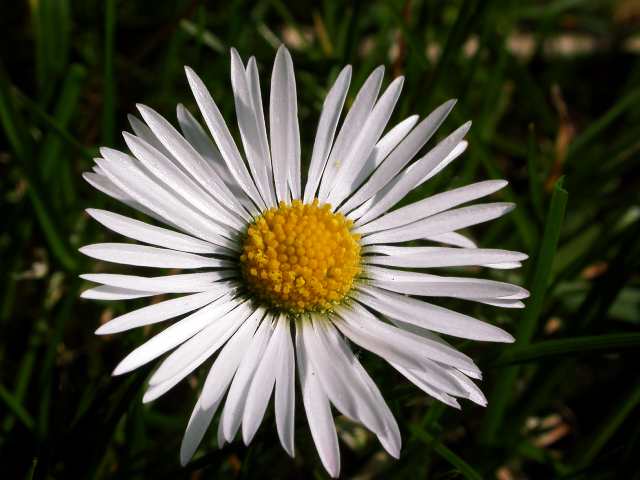
Daisy 210309 Dumpling Cottage#001

At my feet the white-petalled daisies display
the small suns of their center piece, their – if you don’t
mind my saying so – their hearts.

Of course
I could be wrong, perhaps their hearts are pale and
narrow and hidden in the roots.

What do I know?
But this: it is heaven itself to take what is given,
to see what is plain; what the sun lights up willingly;
for example – I think this
as I reach down, not to pick but merely to touch –
the suitability of the field for the daisies, and the
daisies for the field

Mary Oliver, Daisies

Sunday Quote: Letting go of ideas

File:Lotus flower in china.jpg

Only the hand that erases

can write the true thing.

Meister Eckhart

photo: mgmoscatello