A relationship with the world

Life can only find you if you are paying real attention to something other than your own concerns, if you can hear and see the essence of otherness in the world, if you can treat the world as if it is not just a backdrop to your own journey, if you can have a relationship with the world that isn’t based on triumphing over it or complaining about it

David Whyte, The Three Marriages; Reimagining Work, Self and Relationships

Right in front of us

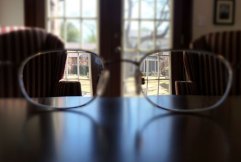
What is right in front of us we see the least. We glasses-see-clearly-7take the plants in the room for granted. We pay no attention to the coming of night. We miss the look of invitation on a neighbour’s face. We see only ourselves in action and miss the cocoon around us. As a result,  we run the risk of coming out of every situation with no more than we went into it. Learning to notice the obvious, the colours that touch our psyches, the shapes that vie for our attention, the looks on the faces of those who stand before us blurred by familiarity, blank with anonymity – the context in which we find our distracted selves – is the beginning of contemplation. Awareness of the power of the present is the essence of the contemplative life. “Oh wonder of wonders”, the Sufi master says, “I chop wood, I draw water from the well”.

Joan Chittister, Illuminated Life

An attitude of acceptance

P1000282In the attitude of acceptance we can allow ourselves to be receptive to life rather than try to control it, run away from, or resist it. This receptivity contrasts resistance. Culturally, we tend to be conditioned into resisting things. There is a fear of being open and receptive, as if by doing so we shall allow something to take us over. We feel we have to develop some kind of protection in order to keep ourselves from being annihilated or taken advantage of; it is a kind of paranoia of the mind.

Ajahn Sumedho, Liberating Emotions

Noticing

The important thing is not
To imagine one ought
Have something to say,
A raison d’etre, a plot for the play.
The only true teaching
Subsists in watching
Things moving or just colour
Without comment from the scholar.
To look on is enough
In the business of love.

Paddy Kavanagh, Is

Simply letting things be as they are

The word “becoming” is an innocuous little term. It doesn’t really evoke much of an image or much feeling. But the reality is that it is because of the nature of becoming that we continually experience suffering. It is why we continually experience conflict. It is why we are continually dissatisfied. Becoming is why we continually opt to be scattered, confused and stupid rather than peaceful and wise….We need to able to let go of the fear of not being something, not getting what one wants, not being what one thinks one should be or would like to be or have to be, have to get, have to become. There’s a tremendous, almost primal fear, of actually being peaceful, of really letting go, of putting stuff down, of putting identity down, of putting the compulsions down….to paraphrase Sariputta, “Freedom from suffering is the cessation of becoming.”

Ajahn Passano, On Becomng and Stopping

….in a shifting world

rope_bridgeIt’s often said that consumer society surrounds us with things and encourages us to pay too much attention to things, but in a way I think that’s also misleading. We live in a world that seems to be extremely unstable, to consist of fleeting images. A world that increasingly, thanks in part, I think, to the technology of mass communications, seems to acquire a kind of hallucinatory character. A kind of fantastic world of images, as opposed to a world of solid objects that can be expected to outlast one’s own lifetime. What has waned, perhaps, is the sense of living in a world that existed before one’s self and will outlast one’s self.

Christopher Lasch, Beating the retreat into private life