What are you waiting for?

I only recently discovered this beautiful poem, on not living in the future, or waiting for some other moment to begin living fully. As Jon Kabat Zinn frequently says, nothing needs to be added to this moment to make it complete. And yet we often fall into the trap of thinking that sometime in the future, the conditions will come together, and we will start to fully live. As the poem says, there will be nothing in that future moment that is greater than now, than this day, when you stop reading this.

Starting here, what do you want to remember?

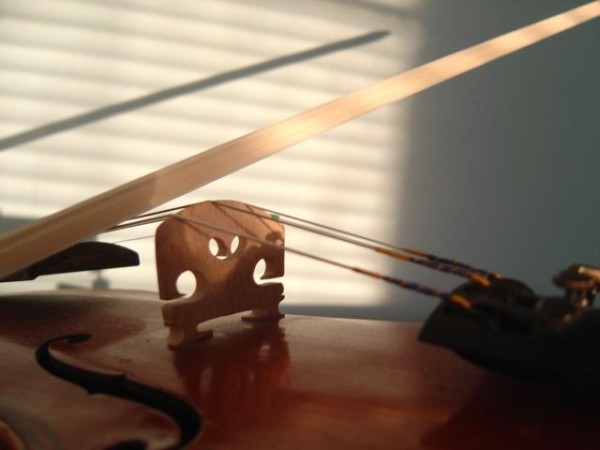
How sunlight creeps along a shining floor?

What scent of old wood hovers, what softened

sound from outside fills the air?

Will you ever bring a better gift for the world

than the breathing respect that you carry

wherever you go right now? Are you waiting

for time to show you some better thoughts?

When you turn around, starting here, lift this

new glimpse that you found; carry into evening

all that you want from this day. This interval you spent

reading or hearing this, keep it for life –

What can anyone give you greater than now,

starting here, right in this room, when you turn around?

William Stafford, You Reading this, Be Ready

Photo courtesy photos-public-domain.com

Nourishing ourselves: Being happy in the way things are

Blessed are the man and woman who have grown beyond their greed and have put an end to their hatred and no longer nourish illusions.

But they delight in the way things are and keep their hearts open, day and night.

They are like trees planted near flowing rivers which bear fruit when they are ready.

Their leaves will not fall or wither.

Everything they do will succeed. 

Psalm 1. Translation by Stephen Mitchell

On not criticizing oneself

As I have said before, I often find in Ajahn Sumedho’s writings a clarity which cannot be matched. It is the case here. Simply stated, it gets to the heart of the dynamic which causes us so many problems – our tendency to add on to and identify with what passes through the mind and make it into a criticism of ourselves. I recognize these phrases he uses here as ones I use myself and which I frequently hear in talking with people.

You can’t get more simple than mindfulness because it is not anything you can create. It is just a matter of paying attention and being present, it’s not a complicated technique or a complexity. It’s so simple, but we are conditioned for complexity, so we tend to make things complex all the time. You are sitting and observing and then a negative thought arises in your mind and you think “That’s bad”. ‘That’s a compounding. The act of judging it, of putting the label “bad” onto it, makes it more than what it is.

Mindfulness is just aware of presences and absences. It is not concerned whether they are good or bad. It is not looking at them from that critical position. So “bad” is a criticism, or “that’s good”, “that’s right” and “that’s wrong”. And then it goes into “I’m good”, “I’m bad”, “I shouldn’t feel like this” ,  “I shouldn’t have these thoughts or desires”, ” I should be more compassionate and patient”. So you see it gets increasingly more complicated with judgments, criticisms and a sense of self that is identified with these different conditions. It gets even more complicated. If you have a bad thought you think “I am bad, I am a bad person, I am not very good…[then] These thoughts arise because people are inconsiderate and don’t respect me. And because of their lack of sensitivity and understanding, I have these bad thoughts”,  so it gets increasingly more complicated.

Ajahn Sumedho, The Sound of Silence

Forgetting and remembering

One of the most difficult things to remember is to remember to remember. Awareness begins with remembering what we tend to forget. Drifting through life on a cushioned surge of impulses is just one of many strategies of forgetting. Not only do we forget to remember, we forget that we live in a body with senses and feelings and thoughts and emotions and ideas. Worrying about what a friend said can preoccupy us so completely that it isolates us from the rest of our experience. The world of colours and shapes, sounds, smells,  tastes and sensations becomes dull and remote…… To stop and pay attention to what is happening in the moment is one way of snapping out of such fixations. It is also a reasonable definition of meditation.

Stephen Batchelor, Buddhism without Beliefs.

Focusing just on the now

The past is a memory of a former now; the future is a mental projection of an expected now. Strictly speaking, nothing ever happened in the past; it happened in the now. Nor will anything happen in the future; it will happen in the now. It sounds almost simplistic or meaningless, and yet there is a deep truth in it: that life and now are one.   Eckhard Tolle

As this quote reminds us,  there is a value in staying in the immediacy of the present moment. However, this can be quite difficult.  We frequently carry into the present habits and roots from the past,  which can be tied up with fearful emotions and inhibit our freedom. Or we find ourselves scanning for danger, warning ourselves about the dangers in proceeding based on past experiences. We find ourselves always moving away from the present moment into an imagined future that we give more importance and credence to, or creating possible scenarios  based on how our mood is in this moment. This worrying about the past or living already in the future frequently puts one at odds with the actuality of the present moment.

We all wish to enter fully into life, to live as if our lives can make a difference. However, so many of these mental habits lead us away from fully being here. We often see this moment as a means towards some other end, rather than complete in itself. To work with what is in front of us, in this moment, and then let go and start again,  is  the way to making the most of our life, not waiting for something dramatic to come along in the future.

Doing the ordinary

Stanley Hauerwas, the American theologian,  said that God “takes time for the trivial.” And yet most of the messages we receive today suggest that ordinary life, with its predictable routines,  and not-so-dramatic activities,  demonstrate that our life has lost its direction. Exciting comparisons are held up in advertising, film and the media, which the mind likes to use to convince us that there is something lacking in our life, that we are somehow not doing “well enough”. This can give rise to a feeling within us that without some diversion and drama the ordinary can weigh us down, and we need to continually be on the look out  – normally somewhere else – for a life with more passion, greater creativity, and celebration. The trivial is not where we expect to find God or anything miraculous. So we have a tendency to get it out-of-the-way as quickly as we can in order to make time for our “real” life.  However, we often hear from people who have had an enforced period away from their normal life – for example, hostages who have come back home from their ordeal, or a prisoner released from prison after a wrongful conviction, or someone recovering from an illness – that they look forward to simply sitting in their garden, or walking the dog, or having a cup of tea or coffee in the kitchen. For them, because it was taken away from them, the possibility to do simple daily things is the ultimate treasure. It shows us that the attitude we take, and the story we tell ourselves about, say,  peeling the vegetables or doing grocery shopping,  is the key towards finding a happiness hidden not only in special moments.