Slowing down, going deeper

Although yesterday’s incredibly mild weather belies the fact,  we have passed the traditional date for the start of winter. It  began on the feast of Saint Martin, marking the end of harvest, the drinking of the new wine, and the time for farm labourers to return home. Then the  ancient period of forty days preparation for Christmas, observed since the 5th Century, followed. Traditionally, these days coincided with a sense of the natural beginning of winter, and the body’s response in taking recovery time for itself. They were a time of reflection and a simplification of intake, of taking stock and winding down. In today’s world,  technology allows us to promote the opposite – longer  shopping hours and a  speeding up in preparation for the holidays, as  Thanksgiving and Christmas  advertisments begin to appear.  An ancient way of doing things and a modern  one. Thus we have a choice.

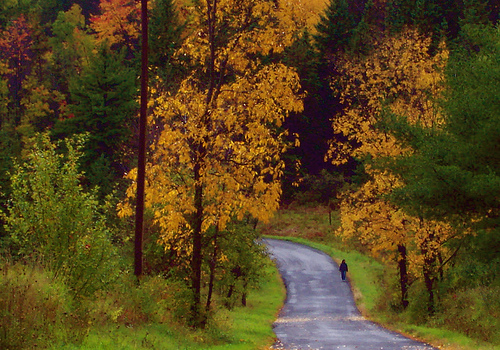
Nature has its periods of growth and its periods of rest. We are still somewhat in the bright and gentle light of autumn but we know that the darker days of winter are sneaking up on us. Soon all will go quiet and cold, with little seeming to stir. However, as yesterday’s post reminds us about the psychological sphere,  underneath much is going on. Nature becomes for us a model in its beckoning us to turn inward and look deeper, to rest, reflect and simplify. Thomas Merton reminded us of the value of “winter, when the plant says nothing.” There is a time for us also to slow down, to say little, to wait and watch.

Our task is to find a balance, to find a middle way, to learn not to overextend ourselves with extra activities and preoccupations, but to simplify our lives more and more. The key to finding a happy balance in modern life is simplicity.

Sogyal Rimpoche.
We see life from how we label our experience

Have you ever noticed that
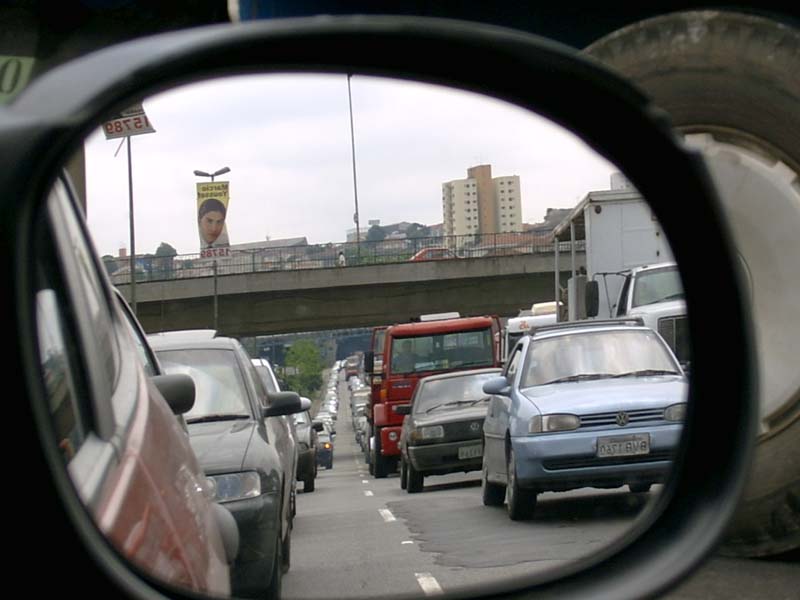
when you get on the highway at rush hour
that it is everyone else who is the traffic,
never you?

Ajahn Armaro.

Being watchful of who comes in

Our mind is like a house, and our mindfulness is like the tenant of that house. Because we don’t want any intruders or unwelcome guests, we lock all the doors and windows of our house. Now no one can get in unless we let them in. No one can enter unannounced. That’s the function of mindfulness—to be watchful of what’s trying to enter our mind.

If an angry thought tries to enter our mind, it can’t come in until we open the door. Our purpose is not to shut everything out; it’s to remain conscious of our environment and what’s happening in it. Then we can deal with it appropriately. We can open the door to our angry thought, listen to it, and then ask it to leave. We recognize it as a thought and don’t mistake it for who we are. That’s the point. It shifts the experience. Instead of thinking, “I’m really angry right now,” we think, “Oh, look, an angry thought has entered my mind.” It’s easy to let go of a thought that’s a guest in your mind; it’s harder when you take on the identity of the guest.

Dzogchen Ponlop Rinpoche, Rebel Buddha

Waking to every moment

The journey toward health…

is nothing less than an invitation to wake up to the fullness of our lives.

Jon Kabat-Zinn

Watching the leaves float by

Our thoughts are always happening. Much like leaves floating down a stream…If you are standing by a river and a leaf floats by, you have your choice of following the leaf with your eye or keeping your attention fixed in front of you. The leaf floats out of your line of vision. Another leaf enters…and floats by. But as we stand on the bank of the river and the leaves float by, there is no confusion as to whether or not we are the leaves. Similarly, it turns out that there is a place in our minds from which we can watch our own mental images go by. We aren’t our thoughts any more than we are the leaves.

Ram Dass and Paul Gorman

Practicing mindfulness in daily life 2.

A very simple way of heightening your awareness to what is going on in the present moment is to draw attention to your sense of touch:

During the day find as many ways as you can to increase your awareness of your sense of touch. For example, notice the warmth of a cup of coffee, notice your fingers touching the computer keyboard,  or the steering wheel of the car at a red light. When you wash your hands really feel the touch of the water, and the softness of the soap. When you lift a glass or cup  feel the touch of the glass, the coldness or warmth due to the contents. Feel the touch of what you eat and drink, staying with the sensations of the food rather than thoughts about it.