Being in the moment: Life as Jazz

Those who love life are tolerant of its ups and downs,

its reversals and leaps forward.
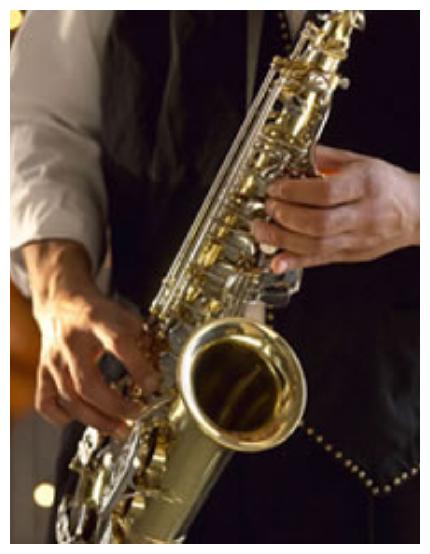
Those who love life, enjoy playing it by ear, engaging life without a printed score, simply flowing with its melody.
By keeping our agendas flexible and minimizing our demands, life can be a melodic song.
Whenever circumstances interrupt the normal rhythm of life,
those who cultivate patience and inner freedom are able to improvise with a life situation like jazz musicians,
making up music as they go along.
The emphasis in playing it by ear is on playfulness.

Edward Hays The Great Escape Manual

Balance 2: Resting

Our culture invariably supposes that action and accomplishment are better than rest, that doing something – anything – is better than doing nothing. Because of our desire to succeed, to meet these ever-growing expectations we do not rest.

Because we do not rest we lose our way. We miss the compass points that would show us where to go,  we bypass the nourishment that would give us succor.

We miss the quiet that would give us wisdom. We miss the joy and love born of effortless delight.

Wayne Muller, Sabbath: Finding Rest, Renewal and Delight in our Busy Lives.

Facing up to the truth

The reason why silence is so disturbing to us [is this]: As soon as we begin to become silent, we experience the relativity of our ordinary everyday mind. With this mind we measure our space and time coordinates, we calculate probabilities and count up our mistakes and successes. It is so useful and familiar a state of mind that we easily think it is all there is to us: our whole mind, our real selves, our full meaning.

Life, love, and death frequently teach us otherwise. We bump into silence at many unexpected turnings on the road of life, in unpredictable ways, in unexpected moments. Its greeting has an effect which is both full of wonder and yet often terrifying. Our thoughts, fears, fantasies, hopes, angers and attractions are all rising and falling moment by moment. We automatically identify ourselves with these fleeting or compulsively recurring states without thinking what we are thinking. When silence teaches us how unreliably transient these states really are, we confront the terrible questions of who we are. In silence we must wrestle with the terrible possibility of our own non-reality.

Laurence Freeman

What we learn at the end of our life

Stephen Levine has written extensively about what he has learned from working with those who are dying. Being close to those who are in the last moments of life has taught him the importance of being alive in every moment.

To the degree we are present for “just this much” this living moment, we are alive. Otherwise we numb to the vibrancy and beg upon our deathbed for one more chance.

Most think that living a “full life” means living into old age. But if you are not alive this moment, what makes you think you’ll be alive then? To live fully is to be filled with this moment. Present for this millisecond, this day, this week, this life.

Stephen and Ondrea Levine, Embracing the Beloved

New buds

I was parking the car the other day as I returned from a meeting and my flu was beginning to kick in. I was preoccupied with it and its effects. As I got out of the car I noticed the snow had gone from the rockery. And there they were, peeking up through the soil, the first signs of snowdrops and crocus planted to greet the Spring. I noticed also the willow beginning to bud. And seeing these little unexpected gifts my heart was warmed, I felt joy, and realized how life and love can break though our most selfish considerations and the times we would like to close our hearts.

At times nature gives us teachings which we can need in our daily lives. Open up to new life and hope for the future. A lot is going on that we do not know about. Trust growth to take its own path in its own mysterious way.

I like to garden and have a plan for its development over the next years. However sometimes nature has its own plans. This winter a mole has come to take up residence in the field next door and from time to time he decides to visit the garden, messing up my neat lawn with his untidy hills. It ruins the order but surely is as much a part of nature as the formal beds I have put down. Who I am to say that my plans are best? Every week we get examples of how the natural world doesn’t behave in a predictable way, so we shouldn’t be surprised that natural upheavals occur in both our gardens and in our private lives. Maybe the small wild flowers that grow along the fence have as much right to be part of the garden as the ordered planting in beds? We often think we know what is best and in doing so often do not recognize what is. Sometimes, out of fear, we prefer to impose our order on things when in fact nature, and life, proceeds with its own mysterious lack of order. In doing so we risk losing the small and beautiful gifts which give joy to the heart. There is so much in life that is unexpected and unplanned for, but often these are the things that make all the difference.

The splendour of the rose and the whiteness of the lily do not rob the little violet of its scent nor the daisy of its simple charm. If every tiny flower wanted to be a rose, spring would lose its loveliness.

Theresa of Lisieux

Media use and distractions

The Kaiser Family Foundation is a non-profit, private operating foundation focusing on the major health care issues facing the U.S. They conduct research on issues affecting health, including the effects of media usage on young people. This month they published a study which found a huge increase in TV, music, phone, computer, and video game usage among 8-18 year olds compared to just five years ago. The rate of increase also accelerated over those years. What was also interesting was the increase in multi-tasking in that age range, where people are using two devices at once, such as texting while watching YouTube videos or talking on the phone while watching TV.

This would seem to be the situation with adults also. It is quite easy to observe today that as soon as the television programme, meal or meeting gets less interesting, people pull out their Blackberries and iPhones and starting checking messages, mail or the net. Now that laptops are much smaller it is possible to work on them while watching TV, and working on them may entail social networking while actually writing a report.

It is clear now that the speed of technological advances is not going to slow down. If anything it will get faster, and we will increasingly live in a connected and media-saturated world. Although many of the advances are helpful it is not clear that all lead to a greater sense of calm. Indeed many studies show links between increased stress and the breakdown in work-life and home-life boundaries.

Mindfulness encourages us to pay attention to what is happening and to simplify our focus of attention. Continually practising being divided in our attention only strengthens the possibility of being scattered and having no sense of being centred. It can increase our sense of anxiety. So we can become aware of our urge to immediately check emails or send that text right now. It can be useful to interrupt the urge and see if our life will actually fall apart.