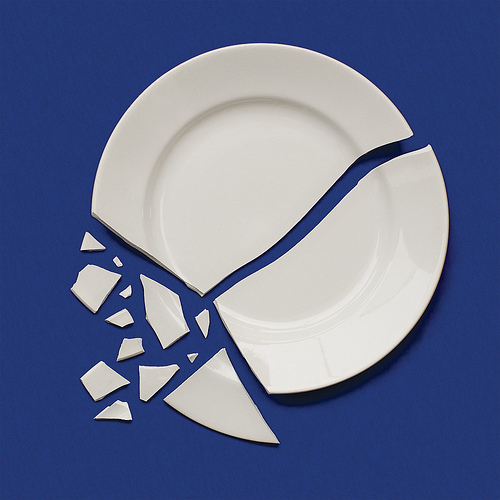
 When I lived in Rome, New Year’s Eve was a noisy affair, with fireworks in most households and the old custom of throwing plates out of windows. This practice, more honoured nowadays in the South of Italy, was meant to get rid of all of the negative events and influences of the old year, so you could start the new one with renewed strength and enthusiasm. It maybe corresponds to a human need around this time of year, as we can see something similar in the Times Square Good Riddance Day which was held yesterday. People were invited to bring their worst memory from 2010, write it down and shred it, getting rid of it once and for all.
We probably all have some things from this past year that we are glad to get rid of. I know I have. It can be useful to consciously let go of those things and move on. It may mean that you have to say yes to things that did not go as you wanted but cannot now change. This does not mean that you are suddenly happy or at peace about everything, or have come to understand the meaning of any of it. You do not need to know all the answers. It just means that at some stage you have decided to move on and find a new outlook on life, trying to integrate the losses and everything you can learn from them. You may have to live with some sadness, while trying to live without regret. You accept it and give yourself permission to move on.
 The slight problem with the way that the Times Square event was named is that it plays into our need to blame others or justify ourselves when things do not work out. One way of dealing with experiences we do not fully understand is to protect ourselves and ensure that we minimize hurt by needing to feel that we are in the right. Thus we may turn all our upset into anger towards the other and ensure that we “win”. We blame them for the decision and freeze them into that moment. However, what we need to realize is that we all get lost from time to time. Maybe we learn more about ourselves that way. The famous physicist Hermann von Helmholtz compared growing in knowledge to climbing a mountain. You do not proceed in a direct line up the mountain. You go round, crossways, zigzag, retrace steps, and on and on in this fashion until you arrive at the peak. From there you can see all the way down as if in a straight line. But it was not that way coming up. Growth is that twisting path, those zigzags where we learn, the stumbling, the turning back. We are moving onwards, even when we feel we are not. Now that we have arrived at a point in the journey we may need to look at some of those twists and turns where we got lost and simply let them go. There are more mountains to climb.



 Mindfulbalance