Like bubbles

File:First Time Bubble (4718544475).jpg

One of the funny things about learning to look into the mind is that normally that’s the last place we ever look! If you consider the way we normally think, we carry on an endless dialogue with ourselves full of memories, justifications, anticipations, commentaries, fantasies, daydreams and so on. We just keep thinking, comparing, analyzing. And we believe what we think. I have  my beliefs, they are true because that’s what I believe! What I like must be good because I like it!…..The aim of meditation practice is to first teach us how to quiet the mind and then to look into the mind itself. It teaches us how to distance ourselves from our thoughts and emotions and to see them as just thoughts and emotions. They are mental states. They arise for a short time, then they disappear, then another state arises. They are like bubbles. Our problem is not that we have thoughts and emotions but that we identify with them.

Ani Tenzin Palmo, Reflections on a Mountain Lake

photo serge melki
The Basics of Practice 1: Learning by doing

I am starting a number of mindfulness courses these days and so the first posts this week will be on the basics of practice. However, in a sense, we all start over each day, each new week, each moment, discovering how little we actually like to be in the present moment….

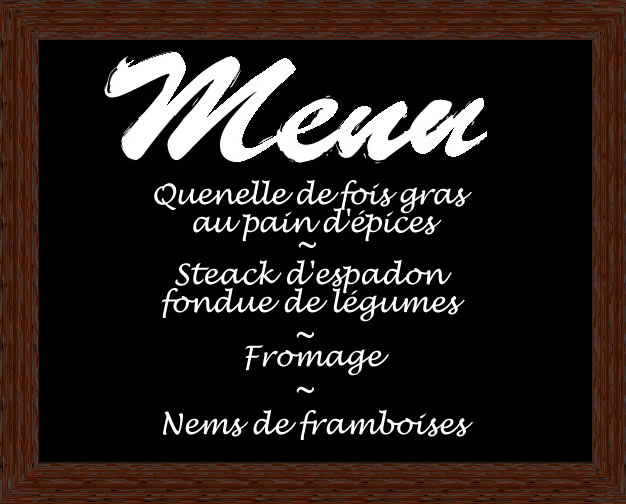
Cultivating mindfulness is not unlike the process of eating. It would be absurd to propose that someone else eat for you. And when you go to a restaurant, you don’t eat the menu, mistaking it for the meal, nor are you nourished by listening to the waiter describe the food. You have to actually eat the food for it to nourish you. In the same way, you have to actually practice mindfulness in order to reap its benefits and come to understand why it is so valuable.

Jon Kabat Zinn

What is not essential

File:KelsoSand.JPG

Each person is born with an unencumbered spot, free of expectation and regret, free of ambition and embarrassment, free of fear and worry. To know this spot of inwardness is to know who we are, not by surface markers of identity, not by where we work or what we wear or how we like to be addressed, but by feeling our place in relation to the Infinite and by inhabiting it. This is a hard lifelong task, for the nature of becoming is a constant filming over of where we begin, while the nature of being is a constant erosion of what is not essential. Each of us lives in the midst of this ongoing tension, growing tarnished or covered over, only to be worn back to that incorruptible spot of grace at our core.

Mark Nepo, Unlearning Back to God

Sunday quote: Body and soul

File:Look Ma, I can Jump!.jpg

Everybody needs beauty as well as bread,

places to play in and pray in,

where Nature may heal and cheer

and give strength to body and soul alike

John Muir, The Yosemite

photo pam

Letting life’s lessons sink in

allondon1 rocks

Another post inspired by the season of Lent, but a reminder for all of the value in slowing down, making space, “meandering” in life, rather than always focusing on driven, purpose-filled activities.

More than giving up or self-denial, Lent, when practiced intentionally, can allow time for self-examination, reflection, and preparation. It’s a time of slowing down, intentionally, so that life is given a chance to sink in, not just run off in so many directions. Induced meandering, if you will.  The slowing that is an inherent part of Lent is not just for the sake of slowing down, but so that life can sink in. In so doing, this season of irrigation provides health and vitality long after its rains have passed. Lent offers us an opportunity to slow down, to meander rather than to rush, to allow life to sink in a bit, to find ways to go deeper and not always stay on the surface. A time to observe, to pay attention, and then to act — and in so doing provide the space to move from rush to replenish. When we take this practice seriously, we plant its blessings so that they benefit not only us in our lives for this season, but also extend to the world around us.

Erin Dunigan, The Induced Meandering of the Lenten Season

Allowing things find you

Campanula barbata

This morning dawned misty and foggy here in Kildare, restricting the view to just a few metres, making travel a bit more slow.  This can be good. It is not always  healthy that we move as fast  or as far as we want to. There is a place for slowing down,  making space and listening.  Some things are only learnt that way, despite our desire to be always in command.

I will arise and go now, and go to Innisfree,
And a small cabin build there, of clay and wattles made;
Nine bean rows will I have there, a hive for the honeybee,
And live alone in the bee-loud glade.

And I shall have some peace there, for peace comes dropping slow.

WB Yeats, The Lake Isle of Innisfree.

“But it isn’t easy,” said Pooh. “Poetry and Hums aren’t things which you get

They’re things which get you

And all you can do is to go where they can find you

A.A. Milne, The House at Pooh Corner