
Clay is molded into vessels, and because of the space where there is nothing, you can carry water. Space is carved out from a wall, and because of the place where there is nothing, you can receive light. Be empty and you will remain full.
Lao Tzu
Clay is molded into vessels, and because of the space where there is nothing, you can carry water. Space is carved out from a wall, and because of the place where there is nothing, you can receive light. Be empty and you will remain full.
Lao Tzu

Our minds are like crows.
They pick up everything that glitters,
no matter how uncomfortable our nests get with all that metal in them
Thomas Merton

The days are getting much shorter here in Ireland, and the colder weather and darker afternoons begin to be felt. This is no surprise as we have passed the old date for the start of winter – the feast of Saint Martin – last Monday. Traditionally, a period of forty days preparation for Christmas began then, a custom dating from the 5th Century. These days coincided with a sense of the natural beginning of winter, with a winding down of work outdoors and the body’s response to that in letting things go and taking recovery time for itself. It was a time of reflection and a simplification of intake, of taking stock and winding down. In today’s world, technology allows us to promote the opposite – longer shopping hours and a speeding up in preparation for the holidays, as Thanksgiving and Christmas advertisements begin to dominate. An ancient way of doing things – probably more in tune with nature’s rhythms – and a modern one. Thus we have a choice.
The first step in any letting go is ‘stepping back’– non-involvement. This initiates letting go by unhooking the mind from the topic that is stirring it up. It’s not a matter of avoiding or suppressing the topic, but of seeing it in a clear and spacious way. Non-involvement is about settling back into the present moment, relaxing into the way things are right now; it’s about letting go of the ‘shoulds’ and ‘shouldn’ts,’ the past, the future and the imaginary, and meeting things as they arise in the present…. Letting go is also about giving things time to shift and settle, and being patient with oneself. It’s about not comparing yourself with others, and letting go of self-images. Letting go makes us more flexible and broad-minded. It’s grounded in the understanding that things change; and that they can change for the better if we’re attentive, mindful, and put aside distractions and negativity.
AjahnSucitto, Meditation, A Way to Awakening
photo kevin law
Again a quote from the Christian tradition, this time from the monastic community of Taize, in Burgundy, France. I went on a silent retreat there from Ireland many years ago, and was struck by the simplicity of the lifestyle and the kindness of the welcome. This quote reinforces the practical words of Kabat Zinn this morning, encouraging the development of silence as a way of working with worrying thoughts.
How is it possible to reach inner silence? Sometimes we are apparently silent, and yet we have great discussions within, struggling with imaginary partners or with ourselves. Calming our souls requires a kind of simplicity: “I do not occupy myself with things too great and too marvellous for me.” Silence means recognizing that my worries can’t do much. Silence means leaving what is beyond my reach and capacity. A moment of silence, even very short, is like a holy stop, a sabbath rest, a truce from worries.
Taize Community, The Value of Silence

Yesterday I got the news that the mother of a good friend had passed away, suddenly, without warning. I had a lovely meal with her and her husband just last Thursday in Geneva, having flown in earlier that day from Ireland. We had spoken of the launch of her website and plans for the future, and we had a lovely, carefree evening. Then yesterday this news came, reminding me of the fragile nature of life, and how our plans can be interrupted. As I drove home five swans flew low over the road. I thought of the poem by Yeats, The Wild Swans of Coole. In Celtic myths these beautiful birds frequently symbolized the inner life or the soul. They were especially associated with the big feast of Samhain, the start of November. In the poem they fly away dramatically, embodying some of the elements of this life – touched by its beauty we wish to grasp it, to live it fully, but it also moves on, with aspects out of reach. We awake some days to find that all has changed.
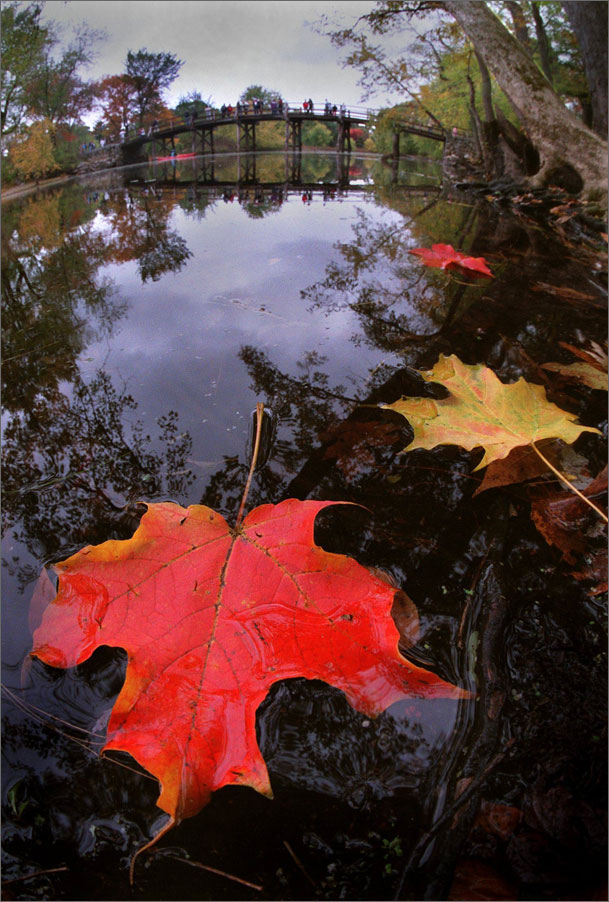
The trees are in their autumn beauty, The woodland paths are dry,
Under the October twilight the water Mirrors a still sky;
Upon the brimming water among the stones
Are nine-and-fifty Swans.
The nineteenth autumn has come upon me Since I first made my count;
I saw, before I had well finished, All suddenly mount
And scatter wheeling in great broken rings
Upon their clamorous wings.
I have looked upon those brilliant creatures, And now my heart is sore.
All’s changed since I, hearing at twilight, The first time on this shore,
The bell-beat of their wings above my head,
Trod with a lighter tread.
Unwearied still, lover by lover, They paddle in the cold
Companionable streams or climb the air; Their hearts have not grown old;
Passion or conquest, wander where they will,
Attend upon them still.
But now they drift on the still water, Mysterious, beautiful;
Among what rushes will they build, By what lake’s edge or pool
Delight men’s eyes when I awake some day
To find they have flown away?
photo dirk ingo franke

Maybe the only enemy is that we don’t like the way reality is now and therefore wish it would go away fast. But what we find as practitioners is that nothing ever goes away until it has taught us what we need to know. If we run a hundred miles an hour to the other end of the continent in order to get away from the obstacle, we find the very same problem waiting for us when we arrive. It just keeps returning with new names, forms, manifestations until we learn whatever it has to teach us about where we are separating ourselves from reality, how we are pulling back instead of opening up, closing down instead of allowing ourselves to experience fully whatever we encounter, without hesitating or retreating into ourselves.
Pema Chodron, When Things Fall Apart
artwork: yuma
 Mindfulbalance