 You ask me why I dwell in the green mountains
I smile and make no reply, for my heart is free of care
As the peach blossom flows downstream and is gone into the unknown
I have a world apart that is not among men
Li Po
You ask me why I dwell in the green mountains
I smile and make no reply, for my heart is free of care
As the peach blossom flows downstream and is gone into the unknown
I have a world apart that is not among men
Li Po
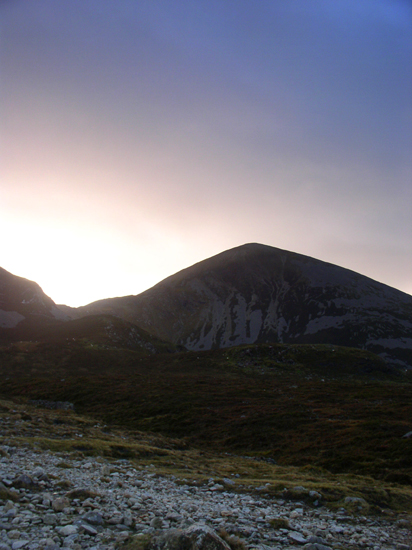
 November is traditionally the month for remembering those who have passed away. It is a practice in harmony with this time of year, as the days shorten and the cold of winter approaches. There seems to be a broad antropological basis for this awareness, as it can be found in the Celtic calendar around this time also. Keeping an awareness of the impermanence of all things is one of the basic practices in most of the wisdom traditions. One of the reasons that we struggle is that we give things more solidity than we should, including the problems and worries which pass through the mind as thoughts or emotions. I think the most important lesson learned in sitting meditation is that nothing stays the same for long, including the activity of the mind. Learning the truth of that in a real, felt way, leads to equanimity. Trying to hold onto things that are changing, even good things, pinning our happiness onto things being exactly as they were, leads us to be less present with how things actually are. However, I do not find this practice easy or something I realize in a once-off manner. I would love if enlightenment came that way. However, for me it is a slow-learned knowledge, that I am working with day-to-day. Looking out on the mountains around my house this morning gently teaches me. The trees let go of their leaves, the mountain allows the mist to descend and rise. I too try to let go, not trying to make this or that moment last forever.
In the deepest forms of insight we see that things change so quickly that we can’t hold onto anything, and eventually the mind lets go of clinging.
Letting go brings equanimity. The greater the letting go, the deeper the equanimity. In practice we work to expand the range of life experiences in which we are free.
U Pandita
 The more Jung worked with people, the more he came to believe that the key problems facing most who came to him for therapy were not psychological illnesses but whether they were in touch with the deepest parts of their being. This is probably even more true today, as more and more of peoples’ material needs are fulfilled and yet more and more people express unhappiness with their lives. In Jung’s view, most suffering today stems from the fact that we have lost a connection with the mythic dimension of life. Our capacity to be in a relationship with something more profound than what is seen is what makes for real, ongoing growth. We have a depth dimension and to become fully human requires that we keep an openness to this in our work and in our relationships. When we find ourselves in situations where this aspect is not reflected we feel impoverished and unfulfilled, often without knowing why. Life can seem too short to be spending our time on activities that are too narrow, or too trivial to nurture our roots. This is true for relationships also; they are most alive when they include space for something beyond the self. Relationships which are truly fulfilling have a luminous quality and as such they make us feel fully alive.
The decisive question for man is: Is he related to something infinite or not? That is the telling question of his life…. Only if we knew that the thing which truly matters is the infinite can we avoid fixing our interest upon futilities, and upon all kinds of goals which are not of real importance. The more a man lays stress on false possessions, and the less sensitivity he has for what is essential, the less satisfying is his life. He feels limited because he has limited aims, and the result is envy and jealousy. If we understand and feel that here in this life we already have a link with the infinite, desires and attitudes change. In the final analysis, we count for something only because of the essential we embody, and if we do not embody that, life is wasted. In our relationships to other men, too, the crucial question is whether an element of boundlessness is expressed in the relationship.
Jung, Memories, Dreams, Reflections.
 [Some] people feel that their real identity is working on themselves, and some work on themselves with such harshness. Like a demented gardener who won’t let the soil settle for anything to grow, they keep raking, tearing away the nurturing clay from their own heart, then they’re surprised that they feel so empty and vacant. Self-compassion is paramount. When you are compassionate with yourself, you trust in your soul, which you let guide your life.
Your soul knows the geography of your destiny. Your soul alone has the map of your future, therefore you can trust this indirect, oblique side of yourself.
If you do, it will take you where you need to go, but more important it will teach you
a kindness of rhythm in your journey.
John O’Donoghue
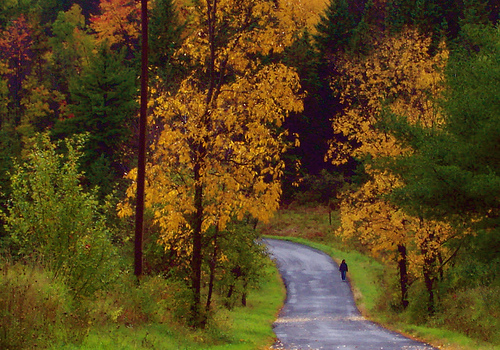 Although yesterday’s incredibly mild weather belies the fact, we have passed the traditional date for the start of winter. It began on the feast of Saint Martin, marking the end of harvest, the drinking of the new wine, and the time for farm labourers to return home. Then the ancient period of forty days preparation for Christmas, observed since the 5th Century, followed. Traditionally, these days coincided with a sense of the natural beginning of winter, and the body’s response in taking recovery time for itself. They were a time of reflection and a simplification of intake, of taking stock and winding down. In today’s world, technology allows us to promote the opposite – longer shopping hours and a speeding up in preparation for the holidays, as Thanksgiving and Christmas advertisments begin to appear. An ancient way of doing things and a modern one. Thus we have a choice.
Nature has its periods of growth and its periods of rest. We are still somewhat in the bright and gentle light of autumn but we know that the darker days of winter are sneaking up on us. Soon all will go quiet and cold, with little seeming to stir. However, as yesterday’s post reminds us about the psychological sphere, underneath much is going on. Nature becomes for us a model in its beckoning us to turn inward and look deeper, to rest, reflect and simplify. Thomas Merton reminded us of the value of “winter, when the plant says nothing.” There is a time for us also to slow down, to say little, to wait and watch.
Our task is to find a balance, to find a middle way, to learn not to overextend ourselves with extra activities and preoccupations, but to simplify our lives more and more. The key to finding a happy balance in modern life is simplicity.
Sogyal Rimpoche.
 Modern society likes to portray everything as being within our grasp, so long as we apply ourselves with determination and ambition. Its unrelenting positive message and preference for distraction does not allow for any complexity or for anything which cannot be explained easily. Success in life comes from building up, getting more, going higher. Prompted by this model, we can sometimes believe that we are fully in charge of our lives, when in fact we have depths and motivations that we are often unaware of. A lot of what is important or which shapes and drives our life is hidden from us, deep in the unconscious. We have wounds that have not healed but still have an influence, fundamental assumptions and powerful unmet needs. Hidden also, is a natural understanding of the direction we should go, as well as potential riches which we are often too timid to take hold of. However, at crucial moments in our lives, growth involves us going down into the depths, paying attention to what has been neglected, hidden or buried. This can happen in the mid to late twenties when we are forced to finally leave the shadow of our parents or in the “mid-life” years when we awaken to these depths as their demands oblige us to redefine our understanding of who we truly are. At these times we are called to a more genuine relationship to our deepest selves and the journey we are on. This can be prompted by a loss or a period of deeper reflection, or by a restlessness or boredom which leads us to see that we are not fully content.
At moments like this we are led to consider the values which will lead us to living a richer, larger life. The way we have lived life’s challenges to date may no longer feel authentic to us. Although it may feel like a crisis or be deeply uncomfortable, we know we are being called to deepen the paradigm which we use to guide us through life. The question of our most real identity will not go away. The untended parts of our lives seek expression. Do we have the courage to go with this new prompting and be rewarded with a deeper, more fulfilling story?
One’s own self is well hidden from one’s own self;
Of all mines of treasure, one’s own is the last to be dug up.
Friedrich Nietzsche

