Unlikely teachers

Sometimes it is through our fears that we come to see where we need to grow.  In our sitting we get an insight into the ongoing commentary that we conduct in our lives and the hidden fears behind it. We plan, daydream, worry and compare and when we notice this we can see the ways in which we prefer to avoid our life as it actually is.  It is also true that it is often in difficult moments that we learn most. Therefore our fears and our difficult moments are often the places where we can grow most.
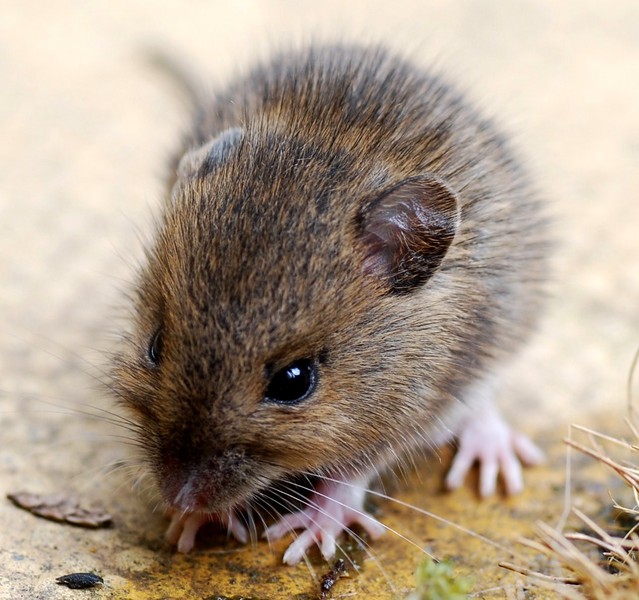
But what we find is that fear is a tough energy to work with and our first reaction is often to move away from it. However, it we manage to create a small gap and to simply acknowledge “there is fear”, we reduce its power over us and it can become a place where we can learn. When we try this,  we notice that it is hard to resist the urge to change the situation when fear arises. But what would it be like if we could just accept it and stay with the fear for just a tiny bit longer than we normally would? Maybe the way it affects our life would begin to change. We may start to heal the conditioned pattterns in our brains which the situation has provoked. We could see a change in the stories which used to run our lives.

What is required of us is that we love the difficult and learn to deal with it. In the difficult are the friendly forces, the hands that work on us.  Right in the difficult we must have our joys, our happiness, our dreams: there against the depth of this background, they stand out, there for the  first time we see how beautiful they are.

Selected Letters of Rainer Maria Rilke (1960)


Poppies

The other day I drove past a beautiful field of poppies. At least it seemed so, but when I stopped to look at it,  it became clear that it was actually a field of wheat, with poppies growing up through it. It reminded me of the parable of the weeds among the wheat, in the gospel of St Matthew. In the story the servants notice that someone has planted weeds in among the wheat, weeds that are almost impossible to distinguish from the real crop. The Master’s instruction is to leave them grow together, until the harvest, when they will be easily divided.

Normally this parable is interpreted in a way that refers to the judgment at the end of time. However, it can also be a wisdom that applies to our life now. There are many areas of our life which we would like to change, which we feel do not contribute to our overall growth. We can be unhappy with aspects of our body,  of our job or our relationship – whichever “weed” we think is ruining our field. Our attention is often drawn to that aspect of our life, and it becomes the focus of our happiness or unhappines.

And we often notice that out desire or our instinct is to fix ourselves, rip up these “weeds”,  remove them immediately from our lives. We find ourselves believing that things would be better if this or that was changed. We notice that it is not easy to accept ourselves, that we almost always want to change ourselves.

However, the parable points us in another direction, and gives two insights. The first says let the weeds and the wheat grow together. This goes against our normal instinct which is to turn away from the things that disturb or scare us, and says let us start by tolerating or accepting them.  The second draws our attention to the fact that we are always imposing conditions: it must be this way or that way, or we can’t be happy. These conditions can lead us to look elsewhere for happiness, and not realize that the all we need is already in our lives right now. Even with the weeds.

When we start meditation, we often think that somehow we are going to improve, which is a subtle aggression against who we really are: its a bit like saying “If I jog, I’ll be a much better person”, “If I had a nicer house, I’d be a better person”. “If I could meditate and calm down, I’d be a better person”. Or we find fault with others. We might say “If it weren’t for my husband, I’d have a perfect marriage”…. But loving kindness towards ourselves doesn’t mean getting rid of anything…Meditation practice isn’t about trying to throw ourselves away and become something better. It’s about befriending who we are already.

Pema Chodron, Comfortable with Uncertaintly

Balance 1: Make time

The question in an age of rapid transit and conference calls and triple shift work days is balance. And the answer is balance too.

But what is balance in a society whose skewing of time has it totally off-balance? What is balance in a culture that has destroyed the night with perpetual light and keeps equipment going twenty-four hours a day because it is more costly to turn machines on and of than it is to pay people to run them at strange and difficult hours? In the first place balance for us is obviously not a mathematical division of the day. For most of us our days simply do not divide that easily. In the second place, balance for us is clearly not equivalence. Because I have done forty hours of work this week does nt mean that I will have forty hours of prayer and leisure. What it does mean, however, is that somehow I must make time for both. I must make time or die inside.

Joan Chittister, Wisdom Distilled from the Daily

Alone

Sometimes it is healthier to be alone. There are times in life when it is right to choose it – to move from the fear of being alone, to the ability to savour it. Mastering this ability is all about living a life in which we can feel whole and happy inside ourselves, and can take care of ourselves emotionally.

This capacity to be alone is one of the most important signs of maturity in emotional development. In Winnicott’s theory of the development of the self, our ability to be alone is formed through the awareness of a stable loving presence. When we are secure in the knowledge of being cared for, we develop the capacity to be by ourselves. If that knowledge was not formed fully when we were little, we can sometimes throw ourselves into relationships and activities in later life because we do not like being with ourselves. Being able to be alone is the best preparation for healthy relationships because it is founded on a security deep inside and we are not using the relationship to run away from our insecurities.

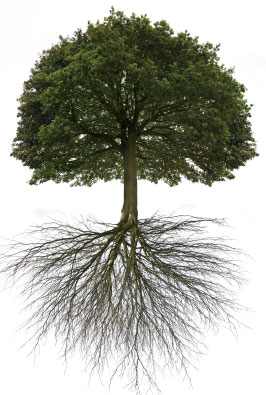
Therefore, the best model for later life is the child playing contently by itself. Maybe this is why sitting practice is so effective; through it we learn to sit with ourselves, allowing our fears and anxiety arise and pass away without giving them undue space. We can develop strong roots, content in ourselves, at home in the silence, not running, planted firmly.

Therapy is completed when a child can play alone
Winnicott

Not everything goes to plan 2: Don’t get alarmed

We have two kinds of fears. One is a fear that whatever is going on is going to go on forever. It’s just not true – nothing goes on forever. The other is the fear that, even if it doesn’t go on forever, the pain of whatever is happening will be so terrible we won’t be able to stand it. There is a gut level of truth about this fear. It would be ridiculous to pretend that in our lives, in these physical bodies, which can hurt very much, and in relationships that can hurt very much, there aren’t some very, very painful times. Even so, I think we underestimate ourselves.  Terrible as times may be, I believe we can stand them.

Because we become frightened as soon as a difficult mind state blows into the mind, we start to fight with it. We try to change it, or we try to get rid of it. The frenzy of the struggle makes the mind state even more unpleasant.

The familiar image is a children’s cartoon character, like Daffy Duck, walking along freely and suddenly stepping into toffee. In a hasty, awkward attempt to extricate himself, he might fall forward and backward and eventually be totally stuck in the toffee. The best solution would be the nonalarmed recognition, ‘This is toffee. I didn’t see it as I stepped into it, but I felt it after I got stuck. It’s just toffee. The whole world is not made out of toffee. What would be a wise thing for me to do now?’

Sylvia Boorstein, It’s Easier Than You Think

Choosing and Unchoosing

This weekend I have been reflecting on two different aspects of choice.

The first comes from my work with people who are wrestling with difficulties in their life. One area which I focus on is helping them with decisions. What is sometimes hard to accept is that when we choose something, it means that we un-choose something else. The root meaning of the word decision comes from the latin decisio meaning to cut or split. Inevitably something is cut out or let go of. What we work towards is that the person makes the choice and is able to stand over that choice. In other words, we are on this planet for a lifetime, and we wish to arrive at our final days with a realization that our choices have not led to regrets.

However there is a second reflection on choice. Sometimes people arrive at a stage in their life having let go of something or made choices for one aspect of their life over another. They have neglected deep aspects of themeselves or not developed all of their potential, out of fear or by following normal conventions. In these cases, the unchosen parts of their lives, if not fully processed, become the problem, by going underground and reappearing later to cause difficulties. What we need to realize is that true fulfillment only comes by integrating all the aspects of our selves into our choices, not by neglecting them.