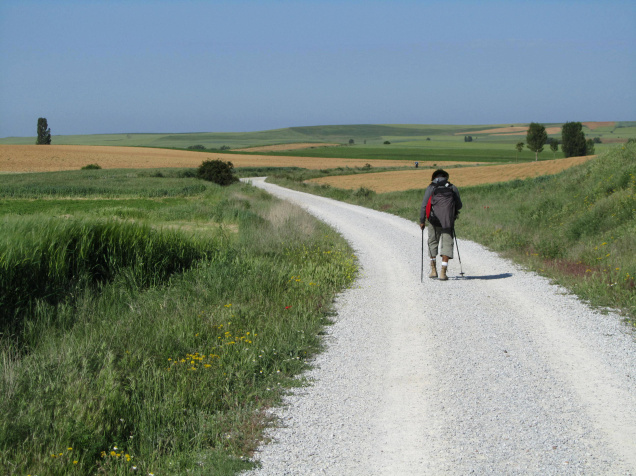
Every step we take, can be filled with peace, joy, and serenity. The question is whether or not we are in touch with it. We need only to be awake, alive in the present moment.
Thich Nhat Hanh
In this part of the world there are not so many English Speaking Retreats available, besides the excellent ones offered all year round at Gaia House in the UK. Therefore, deepening practice through an extended period of silence can be difficult to organize without the extra expense of long travel. For this reason I am delighted to be able to post that James Baraz, the author of the well-known book and programme Awakening Joy, will be leading a Mindfulness Retreat, from June 27 – July 5, in the lovely retreat center at Götzis, Austria, just across the border from Switzerland. The title of the retreat is Being Present for Your Life and the emphasis is on quieting the mind, opening the heart, and developing loving-kindness, clarity and depth of practice. Because the format includes periods of silent sitting and walking meditation along with discussion and mindful movement, this is a great place to start one’s retreat experience, with an excellent teacher. It would be very suitable for all who have completed the MBSR programme and who wish to deepen their practice. More details can be found by clicking on the link : http://www.arbor-seminare.de/being-present-your-life
Here in France, the 4th International Forum on Buddhism and Medicine will be held at the end of May in Lerab Linn near Montpellier, with a range of international speakers coming. Again, details can be found by clicking the link http://2013.buddhismandmedicine.org/en/
Finally, since this is a practical post, the blog had its 200,000 visitor last week, one year after we reached our first 100,000, which took over two and a half years. I want to thank everyone of you who stops by for your readership and comments, and all who follow the Blog for your support, practice and presence on this journey.


 What could be more relaxing than letting go of preferences and worries? What can liberate our hopes and fears other than letting them arise and disassemble themselves naturally in the space of an open mind? Meditation leaves plenty of room for everything: all of our hopes, fears, and anxieties as well as our joys and aspirations. There is no need to control our thoughts, because when we practice we have committed ourselves to letting them be—not judging them as good or bad, spiritual or not spiritual, helpful or harmful. The only thing we need to practice is a quiet place to sit: a room, a park bench, or our own bed. The sutras describe a peaceful mango grove as an ideal place to practice. The Buddha and his disciples practiced meditation in such a place. If you think about it, in the midst of our busy lives, any quiet place to sit can be our modern-day mango grove.
 In mindfulness meditation, we work to create the conditions favorable to the arising of mindfulness, relaxing the body and the mind, focusing the attention carefully but gently on a particular aspect of experience, while producing sufficient energy to remain alert without losing a sense of ease and tranquility. Under such conditions, properly sustained, mindfulness will emerge as if by some grace of the natural world, as if it were a gift of clarity from our deepest psyche to the turbid shallows of our mind. When it does, we gradually learn how to hold ourselves so that it lingers, to relocate or re-enact it when it fades, and to consistently water its roots and weed its soil so that it can blossom into a lovely and sustainable habit of heart and mind.
 S
S Mindfulbalance