 What story are you telling yourself about your life?
As humans we seem to have a deep desire to settle down – in a sense to make a home – where we feel safe, and where we can, in some way, define ourselves. We like to have a narrative of stability, which unfolds sometimes without conscious reflection – an implicit psychological imperative to hold onto a continuity across time and space. Therefore, we unconsciously stretch out a subjective thread across our experiences, telling our story in terms of coherence and unity – seeing certain periods as deviations or moments we got lost – and this continuity gives us an “identity”. Indeed, in Western societies, one of the first questions a person tends to get asked is “What do you do?” – meaning, “What is your job?” – as that allows everyone present to define themselves in terms of something ongoing, and thus gives a kind of identity or something to hold a story together. Continuity is important to us, we do not like any sense of dislocation. We like stories that flow; they seem to give us some sort of comfort.
However, even though we like continuity, I increasingly wonder whether it would not be better to tell our stories as ones of ongoing movement, of continual transitions, and practice being comfortable with that. Last week I was involved in a workshop on Mindfulness as part of a Counselling Conference held in Geneva on the theme of transitions. And as I listened to the talks I was struck by how much of our life is actually changing, all the time, in big and little ways. Life brings innumerable goodbyes, as even on a daily level we can be reminded of little ways that we or others have changed. We are always making little adjustments, little departures. We have to say goodbye to life phases, to certain life patterns, to some memories we have let define us. And because we prefer a narrative of settling down, of attachment to a place or to ideas about ourselves, it is inevitable that departures cause anxiety. But if we come to see that life consists of change, and each change contains a promise of something new, then we can work with our anxieties from a new perspective. Defining ourselves as people who change, and seeing this fluidity as part of our story, allows us rest more easily with the inevitable changes which happen and not see them as a threat to who we are.
The real art of conducting consists in transitions – Gustav Mahler. In our normal narrative we prefer to talk about continuity. This quote prompts us to go even further. Not only can we become comfortable with change, but maybe even find a richness in the in-between moments, the gaps between sounds, those moments in our lives when we feel a little bit on shaky ground or the spaces in our lives when we can feel nothing is happening. Sometimes, we understand things better through their absence or we only appreciate something when we are forced to examine it more closely. Maybe the moments of change which produce anxiety, are the moments which help us to live our lives more consciously, as we reflect on what we have allowed define us. They may be hard, but if we trust that something rich is happening, we may find more strength to go those periods when everything familiar seems far away.
Life is a process of becoming, a combination of states we have to go through. Where people fail is that they wish to elect a state and remain in it. This is a kind of death.
Anais Nin
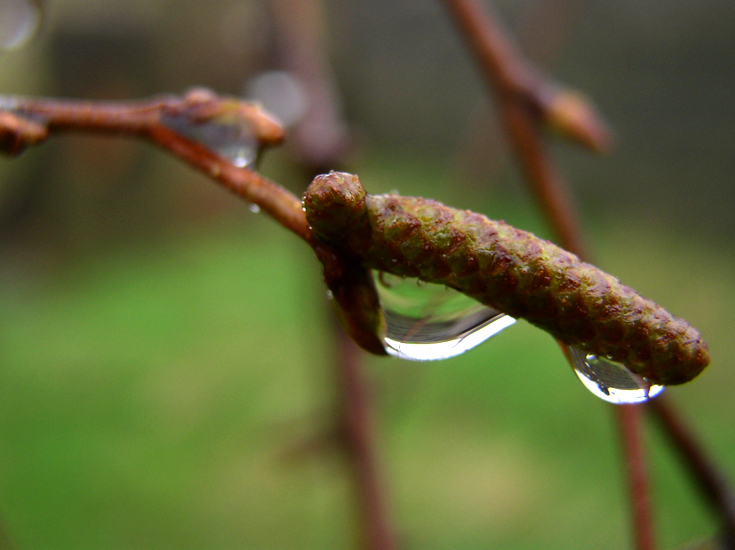 In the Christian calendar, November 2nd is the day set aside for remembering those who have died in the past year, as well as members of our own families who have died. The origins of this are probably found in the basic awareness of the approach of winter and the shortening of the days, which speak to us of change and the impermanence of all things. It also can help us reflect on the other losses and disappointments which have occurred this last year and in our lives. Such moments can provoke fear and anxiety in us. As we are reminded here, one way of working with fear is not to turn away from it, but to turn towards and rest with the sensation it raises in the body.



 Mindfulbalance