
Not letting our fears control us 1: Let go

The river flows rapidly down the mountain, and then all of a sudden it gets blocked with big boulders and a lot of trees. The water can’t go any farther, even though it has tremendous force and forward energy. It just gets blocked there. That’s what happens with us, too; we get blocked like that.
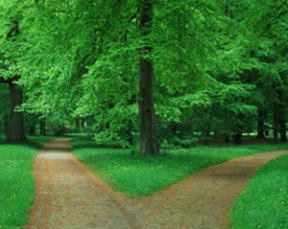

Letting go at the end of the out-breath, letting the thoughts go, is like moving one of those boulders away so that the water can keep flowing, so that our energy and our life force can keep evolving and going forward. We don’t, out of fear of the unknown, have to put up these blocks, these dams, that basically say no to life and to feeling life.

Pema Chodron

Plan to be surprised

Sometimes things don’t go quite like you anticipated them.

Watched a movie the other evening in which the main character has a chance encounter in a bookstore opening up for him a chance of love and a new direction in life. At the end of the movie this line came up: “So instead of asking young people, what do you plan to do with your life? Maybe we should tell them this: plan to be surprised”. It is probably better to cultivate the capacity to be surprised by life rather than think we can control it. Certainly I could never have anticipated the turns in my life which have led me to this day, or encounters which have happened along the way. You just do not what may lie around the corner, and often the things you find yourself hoping for, do not work out.

Despite this happening so often, however, we still find ourselves planning and hoping. It is almost too difficult to not seek things which we perceive at the time to be good for us. It is hard to distinguish the things which lead to genuine happiness or the things we should continue to fight for. And so all of us get disappointed once in a while? We live in an imperfect world and bad things happen. And despite our practice and our life experience, it still can take a lot of energy to cope.

Our practice can help. There are some types of disappointment which come from us leaning too far into the future, imagining a certain development which never really had the potential to emerge. Developing the capacity to live in the present is a counter-balalnce to that. Another thing which can give hope is the understanding that we are just seeing part of the picture. The end of the story is not written yet. We try to stick simply to the feeling of disappointment without adding a fully ended story.

All the major wisdom traditions state that growth can come from working with pain and disappointment. It can help us develop compassion for others, patience with ourselves and, most of all, wisdom about the fragility, unpredictability and mystery of this life. Keeping an ability to be surprised leads to openness to this mystery and lets us receive growth from places where we probably would not go freely.

If you want to make God laugh, tell him about your plans.

Woody Allen

Staying fluid 1: The weather changes, so does life

Life’s energy is never static. It is as shifting, fluid, changing as the weather. How we relate to this dynamic flow of energy is important. We can learn to relax with it, recognizing it as our basic ground, as a natural part of life; Or the feeling of uncertainty, of nothing to hold on to, can cause us to panic, and instantly a chain reaction begins.

We panic, we get hooked, and then our habits take over and we think and act in a very predictable way. The source of our fear is the unfilfillable longing for a lasting certainty and security, for something solid to hold on to. Unconsciously we expect that if we could just get a better job, a better partner, a better something, then our lives would run smoothly. We get caught up in a fearful, narrow holding pattern of avoiding any difficulty and continually seeking comfort.

Pema Chodron, Taking the Leap

The Narrowness of Fear

In many ways it seems that humans change behaviours more easily in response to fear than in response to more positive emotions. We quickly get defensive, shut down and move away in response to real or perceived threats. And even some of the “positive” resolutions which are formed in these days are fear-driven, motivated by negative views of ourselves or comparisons with others or more desired states. It would seem that we have evolved to use fear and anxiety more regularly than more positive emotions, simply because they may be more immediately necessary for survival.

This could be partly because positive emotions like joy, love, calmness and gratitude do not immediately impact as forcibly as fear or anger. They do not register as strongly in the body, or push to to act in the same ways. All emotions can lead to changes in what has been called “momentary thought-action repertoires” – the range of potential actions the body and mind are prepared to take. However, the negative emotions have a specific function of promoting survival. This means that when we consistently practice negative emotions, such as fear, our thought-action activity significantly narrows, focusing on avoiding and defense. Since fear is somewhat “easier” to follow, some psychologists argue that we need to learn skills to keep fear in check and develop positive emotions.

Positive emotions such as joy, gratitude, and contentment, seem to broaden a person’s thoughts and actions, and help us approach what we need in order to grow fully. These emotions broaden, build and open people’s mindsets, enabling more creative and flexible thinking. Thus they expand our thinking and behaving capacities. These positive emotions also seems to effect our overall health and even our recovery from illness. Research has found that contentment and joy speed the recovery of a patient after illnesses and after the onset of certain diseases. Using positive emotions seems to be at the heart of what allows people to bounce back from hardship and become stronger than before. Not only do they effect the individual in the present but they seem to lead to better mood and functioning in the future. Again, studies show that people who increase their positive emotions develop better collaborations with others, their resilience and optimism strengthens, and they become more content with life, compared with people who do nothing to experience them more frequently.

Cultivating positive emotions therefore would seem to be a necessary skill, if only to loosen the effect of negative emotions which can dominate a person’s body and mind. How can we do this? It seems that the key is to start in our actual current circumstances. Developing the ability to be truly open to what actually is happening in our lives and celebrating the good things found there, seems to be crucial. Not surprisingly meditation has been found to boost positive emotions, as has walking or running in nature, dancing, or reading a new book.

Simple changes in self-talk can also help. Self-limiting talk, – such as “I can’t handle this!” or “This is impossible!” – is particularly damaging because it increases the stress in a particular situation and stops the person from looking for solutions. It is better to turn such thoughts into questions. Thinking “How can I handle this?” or “How is this possible?” already opens up more space and allows the imagination seek new possibilities.

Stormy Weather

One of the more interesting things in my mindfulness practice is dealing with what could be called difficult emotions.

Being Irish it is easy to compare that with the changing weather. On the Atlantic coast nothing stays the same for long, and four seasons in the one day, even in summer, is not unusual.

These last few days I have been made aware of that in different ways, with the sad but common Geneva news of someone moving away, with questions on loyalty and closeness moving to distance.

These can give rise to strong emotions. and when that happens I try to simply allow them to take their own course in my body and in my mind. This afternoon, however, that was not so easy. I remind myself that mindfulness is a non-judging, receptive awareness, a respectful awareness. Unfortunately, sometimes I do not attend in this way. Sometimes the emotions are too strong to immediately allow it. I prefer to judge myself and others with a stream of criticism and commentary.

When that happens I try the practice which is presented under the acronym RAIN, which stands for Recognition, Acceptance, Investigation, and Non-Indentification.

Recognizing means pausing and acknowledging the reality of my experience, here and now. This meant today a heaviness in my chest, a certain tightness in the breath.

Acceptance asks me to relax and open to the facts before me. Often I prefer that things were not as they present themselves to me. Acceptance is realizing what Buddhist teacher Ajahn Sumedho said over and over again, “This moment is like this”. So I try to say, simply, in this moment I am feeling a tightness, numbness, heaviness and that is this moment as it presents itself. I try to say, may I accept this moment fully.

Investigation means looking deeply. Mindfulness teaches that whenever i feel stuck stuck, it is partly because I have not looked deeply enough into the nature of the experience. WHy is this affecting me in this way, what stories am I telling myself here, what am I adding on?

Finally, non-identification means I stop taking the experience as me or mine, not seeing it as saying everything about me, not giving my whole story over to it, not being completely bound by the fears that it brings up. Despite the loss I will still love, I will still look to my plans for the future. Non identifying means not feeding the energy, but creating space.

As a former elderly Irish Spiritual Director was fond of saying to me, When you are on a bicycle and it starts raining, you sometimes just put your head down and continue pedalling. I would add now, without wasting my energy complaining about the weather