
It is not up to us to believe in God,
but only to not grant our love to false gods.
Simone Weil
It is not up to us to believe in God,
but only to not grant our love to false gods.
Simone Weil
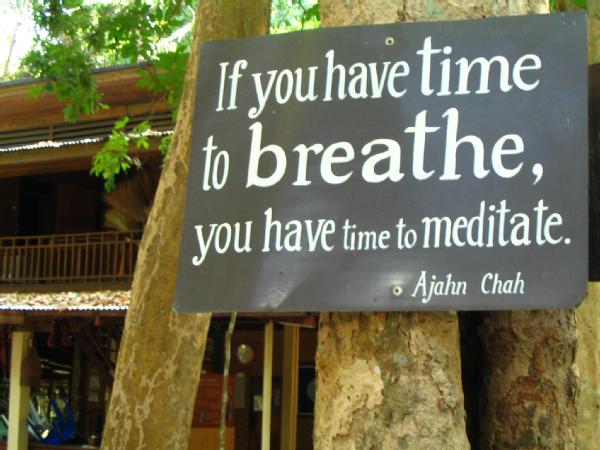
When we get rushed, the mind will formulate all kinds of reasons why we cannot do the things which are good for us – take time out, meditate, exercise, visit friends. This is because it realizes we are under pressure, and mistakenly opts for two contrasting strategies to deal with this. Firstly, it convinces us that we need to conserve energy, that we do not have time to take things easy or socialize. Secondly, it focuses all its energy on the problem, normally by deciding that we should think about it a lot. Both strategies will actually exacerbate the problem in the long run, but the mind prioritizes how we use our time by being tricked by the very pressure it is trying to relieve.
Therefore until our practice becomes firmly established we have to remind ourselves to choose to meditate when we get stressed. This is why a fixed routine and a conscious intention are useful. As one meditation teacher said, meditation actually begins the night before when we form the intention in our mind to set aside the time the next morning. A fixed time each day frees us from associating the practice with what sort of day yesterday was and what may happen today, and allows us take a proactive stance towards our overall wellbeing in the face of constantly changing mind states. It help us embody the constancy we would like to feel in the face of our changing moods.

For each and every one of us, the most important thing is our state of mind. That which feels joy or sorrow, pleasure or pain, is just our mind. But our mind doesn’t have to simply react to things around us. It can be steered in different directions. You can direct yourself toward what is good, and by doing so, you get accustomed to positive thoughts. If you direct yourself toward being negative, that also can become a habit. If you allow yourself to become apathetic and not care much, you become insensitive and dull. The word spiritual refers to directing or steering our mind toward something good, something noble. Simply that. One of the most important factors in accomplishing that goal is to know how to let ourselves be completely at ease.
Chokyi Nyima Rinpoche, Recognizing Our Natural Mind State
 More and more, the desire grows in me simply to walk around, greet people, enter their homes, sit on their doorsteps, play ball, throw water, and be known as someone who wants to live with them. It is a privilege to have the time to practice this simple ministry of presence. Still, it is not as simple as it seems. My own desire to be useful, to do something significant, or to be part of some impressive project is so strong that soon my time is taken up by meetings, conferences, study groups, and workshops that prevent me from walking the streets. It is difficult not to have plans, not to organize people around an urgent cause, and not to feel that you are working directly for social progress. But I wonder more and more if the first thing shouldn’t be to know people by name, to eat and drink with them, to listen to their stories and tell your own, and to let them know with words, handshakes, and hugs that you do not simply like them, but truly love them.
Henri Nouwen
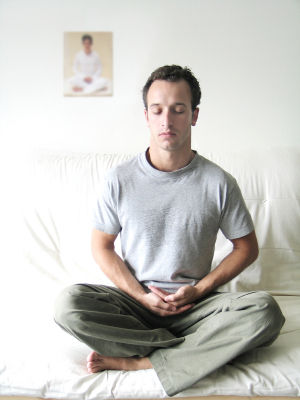
Breath is the bridge which connects life to consciousness,
which unites your body to your thoughts.
Thich Nhat Hahn
 As well as books that apply mindfulness to problems or aspects of our life, it is good to strengthen our practice by reading books that focus on meditation in itself. Good ones are not easy to find, but this one – Turning the Mind into an Ally – written by Sakyong Mipham Rinpoche in 2004 is one of the best that there is. I have returned to it on numerous occasions over the years, because it is a serious, but accessible work that looks at meditation as an extended exercise in mind training and gives the tools to do this.
The book “translates” some traditional teachings from Tibetan Buddhism into a language that is easy to understand in the West. It gets across the heart of that meditation practice without the cultural baggage which can be so off-putting in similar books. The author is fond of using imagery to convey his point, comparing the mind to a wild horse, which we have to get to know and tame:
The bewildered mind is like a wild horse. It runs away when we try to find it, shies when we try to approach it. If we find a way to ride it, it takes off with the bit in its teeth and finally throws us right into the mud. We think that the only way to steady it is to give it what it wants. We spend so much of our energy trying to satisfy and entertain this wild horse of a mind.
The author goes on to outline – in very clear language – the basics of mindfulness and sitting meditation to tame this wild horse. It is here that he is most successful, gently going through the steps from the first, when we place the mind on the breath:
Placing our mind on the breath is the first thing we do in meditation. In the moment of placing our mind, it’s like we’re mounting a horse: we put our foot in the stirrup and pull ourselves up to the saddle. It’s a matter of taking our seat properly. This moment of placement starts when we extract our mind from its engagement with events, problems, thoughts and emotions. We take that wild and busy mind and place it on the breath. Even though we’re placing our consciousness, which isn’t physical, placement feels very physical. In order for placement to be successful, we have to formally acknowledge that we’re letting go of concepts, thoughts and emotions: “Now I’m placing my mind upon the breath.”
This is an excellent hands-on manual for those who wish to deepen their understanding and practice of meditation as a way of working with the mind. It is an encouragement to practice and as such is a valuable addition to any library.

