We dont know

Letting there be room for not knowing is the most important thing of all. When there’s a big disappointment, we don’t know if that’s the end of the story. It may just be the beginning of a great adventure. Life is like that.

We don’t know anything. We call something bad; we call it good.

But really we just don’t know.

Pema Chodron

Sunday Quote: Inner resources

No matter how dark

The hand always knows the way to the mouth

Nigerian Proverb

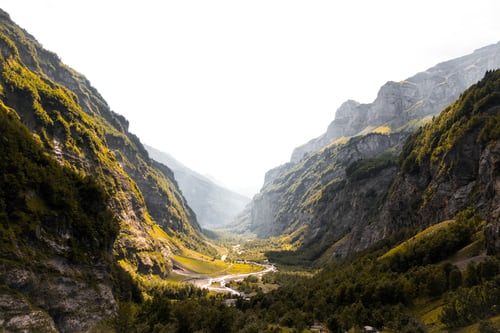
Up hills and down valleys

Jung [said]..: “A psychoneurosis must be understood, ultimately, as the suffering of a soul which has not yet discovered its meaning.” Notice that he does not rule out suffering, for suffering, the medieval adage had it, “is the fastest horse to completion.”

The clear implication of Jung’s position is that working through one’s way to meaning – that is, to an enlarged view of ones dilemma and perhaps to an enlarged view of one’s own summons – can lead one through the valley of the shadow.

James Hollis, Living an Examined Life: Wisdom For the Second Half of the Journey.

(The interesting medieval idea he refers to is from Meister Eckhart: The quickest horse that carries you to perfection is suffering)

Guidebook

Three Guides –

No Blame.
Be Kind.
Love Everything.

Terrance Keenan, artist, poet, Zen Buddhist Monk, formerly head monk at the Zen Center of Syracuse.

How to find where we are going

Every man has to learn the points of compass again as often as he awakes, whether from sleep or any abstraction.

Not till we are lost, in other words not till we have lost the world, do we begin to find ourselves, and realize where we are and the infinite extent of our relations.

Thoreau, Walden

Stillness in the wind

I did a retreat last weekend with Ajahn Amaro who emphasized gaining insight into the ever-present dynamic of “I, me and mine”, and developing a mind which is capable of observing these labels

Enlightenment, liberation, depends on the recognition of the radical separateness of awareness – “the one who knows” – and the world of the five khandhas (Sanskrit: skandhas)…The key is training the heart to rest in the various dimensions of knowing, and not becoming entangled in the khandhas.

Here are some words from Ajahn Chah that encompass [these] themes:

“This mind of ours is already unmoving and peaceful… really peaceful! Just like a leaf which is still as long as no wind blows. If a wind comes up the leaf flutters. The fluttering is due to the wind – the “fluttering” is due to those sense impressions; the mind follows them. If it doesn’t follow them, it doesn’t “flutter.” If we know fully the true nature of sense impressions we will be unmoved.

Our practice is simply to see the Original Mind. We must train the mind to know those sense impressions, and not get lost in them; to make it peaceful.

Ajahn Amaro, Like Oil and Water

[The 5 khandhas, or in Sanskrit,  skandhas, are form, feeling-tone, perception, thoughts and emotions, and consciousness.]