Part of the human family

How you respond to tragedy and suffering is one true measure of your strength. You need to see those moments as moments of growth. You need to look upon them as gifts to help you reclaim what is important in your life. The question you must ask yourself is not if you will heal, but how.  Grief and pain have their own duration, and when they begin to pass, you must take care to guide the shape of the new being you are to become.  So you should not fear tragedy and suffering.  Like love, they make you more a part of the human family.  From them can come your greatest creativity.  They are the fire that burns you pure.  

Kent Nerburn

Flowing with the river

Life is always changing; we are always changing. We live in a river of change, and a river of change lives within us. Every day we’re given a choice: We can relax and float in the direction that the water flows, or we can swim hard against it. If we go with the river, the energy of a thousand mountain streams will be with us, filling our hearts with courage and enthusiasm. If we resist the river, we will feel rankled and tired as we tread water, stuck in the same place. “I’ve known rivers,” writes Langston Hughes. “I’ve known rivers ancient as the world and older than the flow of human blood in human veins. My soul has grown deep like the rivers.” 

Am I going to flow with my river nature today, or am I going to swim against it? This is what I ask myself when I get out of bed each morning. And when I go to sleep, I apologize to the river gods for any hard strokes I made against the current, and for splashing about like a drowning person. I pray that tomorrow I may once again know the pleasure of following my soul downstream, because, I’ve known rivers — and once you’ve known rivers — once you’ve stretched out on the dark waters, trusting the river gods, going in the direction of life even if it is headfirst toward the rapids, you want to taste that water again; you want your soul to grow deep like the rivers again.

Elizabeth Lesser,  Broken Open

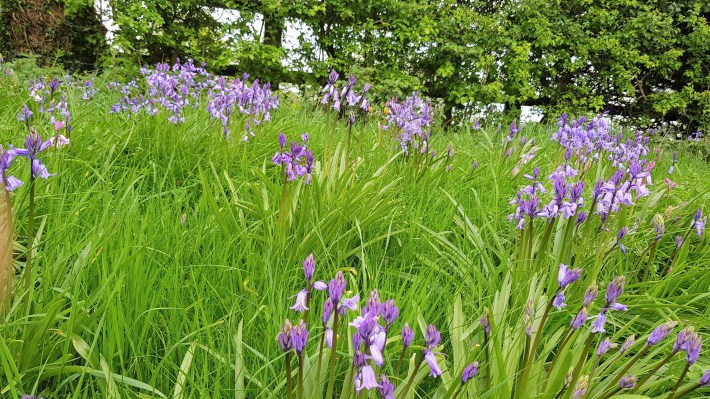
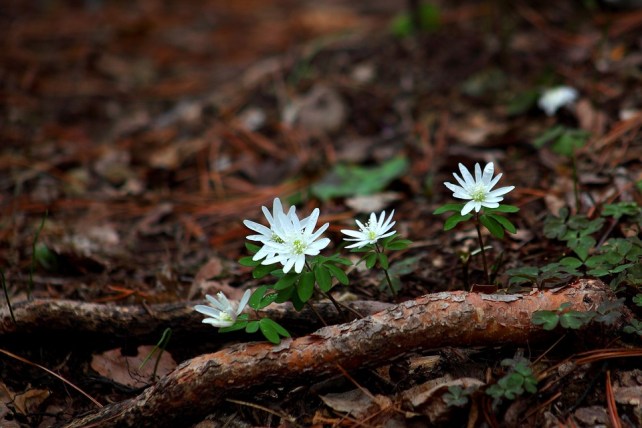
As wildflowers do

Over and over we break
open, we break and
we break and we open.
For a while, we try to fix
the vessel — as if
to be broken is bad.
As if with glue and tape
and a steady hand we
might bring things to perfect
again. As if they were ever
perfect. As if to be broken is not
also perfect. As if to be open
is not the path toward joy.

The vase that’s been shattered
and cracked will never
hold water. Eventually
it will leak. And at some
point, perhaps, we decide
that we’re done with picking
our flowers anyway, and no
longer need a place to contain them
We watch them grow just
as wildflowers do — unfenced,
unmanaged, blossoming only
when they’re ready — and mygod,
how beautiful they are amidst
the mounting pile of shards.

Rosemery Wahtola Trommer, American Poet, The Way it is


Paradox and ambiguity

As human beings, not only do we seek resolution, we feel that we deserve resolution. However, not only do we not deserve resolution, we suffer from resolution. We deserve something better than resolution: we deserve our birthright …an open state of mind that can relax with paradox and ambiguity

Pema Chodron, Comfortable with Uncertainty

Ever Changing

I do dimly perceive that whilst everything around me is ever changing, ever dying,  there is underlying all that change a living power that is changeless, that holds all together, that creates, dissolves and recreates...for I can see that in the midst of death, life persists, in the midst of untruth,  truth persists, in the midst of darkness,  light persists.

Mohatma Gandhi, Spiritual Message (London, Kingsley Hall, 20 October 1931)

Sunday Quote: All of experience

The “10, 000 things” is a shorthand way of talking about all the experiences –  good and bad – which arise and pass away in our lifetime, continually in movement, with ebbs and flows.  Eastern wisdom considered that they  contain the right mix of experiences for our growth.

When the 10,000 things become one,
then we return to the center,
where we have always been.

Chuang-Tse, Chinese philosopher, 4th century BC