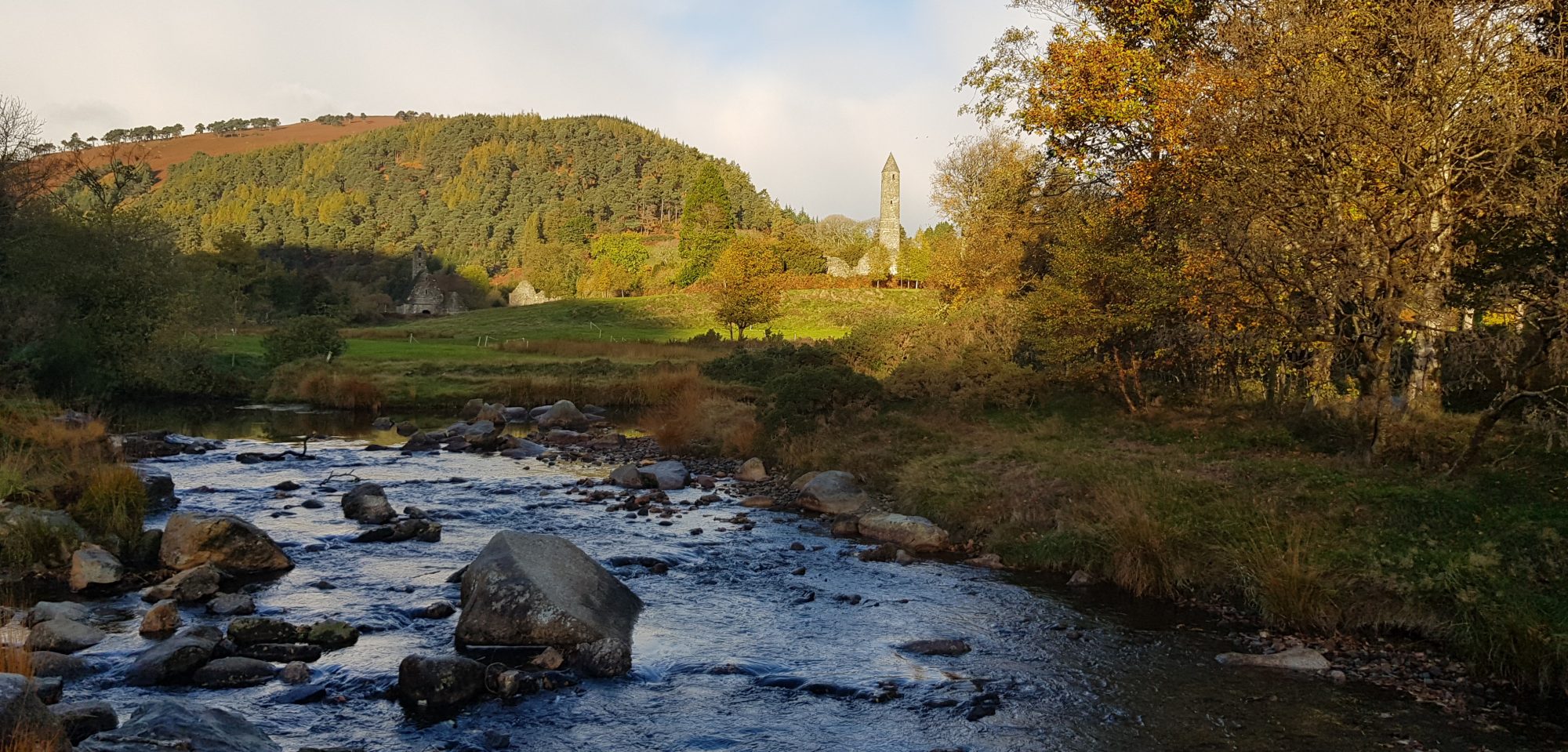
Process and flow

The first day of Spring in the older Celtic tradition

By gently letting go of everything – not through force, not by slaying it, but simply seeing all the content as a passing show, as process and flow – we become the whole of our experience and open to our natural understanding.

If fear or wanting arises, it is seen within the spaciousness that surrounds it. We don’t get lost by becoming it, but simply see it as just another moment in the mind flow, another something which arose uninvited and will pass away in the same manner.

Stephen Levine, A Gradual Awakening
A soft gaze

Most of our suffering comes from having a fixed view of how life, or this day, should go…

For things to reveal themselves to us

we need to be ready to abandon our views about them

Thich Nhat Hahn

Resting In How Things Are

Do not rule over imaginary kingdoms of endlessly proliferating possibilities.

Geshe Shawopa 1070–1141(?), quoted in Patrul Rinpoche, The Words of my Perfect teacher

Sunday Quote: Whats not wrong

We often ask, ‘what’s wrong?’  Doing so, we invite painful seeds of sorrow to come up and manifest. We feel suffering, anger, and depression, and produce more such seeds. We would be much happier if we tried to stay in touch with the healthy, joyful seeds inside of us and around us. We should learn to ask, ‘what’s not wrong?’ and be in touch with that.

One of my favourite thoughts from Thich Nhat Hahn, who died yesterday, aged 95

Nothing to Seek

Birth, old age, Sickness, and death:

From the beginning this is the way things have always been.

Any thought of release from this life will wrap you only more tightly in its snares.

The sleeping person looks for a Buddha, The troubled person turns toward meditation.

But the one who knows that there’s nothing to seek, knows too that there’s nothing to say.

She keeps her mouth closed.

Ly Ngoc Kieu, 1041 – 1113, Vietnamese zen Buddhist nun.

Translation Thich Nhat Hahn and Jane Hirshfield

Take the time

It takes a long time to sift through the more superficial voices of your own gift in order to enter into the deep signature and tonality of your Otherness. When you speak from that deep, inner voice, you are really speaking from the unique tabernacle of your own presence. There is a voice within you that no one, not even you, has ever heard. Give yourself the opportunity of silence and begin to develop your listening in order to hear, deep within yourself, the music of your own spirit.

John O’Donohue, Anam Cara: Spiritual Wisdom from the Celtic World