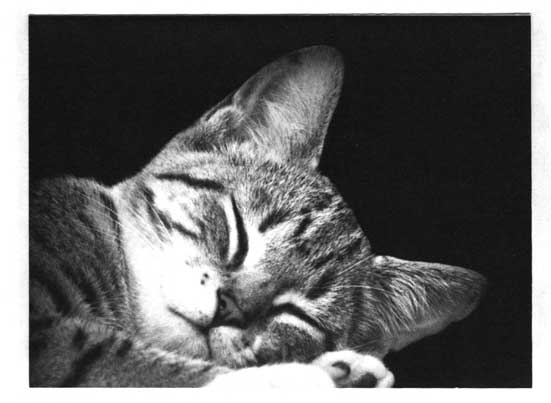
Imaginary importance

Humility is the greatest freedom. As long as you have to defend the imaginary self that you think is important, you lose your peace of heart. As soon as you compare that shadow with the shadows of other people, you lose all joy, because you have begun to trade in unrealities and there is no joy in things that do not exist.

Thomas Merton, New Seeds of Contemplation

Sunday Quote: Life

Living never wore one out so much as the effort not to live.

Anais Nin

Patience

Do you have the patience to wait
till your mud settles and the water is clear?
Can you remain unmoving
till the right action arises by itself?

Lao Tzu, Tao Te Ching

Non-Involvement

Non-involvement is about settling back into the present moment, relaxing into the way things are right now; it’s about letting go of the ‘shoulds’ and ‘shouldn’ts,’ the past, the future and the imaginary, and meeting things as they arise in the present…. Letting go is also about giving things time to shift and settle, and being patient with oneself. It’s about not comparing yourself with others, and letting go of self-images. Letting go makes us more flexible and broad-minded. 

Ajahn Sucitto, Meditation, A Way to Awakening

Endings and beginnings

In the Christian liturgical calendar tomorrow is the last day of the year, with a new year starting on Sunday in Advent. All wisdom and religious traditions give guidance on how to work with the passing of time, how to celebrate fully and be complete in each moment which we have. This text is from the Stoic philosophical viewpoint: 

Let us prepare our minds as if we had come to the very end of life. Let us postpone nothing. Let us balance life’s books every day..The person that puts the finishing touches on their life each day is never short of time.

Seneca,  Moral Letters, 101, 7b – 8a


How do I see the world

What way do I behold the world?” Do we see the world through fearful eyes, where everything and every person is perceived as a threat? Do we see the world through greedy eyes, where everything can be possessed at a certain price? Do we see the world through judgmental eyes, where everything and every person is rigidly defined and limited by our prejudices and preconceptions? Do we see the world through resentful eyes, elevating our own entitlements while condemning others for theirs? Do we see the world through indifferent eyes, where our capacity for compassion is trumped by cynicism and despair? Do we see the world through inferior eyes, where everyone is perceived as superior to ourselves? Or can we remove the lens of fear, the lens of greed, the lens of prejudgment, the lens of resentment, the lens of indifference, the lens of inferiority — and then begin to see the world through eyes of love? Can we ever accept St. Augustine’s profound but simple advice: “Love and do what you will.”

John O’Donohoe, Anam Chara