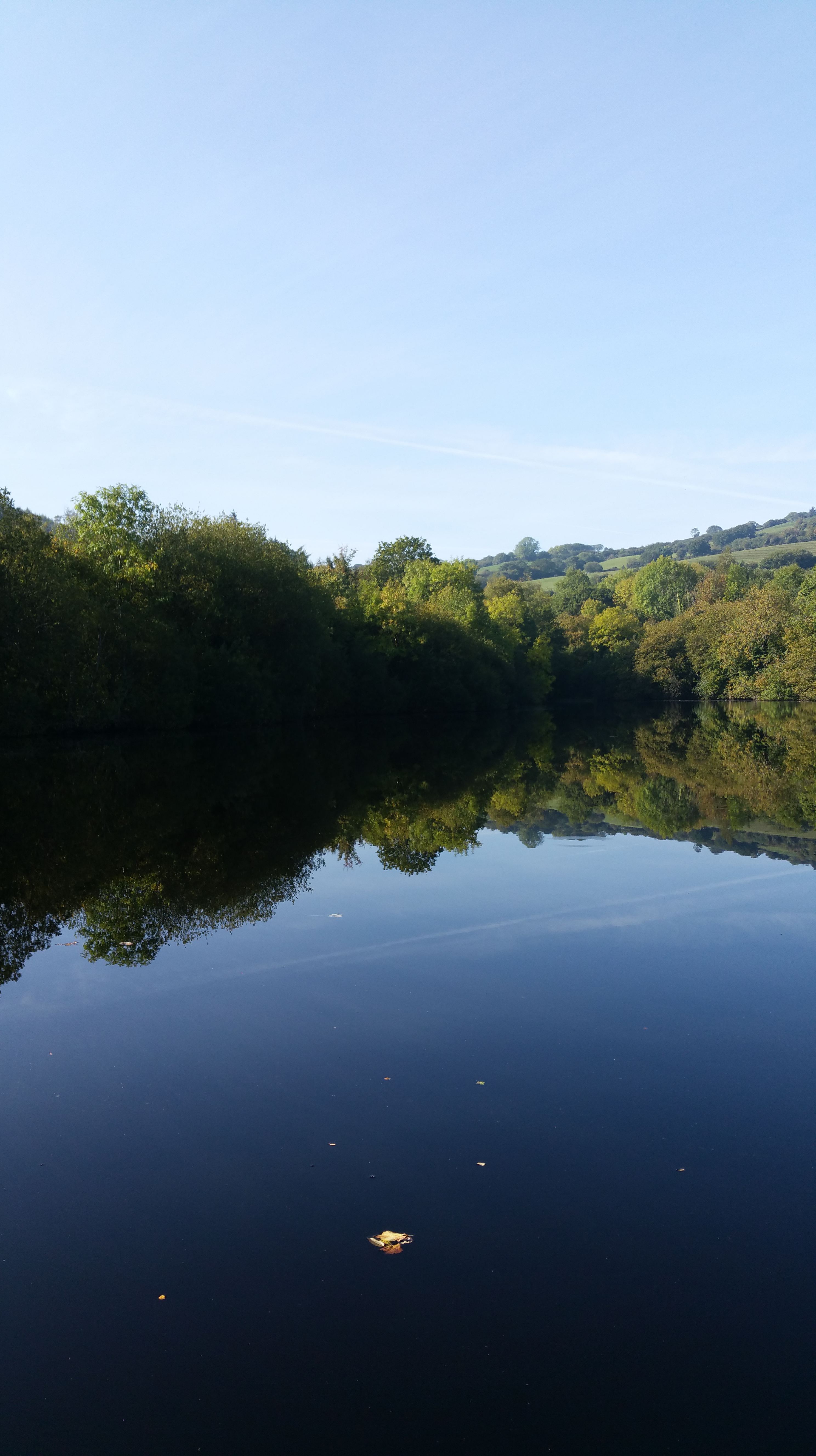
Suchness

20150930_105332

When I first came across this word ‘Suchness’ in Zen literature, I thought, ‘What the heck is Suchness? …Can’t figure that one out.’ If we hold perceptions to be reality, then in order for our world to be real, we have to perceive it as something. It can’t be just what it is. We have to interpret it, or give it a name, or describe it in some way. We perceive the world through words, through ideas. This obsession with cameras and selfies now, is just wanting to capture things, capture moments on film, petrify them in time, and make them fixed because everything is moving and changing. But Suchness, or Tathata…. is right now. This is the way it is. But sometimes, when I say, ‘This is the way it is,’ somebody will say, ‘You mean this is the way it is forever?’ No! RIGHT NOW — this is the way it is. The only way it can be is the way it is right now! It’s changing, but at this moment, the Suchness of this moment, is just this way. The thinking mind has to stop. Otherwise you will want to ask, ‘Where is it? What is he saying?’ You just have to stop your mind and listen, or watch. Then you will be relating to Suchness, the Suchness of the moment, the as-is-ness.

Ajahn Sumedho, Tathata or suchness

with thanks to Jackie for the prompt.

What we learn from the leaves

File:Maple leaf autumn.jpg

A person  fundamentally does not dwell anywhere. The white clouds seem fascinated by the green mountain’s foundation. The bright moon loves being carried along with the flowing water. But the clouds part and the mountains appear, and the moon sets and the water is cool. Each bit of autumn contains vast interpenetration without bounds.

Hongzhi, 1091-1157, Chinese Chan (Zen) monk

photo: lite

Thinking we make the moves

File:Chess-king.JPG

Maybe something to remember when something bothers us today, and we take it very seriously….

What is the difference
Between your experience of life
And that of a saint?

The saint knows that the spiritual path
Is a sublime chess game with God

And that the Beloved has just made such a Fantastic Move

that the saint is now continually
Tripping over Joy
And bursting out in Laughter
And saying, “I Surrender!”

Whereas, my dear,
I’m afraid you still think

You have a thousand serious moves.

 Hafiz, Tripping Over Joy

Sunday Quote: Slow down

File:Glendasan River, Wicklow Mountains.jpg

All this hurrying soon will be over.

Only when we slow down do we touch the holy. 

Rainer Maria Rilke, In Praise of Mortality.

photo of Glendasan river in Wicklow by Joe King

A motto for the new month

20150919_085205(1)

Awareness is your refuge:

Awareness of the changingness of feelings, of moods, of material change and emotional change:

Stay with that, because it’s a refuge that is indestructible.

It’s not something that changes. It’s a refuge you can trust in.

This refuge is not something that you create. It’s not a creation. It’s not an ideal.

It’s very practical and very simple, but easily overlooked or not noticed.

When you’re mindful, you’re beginning to notice: 

It’s like this

Ajahn Sumedho, The Sound of Silence

Getting a glimpse in a moment

File:Migrating Sandhills departing Barr Lake (1579868329).jpg

When we are alone on a starlit night, when by chance we see the migrating birds in autumn descending on a grove of junipers to rest and eat; when we see children in a moment when they are really children, when we know love in our own hearts; or when, like the Japanese poet, Basho, we hear an old frog land in a quiet pond with a solitary splash – at such times the awakening, the turning inside out of all values, the “newness,” the emptiness and the purity of vision that make themselves evident, all these provide a glimpse of the cosmic dance.

Thomas Merton, New Seeds of Contemplation

A famous Zen poem reads: “The old Pond. A frog jumps in. Plop”  This is a wonderful description of bare attention. The poet, Basho, goes directly to the essence of his experience: the pond, frog, plop. We can say that in meditation we are developing “plop mind”. We are stripping away everything that is extraneous to our immediate experience and simply being present with what is happening. This is bare attention: direct, essential, non-interfering.

Joseph Goldstein, Bare Attention

photo Louis