Enough space to hold

File:A blue sky.JPG

We do not meditate in order to be comfortable. In other words, we don’t meditate in order to always, all the time, feel good. I imagine shockwaves are passing through you as you read this, because so many people come to meditation to simply “feel better.” However, the purpose of meditation is not to feel bad, you’ll be glad to know. Rather, meditation gives us the opportunity to have an open, compassionate attentiveness to whatever is going on. The meditative space is like the big sky — spacious, vast enough to accommodate anything that arises.

Pema Chodron, 5 Reasons to Meditate

photo Thamizhpparithi maari


Sunday Quote: Grandeur

File:Mount Kenya.jpg

If there is a sin against life, it consists perhaps not so much in despairing of life

as in hoping for another life

and in eluding the implacable grandeur of this life.

Albert Camus

photo Håkon Dahlmo

Whole even if not perfect

File:Contemporary wabi-sabi tea bowl.jpg

[Thomas] Merton taught me the importance of looking at life not merely in terms of either-or,  but also in terms of both-and. Paradoxical thinking is key to creativity, which comes from the capacity to entertain apparently contradictory ideas in a way that stretches the mind and opens the heart to something new. Paradox is also a way of being that’s key to wholeness, which does not mean perfection: it means embracing brokenness as an integral part of life…..To be whole I have to be able to say I am both shadow and light.

Parker Palmer, A Friendship, A Love, A Rescue

photo wabi-sabi tea bowl by ottmarliebert

As they are

File:Michel Comte exhibition.jpg

The beginning of love is the will to let those we love be perfectly themselves, the resolution not to twist them to fit our own image. If in loving them we do not love what they are, but only their potential likeness to ourselves, then we do not love them: we only love the reflection of ourselves we find in them.

Thomas Merton, No Man is an Island

photo paul stocker

Trying to simply observe

File:Mirror.jpg

The mind is like a mirror that reflects everything. Like a mirror, the mind is not damaged by anything it is reflecting. A mirror can reflect the ugliest, nastiest thing in the whole world and still remains untarnished, even though the reflection is terrible. The mind is like that mirror: the reflections can be very impure or ugly or vicious, or they can be very beautiful. If we try to punish the mirror, if we destroy or crack the mirror, we go crazy – then we are really stuck. But, if we are willing to, we can recognize that the reflection in the mirror simply is as it is. This recognition is a skilful way of dealing with thoughts and feelings that may be very unpleasant for us.

Ajahn Sumedho

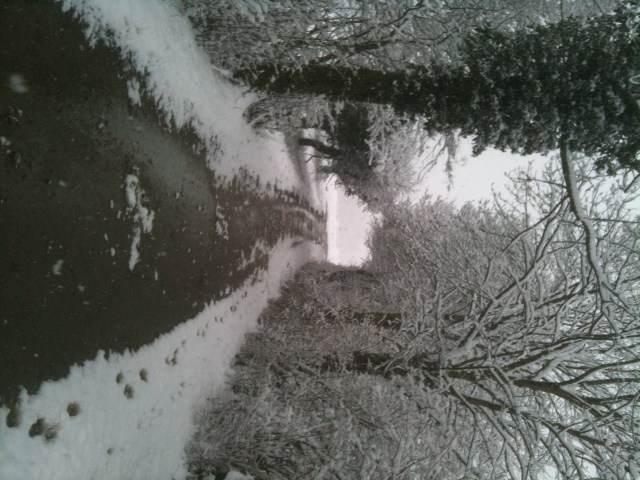
…including weather within and without

snow Feb 1 2012

We had a wild, wet and windy Sunday, and snow early this morning,  and we see the reports of  very cold weather in the US and in Eastern Europe. Always a useful way to practice – we see that we like to label our experience (“bad weather today”) and it also prompts us to reflect on how we are working with the changing conditions in our inner lives and in each day.  as this quote from Toni Parker reminds us:

We call it “weather” but what is it really? Wind. Rain. Clouds slowly parting. Not the words spoken about it, but just this darkening, blowing, pounding, wetting, and then lightening up, blue sky appearing amidst darkness, and sunshine sparkling on wet grasses and leaves. In a little while there will be frost, snow and ice-covers. And then warming again, melting, oozing water everywhere. On an early spring day the dirt road sparkles with streams of wet silver. So — what is “weather” other than this incessant change of earthly conditions and all the human thoughts, feelings, and undertakings influenced by it: Like and dislike. Depression and elation.  Creation and destruction? No entity “weather” to be found except in thinking and talking about it.

Now — is there such an entity as “me,” “I,” “myself?” Or is it just like the “weather” — an ongoing, ever-changing stream of ideas, images, memories, projections, likes and dislikes, creations and destructions, which thought keeps calling “I,” “me,” “Toni,” and thereby solidifying what is evanescent? What am I really, truly, and what do I think and believe I am? Are we interested in exploring this amazing affair of “myself” from moment to moment?

Toni Parker, The Wonder of Presence and the Way of Meditative Inquiry