When such as I cast out remorse, so great a sweetness flows into the breast
We are blest by everything, Everything we look upon is blessed.
W.B. Yeats, A Dialogue Of Self And Soul
When such as I cast out remorse, so great a sweetness flows into the breast
We are blest by everything, Everything we look upon is blessed.
W.B. Yeats, A Dialogue Of Self And Soul
There are two types of meditation, namely, samatha and vipassana. Samatha is the development of concentration. Vipassana is the development of wisdom. Of these two, samatha is the important foundation of vipassana. Therefore, the Buddha said: ‘ you should cultivate concentration….. if you have enough concentration, you can understand phenomena as they really are.’ So beginners are encouraged to first practise samatha to develop deep and powerful concentration. Then they can practise vipassana and see phenomena in their real essence.
Pa-Auk Sayadaw
People can think that mindfulness meditation is complicated, but it’s actually very simple to describe. The great thing is that anyone can start by practicing for just 5 minutes a day. Even such a short break from the normal activity of the mind can make a big difference. Paying attention, observing, on purpose, without judgment, to the gentle rhythm of our breathing, is a good place to start to develop this natural skill.
Observation,
giving bare attention to whatever you happen to be experiencing at a particular moment,
is meditation.
Yongey Mingyur Rinpoche
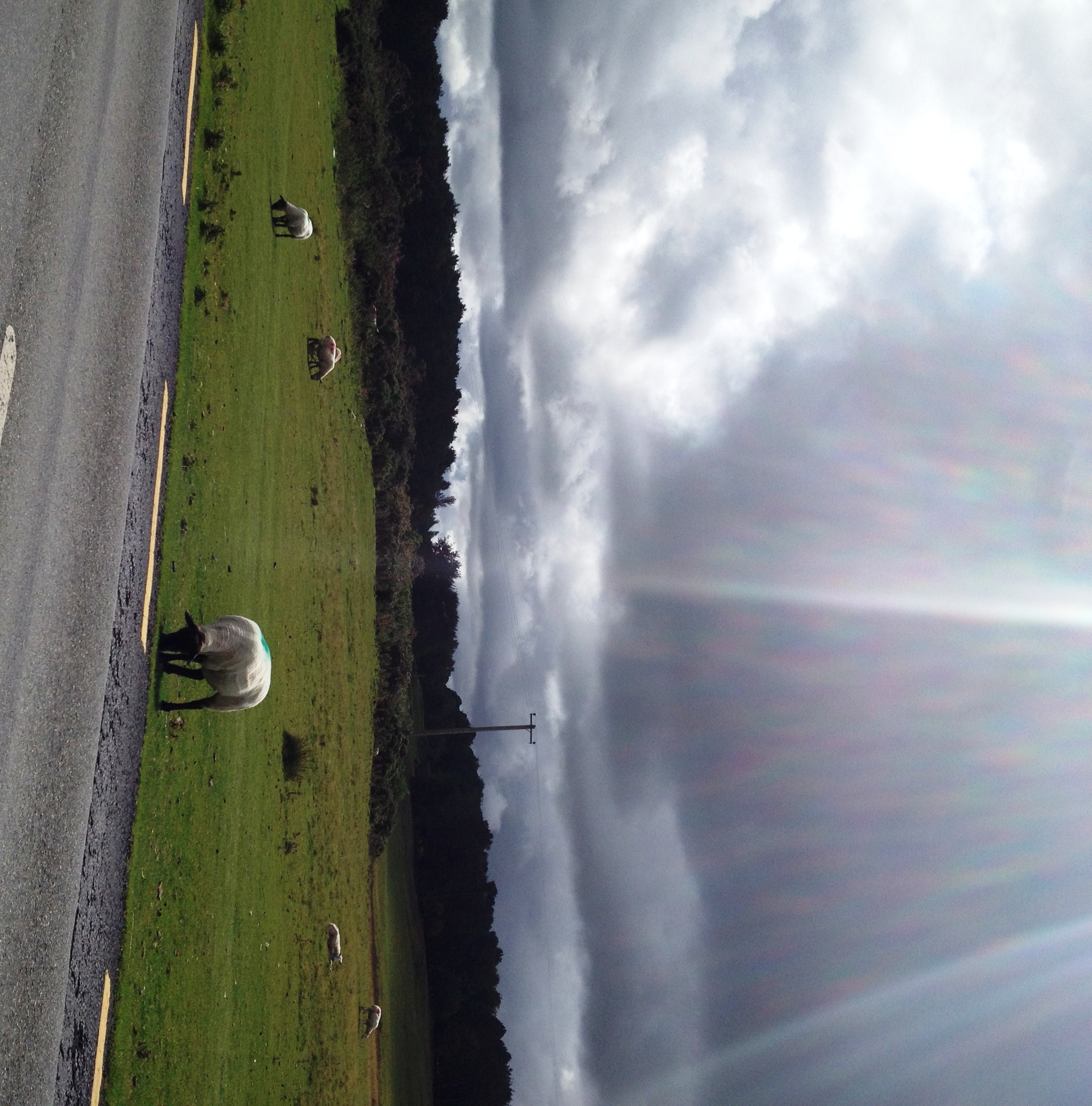
I drove back from some meetings yesterday across the Curragh, which is unique in Ireland as a flat open plain of land which has existed for thousands of years as uncultivated land, nowadays used for grazing. It is without fences, so the sheep roam freely, and sit at the side of the road, or, as was the case yesterday, simply wander out in front of the car without any regard for safety or “rules”. It was interesting to see them behaving without fear because of their familiarity with traffic and because they have become used to the freedom of the area, having grown up in flocks where this “courage” was normal. Most of our fearful behaviour is learnt, often due to frightening responses or lack of encouragement when we were young, or simply by being in proximity with people whose dominant narrative was fearful. Knowing where they originate is less important than recognizing their presence in us as adults, where they frequently operate as thoughts, feelings and bodily sensations that we may not be aware of or simply think are inevitable.
We are more addicted to fear than to fearlessness. Notice how much of the day you hold tightly to your fears, especially the fear of the loss of control. All of our “what if” thinking falls into this category: “What if I don’t do it right?” “What if it’s painful?” “What if I look bad?“ These thoughts are based on wanting to control some imagined future more than on what’s happening now. It’s crucial to see and to label them with the question: “What is my most believed thought right now?”
After seeing the mental constructs, we just sit, experiencing what’s happening right now, aware of the intense physical sensations of anxiety — the tightness, the queasiness, the narrowing down. We might ask the practice question, “What is this moment?” What happens when we do this? Finding the answer is what practice is really about.
Again, the simplicity and clarity of practice amounts to this: first, we must see through the mental process, dropping the story line of “me.” What is the story line of “me”? It’s the addiction to comfort and thoughts, to our self-judgments and emotions, to our identities and our fears.
Ezra Bayda

When we taste something, what is the ‘realness’ of it? We can say, ‘It tastes nice’ but this is what we think about it, not what the taste is. We can say, ‘It’s a grape’, but that’s a designation, a perception, isn’t it? What is the actual taste? We say, ‘It’s sweet’, but ‘sweet’ is a judgment, isn’t it? We come to understand that the reality of it is indefinable, and that for most of our life we are operating at the level of interpretations and classifications, of secondary experiences, rather than living the actuality of it. We never even know who we really are, because everything is constantly changing; the reference points are changing so although we feel we’re something, nothing quite fits. So as long as we identify with the world of change and appearance, this is all we shall ever feel ourselves to be, just an appearance that changes and wants to find a certain position.
Ajahn Sucitto, Gnosis and Non-Dualism
photo MatthiasKabel

Meanwhile, here we are, missing the fullness of the present moment, which is where the soul resides. It’s not like you have to go someplace else to get it. So the challenge here is, Can we live this moment fully? Over a lifetime, you may wind up in the situation where you are never actually where you find yourself. You’re always someplace else, lost, in your head, and therefore in a kind of dysfunctional or non-optimal state. Why dysfunctional? Because the only time you ever have in which to learn anything or see anything or feel anything, or express any feeling or emotion, or respond to an event, or grow, or heal, is this moment, because this is the only moment any of us ever gets. You’re only here now; you’re only alive in this moment. The past is gone, and I don’t know what’s coming in the future. It’s obvious that if I want my life to be whole, to resonate with feeling and integrity and value and health, there’s only one way I can influence the future: by owning the present.
Jon Kabat Zinn
photo : frettie