 Mindfulness practice, as it deepens, is a practical way of relating to thoughts, of working with difficult emotions – especially as they present in body sensations – and finally, and maybe most crucially, a way of relating to our sense of self. One way this may be helpful, in a pragmatic way of dealing with the up’s and down’s of each day, is to continually define ourselves in a fluid, on-going, non-fixed sense, understanding life, as it were, as always being born in each moment. We try to bring attention to these continual little births, seeing how an event or moment gives birth to a new emotion and is followed by a new thought (or more likely, a re-hashing of familiar, old patterns of thought). Rather than allowing that thought take hold, identifying with it and making it part of our story, we can let it pass through. Rather than attaching some of our identity to these moments, and the narrative that accompanies them , we can hold ourselves lightly, not limiting ourselves to the moods we experience or the judgmental thoughts they generate. In this way we can develop a sense of ease as we no longer feel the need to defend the “self” created by them.
Once we are able to perceive that there is change only, and that we ourselves are part of the change, there is no longer anything to possess, no me to possess, no such things as possession. Moreover, I can understand that the impulses that torment me have no more solidity and fixity than any other event. If anger, for instance, were to possess any independent, real existence, then I would be faced with a great problem, for it would existing me apart from other internal or external causes, a constant personality defect with which I would have to cope. However, since anger is a momentary state arising from conditions and then subsiding because of other conditions, when it is gone, it is really gone, extinct. I am thus not intrinsically an angry person, nor a good person, or any other kind of person.
Francis Cook, Hua-yen Buddhism
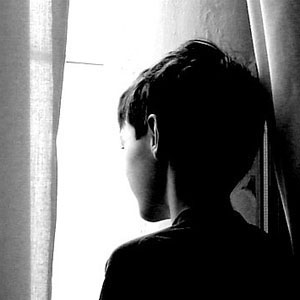 You may struggle to understand your authentic self. For instance, you may unconsciously assume that you are the collection of old habits of mind that you have accrued over your lifetime in reaction to difficulty, disappointment and uncertainty. You may believe you are someone who is anxious because as a child you had to endure a constant stream of criticism from your parents. Or you may see yourself as a failure because you haven’t achieved your career goals. But these conditioned mind states are not you – they are merely thoughts and feelings. These thoughts and feelings, as you can observe for yourself, are temporary and ever-changing, and arise episodically. So while they may characterise your experience sometimes, they don’t define you. Your authentic self is defined by the values from which you respond to these mind states.
 Your great mistake is to act the drama as if you were alone. As if life
 In your life just take time to stop, just this sense of stopping and opening when you find yourself in that moment – “Oh I’m caught up, this thing, the next thing and the next thing” …… Just say to yourself “STOP” and relax and open – try to listen to the sound of silence.


 The chief obstacle to our happiness is our concept of happiness. Above all we tend to think that certain conditions must be present for us to be happy. We think we cannot be happy until we meet certain life goals. All of this future-orientated thinking, instead of making us happy, becomes a reason for us to be unhappy now. And if we aren’t happy now, the postponement of our happiness regresses into an infinitely receding future. We chase the horizon in endless anticipation and continual frustrations. We never get there, because we always hope to arrive there someday. It’s as if we are on a beautiful hiking trail, where there are spectacular mountains, lush meadows, cool streams, quiet lakes and beautiful trees, but we’re unhappy because we’re caught up in the concept that the view around the next corner will be better, while the one surrounding us is nothing at all

