Noticing what is here, not what we would like to be here

Similar thoughts to yesterday morning’s post – this time from the Zen tradition – on staying close to what is actually happening, moment by moment, rather than worrying about what may happen. Sometimes it may not be what we would want, so our practice is to see if we can open to it and acknowledge it’s happening, even if we do not like it.  It also encourages us to meet every person today with fresh eyes, rather than immediately reducing them to  history which we have had with them, or to what we have come to “expect” from them.

The aim of Zen is to focus our attention on reality itself, instead of our intellectual and emotional reactions to reality – reality being the ever-changing, ever-growing, indefinable something known as “life,” which will never stop for a moment for us to fit it satisfactorily into any rigid system of pigeonholes and ideas.

Alan Watts

The freedom of not comparing to an ideal self

We can always see ourselves in terms of what’s wrong with us as persons. There are always so many flaws and inadequacies. There is no perfect personality that I have ever noticed. Personality is all over the place. Some of it is all right and some of it is really wacky. There is no personality that you can take refuge in. You are never going to make yourself into a perfect personality. So when you judge yourself you find so many problems, inadequacies, flaws and weaknesses. Maybe you are comparing yourself to some ideal person, some unselfish and superlative personality. However, that which is aware of personality is not personal. These personality conditions arise and cease…. Your refuge is in this awareness rather than in trying to make yourself into an ideal man or woman – mature, responsible, capable, successful,  “normal”  and all the rest – these are ideals.

Ajahn Sumedho, The Sound of Silence

Choosing outside our usual pattern

The big thing in my own experience is that the bravery is to not just go with an habitual pattern because it’s usually fear-based. Instead, stay present and open so you can connect with your underlying strength, which is called basic goodness. The seductiveness of habitual patterns is a false security, but we wouldn’t follow it if we didn’t think it was going to bring us some comfort or relief. Still, habitual patterns just keep us stuck in the same rut, so the courage is to actually realize you have a choice and choose to do the tougher thing.

Pema Chodron

Our habit of running

If we can’t rest,  it is because we have not stopped running. We began running a long time ago. We continue to run even in our sleep. We think that happiness and well-being are not possible in the here and now. That belief is inherent in us. We received the seed of that belief from our parents and grandparents. They struggled all their lives and believed that happiness is only possible in the future. That’s why when we were children, we were already in the habit of running. We believed that happiness was something to seek for in the future. But the teaching…is that we can be happy right here, right now. If you can stop and establish yourself in the here and now, you will see that there are many elements of happiness available in this moment, more than enough to make you happy.

Thich Nhat Hahn, Happiness

Letting it all pass through

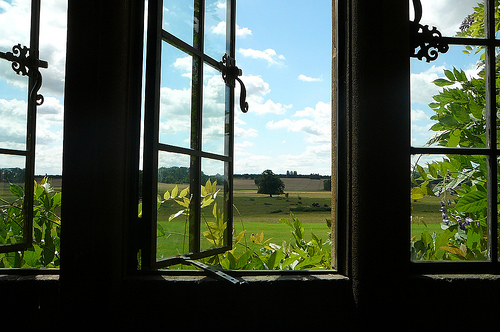
Just go into the room, and put one chair in the center. Take the one seat in the center of the room, open the doors and windows, and see who comes to visit. You will witness all kinds of scenes and actors, all kinds of temptations and stories, everything imaginable. Your only job is to stay in your seat. You will see it all arise and pass, and out of this, wisdom and understanding will come.

Ajahn Chah

How to deal with our inner commentator

A great distraction at times are so-called “running commentary” thoughts such as, “Now I am not thinking of anything,” “Things are going very well now,” “This is dreadful; my mind just won’t stay still” and such like……..All such thoughts should simply be noted as “Thinking,” and, as Huang Po says, “dropped like a piece of rotten wood.” “Dropped,” notice, not thrown down. A piece of rotten wood is not doing anything to irritate you, but is just of no use, so there is no point in hanging on to it…Nor is there any need to try to retrace the links in a chain of associated thoughts, nor to try to ascertain what it was that first started the chain. Any such impulse should itself be noted simply as “Thinking,” and the mind should revert to the breathing. However badly things have just been going, one should take up again at the only place one can – where one is – and go on from there.

Bhikku Mangalo, The Practice of Recollection