Tenderly holding whatever you touch

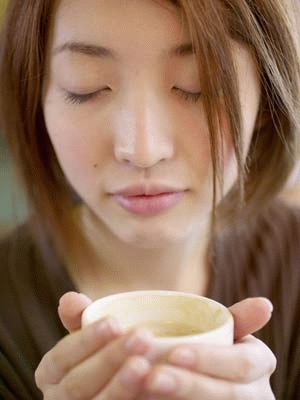
Tenderness is the language of the body as a mother holds her child, as a nurse touches a patient’s wound, or as an assistant bathes someone with a disability. Recently in a buddhist monastery, I watched a sister as she served us food and tea with great delicacy; it was as if the meal itself was sacred, revealing a presence of God. And so it did, because it was treated so.

Tenderness is the language of the body speaking of respect: the body honours what it touches. It honours reality. It does not act as if reality has to be changed or possessed; reality belongs to humanity and to God. Is not this the way we should relate to all living beings, plants, animals and the earth?

Jean Vanier,  Becoming Human

Sunday Quote: Sitting, without speaking

The whole of practice can be simplified on this day: To be able to sit quietly with where our life is, and be at ease there.

Silence is pure and holy.

It draws people together

because only those who are comfortable with each other

can sit without speaking.

Nicholas Sparks, The Notebook

How to get the most from the holidays: Do all things deliberately and with attention

“Conquer haste”, the Zen masters say. The writer Joe Hyams, describes how he learned that lesson in a meeting with the master Bong Soo Han. The two were having tea when a letter arrived from the teacher’s family in Korea. Hyams says: ‘Knowing he had been eagerly anticipating the letter, I paused in our conversation, expecting him to tear open the envelope and hastily scan the contents. Instead, he put the letter aside, turned to me, and continued our conversation. The following day I remarked on his self-control, saying that I would have read the letter at once.’

“I did what I would have done had I been alone,” he said. “I put the letter aside until I had conquered haste. Then when I set my hand to it, I opened it as though it were something precious.”  I puzzled over this comment a moment, knowing he meant it as a lesson for me. Finally I said I didn’t understand what such patience led to. “It leads to this,” he said. “Those who are patient in the trivial things in life have the same mastery in great and important things.”

Philip Toshio Sudo.

Freedom comes from accepting limitations

When the stories of our life no longer bind us, we discover within them something greater. We discover that within the very limitations of form, of our maleness and femaleness, of our parenthood and our childhood, of gravity on the earth and the changing of the seasons, is the freedom and harmony we have sought for so long. Our individual life is an expression of the whole mystery, and in it we can rest in the center of the movement, the center of all worlds.

Jack Kornfield, A Path with Heart

Opening to the sacred in each moment

Pause practice can transform each day of your life. It creates an open doorway to the sacredness of the place in which you find yourself. The vastness, stillness, and magic of the place will dawn upon you, if you let your mind relax and drop for just a few breaths the storyline you are working so hard to maintain. If you pause just long enough, you can reconnect with exactly where you are, with the immediacy of your experience.

When you are waking up in the morning and you aren’t even out of bed yet, even if you are running late, you could just look out and drop the storyline and take three conscious breaths. Just be where you are! When you are washing up, or making your coffee or tea, or brushing your teeth, just create a gap in your discursive mind. Take three conscious breaths. Just pause. Let it be a contrast to being all caught up. In any moment you could just listen. In any moment, you could put your full attention on the immediacy of your experience. When you are completely wound up about something and you pause, your natural intelligence clicks in and you have a sense of the right thing to do. This is part of the magic: our own natural intelligence is always there to inform us, as long as we allow a gap. As long as we are on automatic pilot, dictated to by our minds and our emotions, there is no intelligence. It is a rat race. So, what is the most important thing to do with each day? With each morning, each afternoon, each evening? It is to leave a gap.

Pema Chodron

The shortest, darkest day of the year

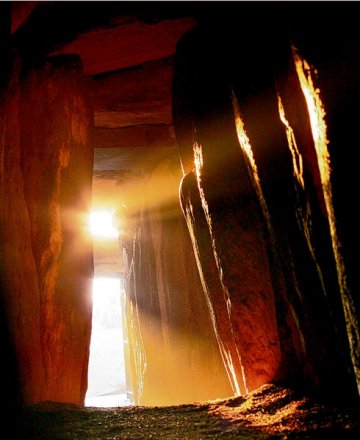
Today is the Winter Solstice, the shortest day of the year in the Northern Hemisphere. It is a day that has always held significance for humans, as can be seen by the major Celtic and Christian feasts that are celebrated around this time, and whose symbols are still used today, even if their true meaning is long-lost. The Ancient Celts seemed to follow closely the passage of the sun and linked it to the sacredness of certain days. On this day,  in the burial chamber of Newgrange in Ireland  – built some 500 years before the pyramids of Giza and more than 1,000 years before Stonehenge –   they ensured that the rising sun penetrated right into the place where their loved ones were buried. In this way they marked the turning point of the year, even when times were difficult, where the days gradually grow longer and move the countryside back towards the warmth and rebirth of spring.

We can learn from the fact that there have always been rituals of light in the darkness, cycles of growth after periods of rest,  hope returning when all seemed lost. There is a deep wisdom in understanding these ways of nature deep in our own bones. No matter how dark a place we find ourselves in from time to time,  or how deeply we feel buried,  we come to know how light can still enter and illuminate. If we come to see that all circumstances change and pass away,  we get in touch with a deeper, more ancient wisdom, no matter how frozen we feel at any particular moment.  This wisdom holds onto the fact that we are complete in ourselves, no matter what our passing thoughts  tell us, or if we cannot feel it at that time.

Because our moods change constantly, we might not understand that cheerfulness is in fact an inherent quality of mind. Within the meditative tradition, cheerfulness is considered to be the natural, harmonious and wholesome expression of our truest self. This kind of cheerfulness helps the mind to move forward, beyond the distortion and torment of emotions. Cheerfulness comes naturally with meditation. It is a quality of space created within the mind. When there’s space in the mind, the mind relaxes, and we feel a simple sense of delight. We experience the possibility of living a life in which we aren’t continuously bombarded by emotions, discursiveness and concepts about the nature of things.

In dark times  when we feel even more burdened and insecure, we should be contemplating our true nature more than ever. It can cheer us up on any day. Despite all the ups and downs of our life, we are fundamentally awake individuals who have a natural ability to become compassionate and wise. Our nature is to be cheerful. This cheerfulness is deeper than temporary conditions. The day does not have to be sunny for us to be cheerful. We are free of having to depend on something else to make us happy. We can bask freely in the natural radiance of our mind.  This is the equanimity of true cheerfulness—nothing more, nothing less.

Sakyong Mipham Rinpoche, A Simple Sense of Delight