All the time in the world

Wherever we are, from one day to the next, the Earth is moving at the same speed. Yet in the modern world, we’ve convinced ourselves that the world is moving faster, and that speed is the way to make our life work. Under the pressure of schedules and commitments, we think we can accomplish more if we speed through our day. Speed gives life a frantic quality. It is an anxious state of mind that keeps us from settling into whatever we are doing. There is always something more important than what we’re doing now. We’re double-parked outside a store, trying to find what we need, while talking to our mother on the cell-phone. Rather than accomplishing our activity well, we are nullifying it, because we aren’t really there for it.  Speed comes from being overly ambitious. We aren’t content with our own mind, so we become aggressive in how we conduct our life. In an effort to match a concept of what success might be, we fill our calendars and spend the whole day holding on to our “to do” list. We chase after appointments, phone calls and meetings with jealousy, competition, fixation and irritation — whatever it takes to get us where we think we need to go. When life still won’t match our concept, we get mad — mad that others are late, or mad that we are early.

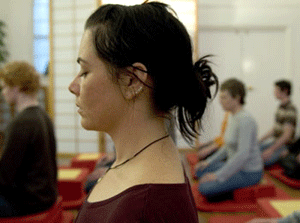
The practice of meditation offers us the opportunity to slow down for a short time every day. This is how we can begin to step out of the cycle of speed. In sitting still and focusing our mind, we are declaring daily that this human life is precious. Taking time to appreciate it comes from our own determination and wisdom. Through this discipline, we simplify our life. We regain the space to appreciate it, having lost nothing but speediness. We learn how to float aloft, carried by the winds, appreciating what we see in every direction. We learn to relax.

Sakyong Mipham Rinpoche, Slow Down, You Move Too Fast
Seeing things from a different perspective today

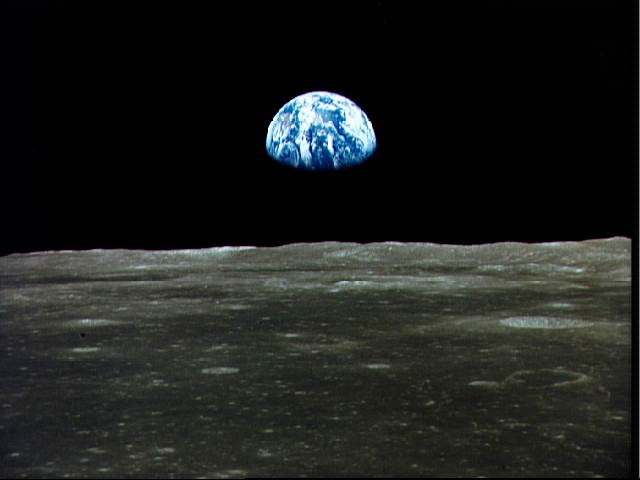
My favorite picture is earthrise as seen from the moon. It’s perfect. A great blue and green ball floating in vast black space, hanging right there in its orbit. From that vantage point,  the scene on earth is awesome. creatures being born, other ones dying; plants blooming on one side, plants withering on the other; snow snowing, winds blowing, volcanoes erupting, earthquakes shivering, people talking, music playing. From the moonview, its incredible cosmic drama. From our usual view, inside the drama, looking up at the moon, it’s a different story. It changes from the drama to my drama and gets to be a problem. If you’re far enough away, it’s not your story – its one of the six and a half billion stories.

Sylvia Boorstein: It’s Easier than you Think

Where is the point of life to be found?

We could say that meditation doesn’t have a reason or doesn’t have a purpose. In this respect it’s unlike almost all other things we do except perhaps making music and dancing. When we make music we don’t do it in order to reach a certain point, such as the end of the composition. If that were the purpose of music then obviously the fastest players would be the best. Also, when we are dancing we are not aiming to arrive at a particular place on the floor as in a journey. When we dance, the journey itself is the point, as when we play music the playing itself is the point. And exactly the same thing is true in meditation. Meditation is the discovery that the point of life is always arrived at in the immediate moment.

Alan Watts

How to meditate: very simple instructions

When a thought arises that’s strong enough to take your attention away from the breath, simply note it as not breath. Whether it’s the most beautiful thought in the world or the most terrible, one you would never disclose to another soul, in this meditation, it’s simply not breath. You don’t have to judge yourself. You don’t have to get lost in making up a story about what triggered the thought or its possible consequences. All you have to do is recognize that it is not a thought. Some of your thoughts may be tender and caring, some may be boring and banal; all that matters is that they are not the breath. See them, recognize them, very gently let them go, and bring your attention back to the feeling of the breath.

Sharon Salzberg, Real Happiness: The Power of Meditation

The hidden work that is essential for growth

The ladder whose ascent implies spiritual progress has a long pedigree.  Hebrews, Greeks and Christians all gave special value to the heights, and Western morality tends to put all better things up high and worse things down low. By the last century growth became inexorably caught in this ascensionist fantasy. Darwin’s thesis The Descent of Man became, in our minds, the ascent of man. Each immigrant moved upward in social class as buildings moved upwards with their elevators to more expensive levels. By now the upward idea of growth has become a biographical cliché. To be an adult is to be a grown-up. Yet this is merely one way of speaking of maturity, and an heroic one at that. For even tomato plants and the  tallest trees send down roots as they rise toward the light. Yet the metaphors for our lives see mainly the upward part of the organic motion.

James Hillman, The Soul’s Code

Keeping things light

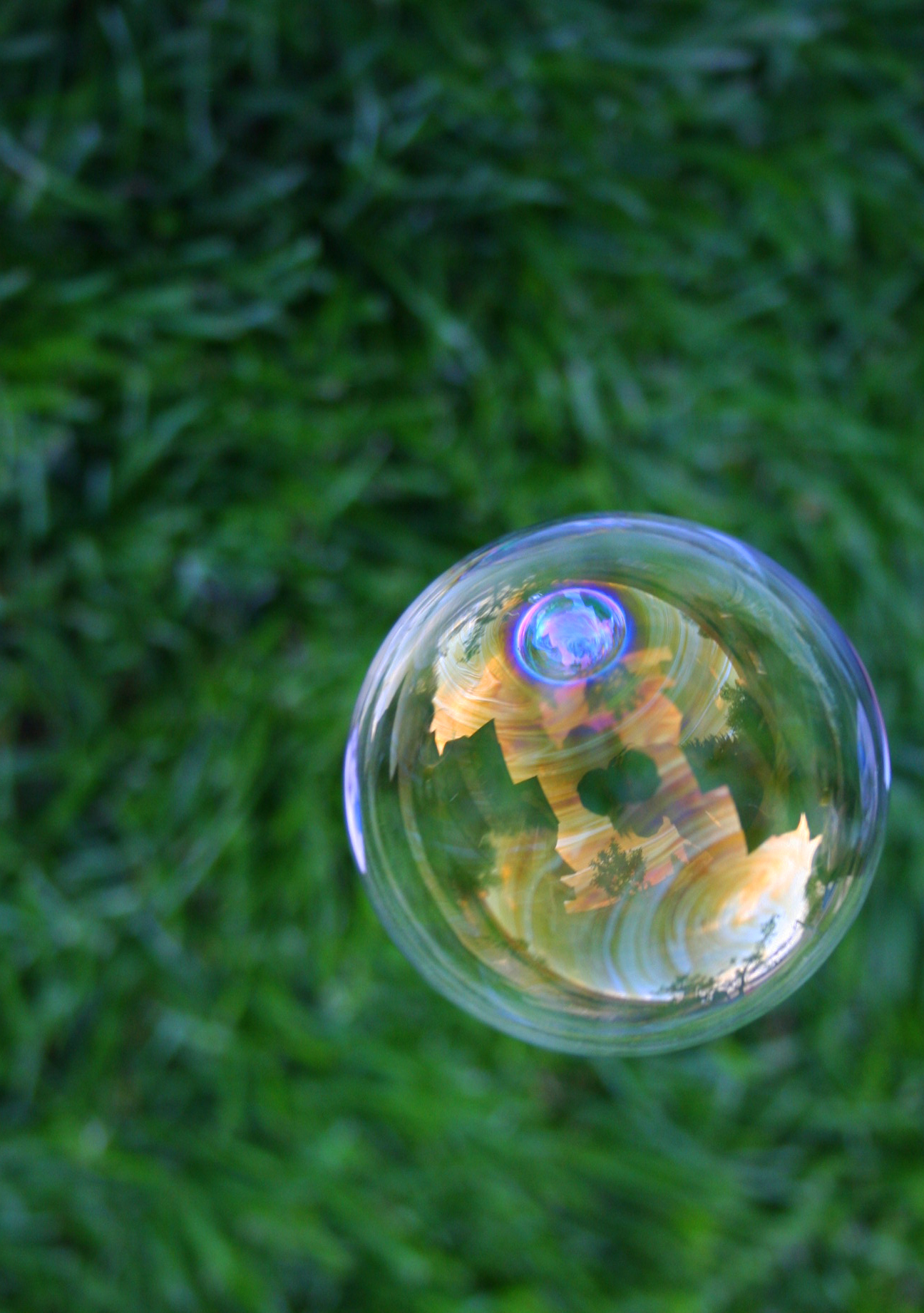
There is a difference between being aware of a thought and thinking a thought. That difference is very subtle; it is primarily a matter of feeling or texture. A thought you are simply aware of with bare attention feels light in texture; there is a sense of distance between that thought and the awareness viewing it. It arises lightly like a bubble, and it passes away without necessarily giving rise to the next thought in that chain. Normal conscious thought is much heavier in texture. It is ponderous, commanding, and compulsive. It sucks you in and grabs control of consciousness. By its very nature it is obsessional, and it leads straight to the next thought in the chain, apparently with no gap between them.

Bhante Henepola Gunaratana, Mindfulness in Plain English