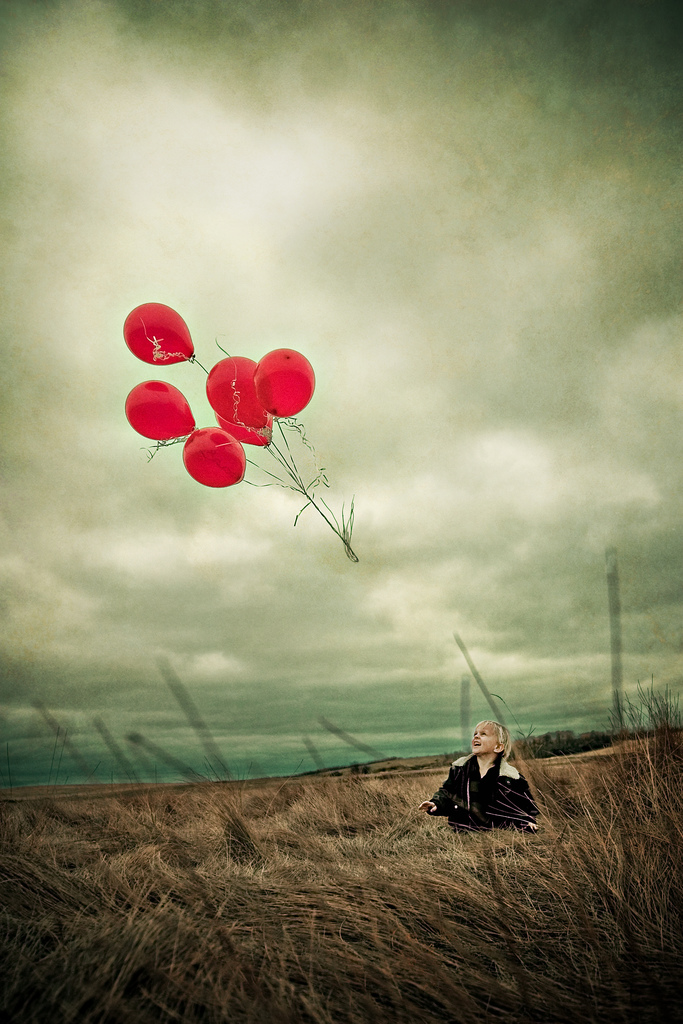
Thoughts as arising and passing away

All conditions are impermanent. By the word “condition”, we mean a formation of the mind, such as a thought or opinion. Men and women are conditions. Similarly, Jews and Gentiles, Buddhists and Christians, Asians and Europeans, Africans, the working class, the middle class, the upper class-all these are only formations that go through the mind. They aren’t absolutes. They are merely conventions that are useful for communication. We must use these conventions, but we must also realize that they are only conventions – not absolutes. In this way, our minds are no longer fixed in our views or opinions. Views and opinions are seen simply as conditions that arise and cease in the mind, because that’s what they really are. All conditions are impermanent; they arise and cease.

Ajahn Sumedho, The Mind and the Way

Not dwelling in thoughts

When we learn to move beyond mistaken concepts and see clearly, we no longer solidify reality. We see waves coming and going, arising and passing. We see that life, composed of this mind and body, is in a state of continual, constant transformation and flux. There is always the possibility of radical change. Every moment – not just poetically or figuratively, but literally – every moment we are dying and being reborn, we and all of life.

Sharon Salzberg, Loving-Kindness – The Revolutionary Art of Happiness

Choosing to be who we are

Happiness is accepting and choosing life, not just submitting grudgingly to it.  It comes when we choose to be who we are, to be ourselves, at this present moment of our lives; we choose life at it is, with all its joys, pain and conflicts.  Happiness is living and seeking the truth, together with others in community, and assuming responsibility for our lives and the lives of others. It is accepting the fact that we are not infinite, but can enter into a personal relationship with the Infinite, discovering the universal truth and justice that transcends all cultures: each person is unique and sacred. We are not just seeking what others want us to be or to conform to the expectations of family, friends, or local ways of being. We have chosen to be who we are, with all this is beautiful and broken in us. We do not slip away from life and live in a world of illusions, dreams, or nightmares. We become present to reality and to life. We become present to reality and to life so that we are free to live according to our personal conscience, our sacred sanctuary, where love resides within us and we see others as they are in the depth of their being. We are not letting the light of life within us be crushed, and we are not crushing it in others. On the contrary, all we want is for the light of others to shine.

Jean Vanier, Essential Writings

Being alive in each moment

We practice so that every moment of our life becomes real life. And therefore when we meditate. we sit for sitting. We don’t sit for something else. If we sit for twenty minutes, these twenty minutes should bring us joy, life. If we practice walking meditation, we walk just for walking, not to arrive. We have to be alive with each step, and if we are, each step brings real life back to us. The same kind of mindfulness can be practiced when we eat breakfast, or when we hold a child in our arms. Each breath we take, each step we make, each smile we realize, is a positive contribution to peace, a necessary step in the direction of peace in the world.

Thich Nhat Hahn, The Heart of Understanding

Observing our mental states

Your practice of mindfulness has taught you that it is not your mental states themselves that make you uncomfortable, but your attitude toward them. You may have the idea that mental states are part of your own personality, part of your existence. Then you try to reject the unpleasant ones as if they were foreign bodies. But you cannot really reject them because they were not yours in the first place. Your best response is to maintain a steady practice of observing the mind, without reacting with clinging or aversion to anything that comes up, but skilfully working to free the mind from all unwholesome states. 

Bhante Henepola Gunaratana, Eight Mindful Steps to Happiness

A path full of adventures

The spirit in which we approach anything new – a new day, a new week  or a new year – is the key to how we will experience it. Most of our suffering is caused by our minds. Pay attention to your interval and beginning moments today, to the gaps between tasks or before we go into a meeting, or  – especially –  to the moment before we start a conversation. Are we open to receive whatever happens, freshly, in a spirit of adventure?

Vα εύχεσαι να είναι μακρύς ο δρόμος, γεμάτος περιπέτειες, γεμάτος γνώσεις

Wish that your journey be a long one,

full of adventures, full of knowing.

Cavafy’s advice to Odysseus before he set out on his voyage back to Ithaca