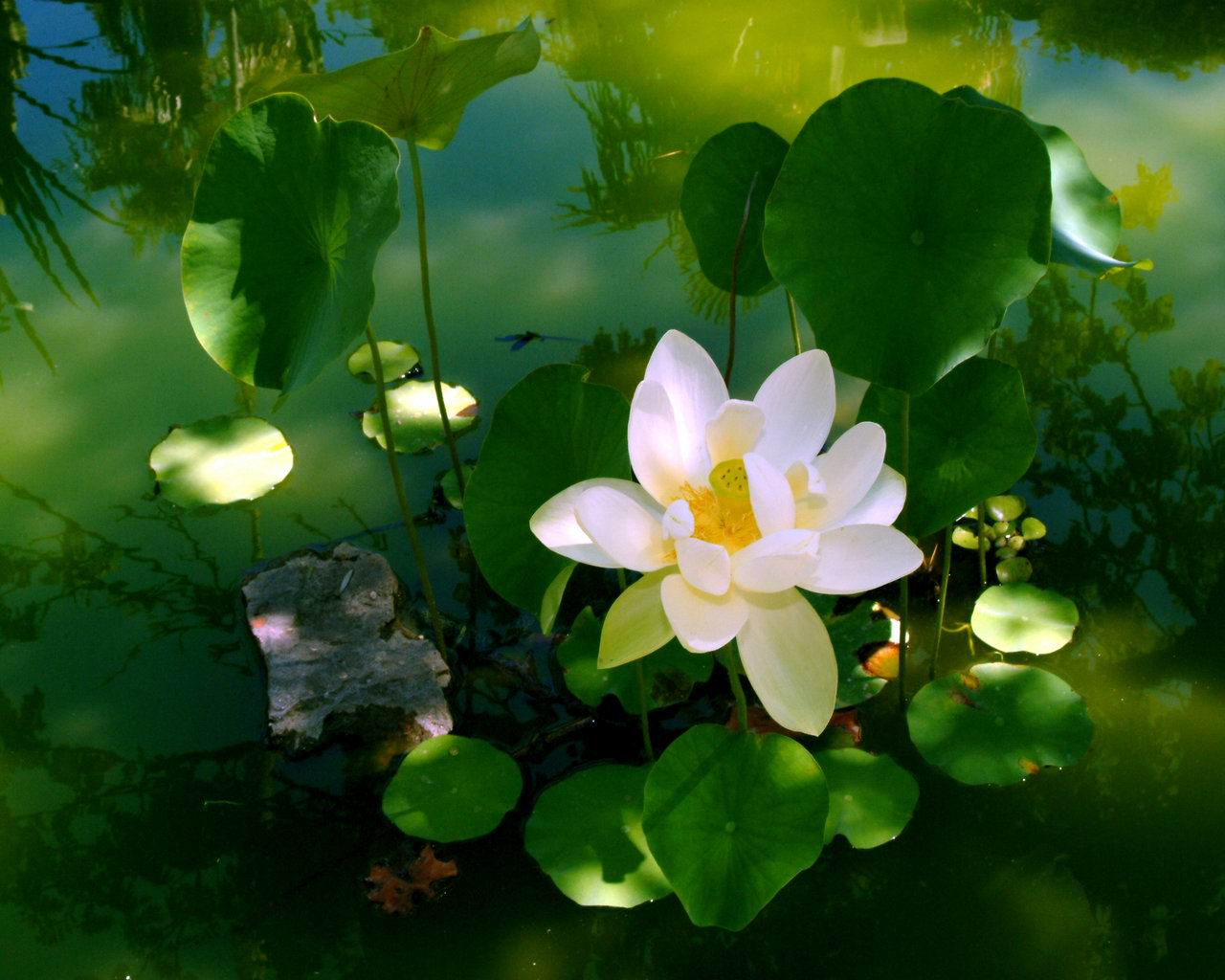
Trusting and falling

If we surrender
to earth’s intelligence
we could rise up rooted, like trees.

Instead we entangle ourselves
in knots of our own making
and struggle, lonely and confused.

So, like children, we begin again
to learn from the things
because they are in God’s heart
they have never left him.

This is what the things can teach us:
to fall patiently,  to trust our heaviness
Even a bird has to do that
before he can fly.

Rilke, Book of Hours, II, 16

Difficult moments in our lives

In the difficult are the friendly forces, the hands that work on us.  Rilke

Every shift in our life comes courtesy of the friendly forces; every catastrophe can offer us exactly what we need to awaken into who we really are. It’s difficult, though, when you are in the middle of a painful transition to mine the experience for inner growth.  And when your life falls apart,  it’s a lot easier to blame someone,  or to rail against fate, or to shut down to the hopeful message carried by the winds of change. Sometimes when friends try to help by saying “There’s a reason for everything” or “It’s a blessing in disguise”, you just want to run away or you  want to say” Yeah, if it’s such a blessing, then why does it hurt so much?” So forgive me when I say that everything in life is a blessing – whether it comes as a gift wrapped in happy times or as a heartbreak, a loss, or a tragedy…. It helps me to remember that everyone is confused when the friendly forces come knocking; there is no one alive who did not want to go back asleep instead of making a big change; and the journey from Once-Born innocence to Twice-Born wisdom is never easy.

Elizabeth Lesser, Broken Open

Becoming a friendly audience to your experience

Here’s a definition of mindfulness: it’s a strengthening of your concentration so that you can be more precise and clear in recognizing your experience. It’s also a strengthening of your equanimity—your ability to be relaxed and open in the face of your experience. The concentration part of mindfulness is a little like drinking a cup of coffee; it kind of wakes you up. It’s like the straight spine of arousal or awareness. The equanimity part is like the relaxed limbs of the body. The spine is straight, and the limbs are relaxed. This relaxation part is a receptivity and acceptance to things as they are. It’s a kind of “friendly audience” to your own experience; a sort of “Hello. Wow! OK.” attitude—a gentle, matter-of-fact awareness of your experience, rather than a reactive pulling back. All mindfulness practices cultivate both of those, the concentration and the equanimity, so that you can be clearer, more precise and more relaxed in the face of whatever is happening to you—whether it’s loud noises coming in from a jackhammer running in the next building, or a pain in your knee, or your emotions about your spouse.

Polly Young-Eisendrath, Jungian Analyst, Personality Type in Depth

How we grow and mature

Healing does not mean that one will reach an end-point where all is clear and conflict free. How could we imagine that the attitudes of one stage of our life would be adequate for subsequent stages and altered realities? While it is the secret hope of the nervous ego to fix the world and make it more predictable and secure, all is in flux. Finding the secret sources of our distress, and being enlarged by the suffering of this conflict, is how we grow and mature. As Jung notes, “Suffering is not an illness; it is the normal counterpole to happiness”.  Our goal is not happiness, which is evanescent and impossible to sustain; it is meaning which broadens us and carries us toward our destiny

James Holllis, Creating a Life: Finding your Individual Path.

The winds in the trees, the sound of the stream

No writing on the solitary, meditative dimensions of life can say anything that has not already been said better by the wind in the pine trees. These pages seek nothing more than to echo the silence and peace that is “heard” when the rain wanders freely among the hills and forests. But what can the wind say when there is no hearer? There is then a deeper silence: the silence in which the Hearer is No-Hearer. That deeper silence must be heard before one can speak truly of solitude.

Thomas Merton, Preface to Japanese translation of Thoughts in Solitude

Trusting the deeper wisdom

Whatever form of meditation you practice, it is in essence simply a method for detaching yourself from thinking (which tends to reinforce the egoic process) long enough for you to begin to trust this other, deeper intelligence moving inside you. It provides you with another way to think: from “beyond the mind” — which, incidentally, is what the word metanoia, usually translated as “repentance,” actually means.

 Cynthia Bourgeault,  Mystical Hope