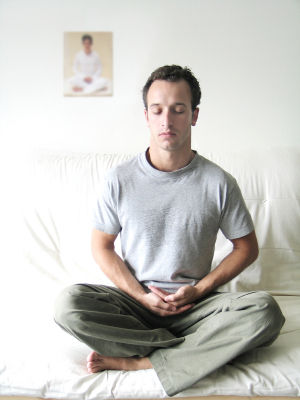
Breath is the bridge which connects life to consciousness,
which unites your body to your thoughts.
Thich Nhat Hahn
Breath is the bridge which connects life to consciousness,
which unites your body to your thoughts.
Thich Nhat Hahn
 Research, mainly in the area of neuroscience, is increasingly showing that meditation changes how the brain functions. What I find interesting is how this harmonizes with the work of psychologists who look at the importance of early relationships or those who write about the unconscious. One of the most stimulating writers in this latter area is the modern psychoanalytical author, Christopher Bollas. Jon Kabat Zinn likes to say that meditation allows us to step out of “doing-mode” into “being-mode”. This strengthens our capacity to rest with experience rather than always conceptualizing it. As Ajahn Sumedho said in a recent post, we simply recognize, without going into the need to analyse. Bollas’ quote here may suggest a link. Maybe getting in touch with silence may allow us reconnect with our earliest experiences which were processed without the use of language and thought. We may even say that sitting in silence and holding whatever arises may possibly, slowly, heal these early experiences, if they were somehow lacking. His words also allow us see how our emotions contain a deep truth which may be outside of conscious thought, truths which may be “known” without being “thought”.
Some moments feel familiar, sacred, reverential, but are fundamentally outside cognitive experience. They are registered through an experience in being, rather than mind, because they express that part of us where the experience of rapport with the other was the essence of life before words existed….the aesthetic moment constitutes part of the unthought known. The aesthetic moment is an existential recollection of the time when communication took place primarily through this illusion of deep rapport of subject and object. Being with, as a form of dialogue, enabled the baby’s adequate processing of his existence prior to his ability to process it through thought. The mother’s idiom of care and the infant’s experience of this handling is one of the first if not the earliest human aesthetic.
Christopher Bollas, The Shadow of the Object

Don’t carry away a conclusion unless it has been arrived at through your direct experience.
Rather, if there hasn’t been direct experience, carry away the question.
Toni Parker, The Silent Question
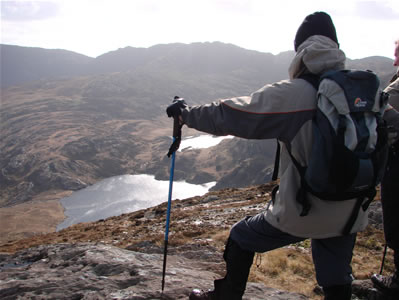
Only knowledge gained through experience, the fruit of living and suffering, fills the heart with the wisdom of love, instead of crushing it with the disappointment of boredom and final oblivion. It is not the results of our own speculation, but the golden harvest of what we have lived through and suffered through, that has the power to enrich the heart and nourish the spirit. And all the knowledge we have acquired through study can do no more than give us some little help in meeting the problems of life with an alert and ready mind.
Karl Rahner
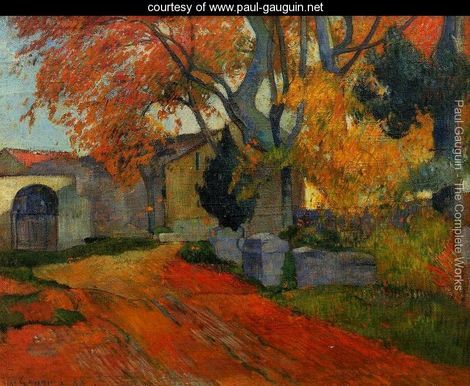
I shut my eyes in order to see.
Paul Gauguin, French artist
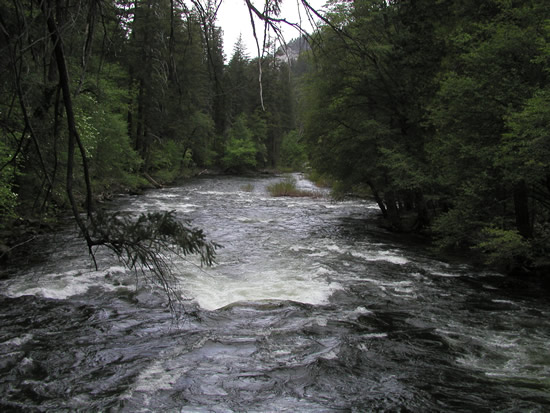 At times we need to pay attention to what is going on upstream in our lives and in the world around us, rather than always reacting or playing catch-up. We can find that we have constructed a lot of reactive practices – fire-fighting – rather than dealing with the issues at source, somewhat like the Downstreamers in this contemporary fable by Donald Ardell. We need to recognize what are the stressors in the way our life is structured and take proactive measures to readjust the balance, rather than dealing with the symptoms when they become overwhelming. Or sometimes we need courage to go back in our history and face the events that are still having consequences in our life today.
Though the number of victims in the river has increased greatly in recent years, the good folks of Downstream have responded admirably to the challenge. Their rescue system is clearly second to none: most people discovered in the swirling waters are reached within 20 minutes — many in less than 10. Only a small number drown each day before help arrives — a big improvement from the way it used to be.
Talk to the people of Downstream and they’ll speak with pride about the new hospital by the edge of the waters, the flotilla of rescue boats ready for service at a moment’s notice, the comprehensive health plans for coordinating all the manpower involved, and the large number of highly trained and dedicated swimmers always ready to risk their lives to save victims from the raging currents. Sure it costs a lot but, say the Downstreamers, what else can decent people do except to provide whatever is necessary when human lives are at stake.
Oh, a few people in Downstream have raised the question now and again, but most folks show little interest in what’s happening Upstream. It seems there’s so much to do to help those in the river that nobody’s got time to check how all those bodies are getting there in the first place. That’s the way things are, sometimes.
Donald Ardell, “The Parable of the Downstreamers” in High Level Wellness: An Alternative to Doctors, Drugs and Disease

