Be happy

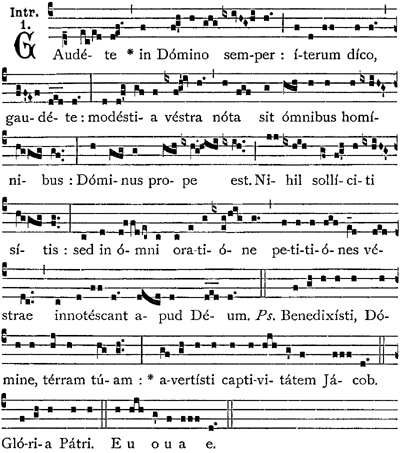
The third Sunday of Advent, is traditionally called Gaudete Sunday, or Be Happy Sunday.  For those preparing for Christmas,  this joy comes from knowing that the coming of Jesus is near. which puts the up’s and down’s of daily life be put into context.  This exhortation is shared by most wisdom traditions.  We are reminded  of a fact, sometimes forgotten by earnest religious practioners, that at the heart of all inner practice is joy, which leads us to understand the true nature of happiness.

Joy does not come from having everything perfect as we want it, by having a preconceived perfect day, but by accepting how life actually is and not fighting against it. It is possible even in the midst of difficult moments. It comes from seeing deeper into the heart of things. understanding that it is born from within and not from the external conditions of our lives.  It is based on choices we make. It has its roots in the security we find within ourselves and from love:

Joy is the experience of knowing that joy and freedom comes from knowing you are unconditionally loved and that nothing — sickness, failure, emotional distress, oppression, war, or even death — can take that love away.

Joy is not the same as happiness.  We are inclined to think that when we are sad we cannot be glad, but ….. sorrow and joy can exist together. That isn’t easy to understand, but when we think about some of our deepest life experiences, such as being present at the birth of a child or the death of a friend, great sorrow and great joy are often seen to be parts of the same experience. Often we discover the joy in the midst of the sorrow. I remember the most painful times of my life as times in which I became aware of a spiritual reality much larger than myself, a reality that allowed me to live the pain with hope. I dare even to say: ‘My grief was a place where I found joy.’ Still, nothing happens automatically in the spiritual life. Joy does not simply happen to us. We have to choose joy and keep choosing it every day.

Joy is what makes life worth living, but for many it seems hard to find. They complain that their lives are sorrowful and depressing. What then brings the joy we so much desire? Are some people just lucky, while others have run out of luck? Strange as it may sound, we can choose joy. Two people can be part of the same event, but one may choose to live it quite differently than the other. One may choose to trust that what happened, painful as it may be, holds a promise. The other may choose despair and be destroyed by it.

What makes us human is precisely this freedom of choice.

Henri Nouwen

Working with what is

So be reposed

and praise, praise, praise

The way it happened

and the way it was.

Patrick Kavanagh, Irish Poet, Question to Life

Welcoming each moment as something new

Gratefulness sprouts when we rise to the challenge of surprise. Gratefulness can be improved by practice. But where shall beginners begin? The obvious starting point is surprise. You will find that you can grow the seeds of gratefulness just by making room. If surprise happens when something unexpected shows up, let’s not expect anything at all. Let’s follow Alice Walker’s advice: “Expect nothing. Live frugally on surprise.”

To expect nothing may mean not taking for granted that your car will start when you turn the key. Try this and you will be surprised by a marvel of technology worthy of sincere gratitude. Or you may not be thrilled by your job, but if for a moment you can stop taking it for granted, you will taste the surprise of having a job at all, while millions are unemployed. If this makes you feel a flicker of gratefulness, you’ll be a little more joyful all day, a little more alive.

From there it is only a small step to seeing the whole universe and every smallest part of it as surprising. From the humble starting point of daily surprises, the practice of gratefulness leads to these transcendent heights. Thomas Carlyle pointed to these peaks of spiritual awareness when he wrote, “Worship is transcendent wonder” – transcendent surprise.

Brother David Steindl-Rast

Holding some thoughts lightly

It’s pointless to try to find peace through nullifying or erasing the sense world.

Peace only comes through not giving that world more substantiality or more reality than it actually possesses.

Ajahn Amaro

Having infinite faith in each other

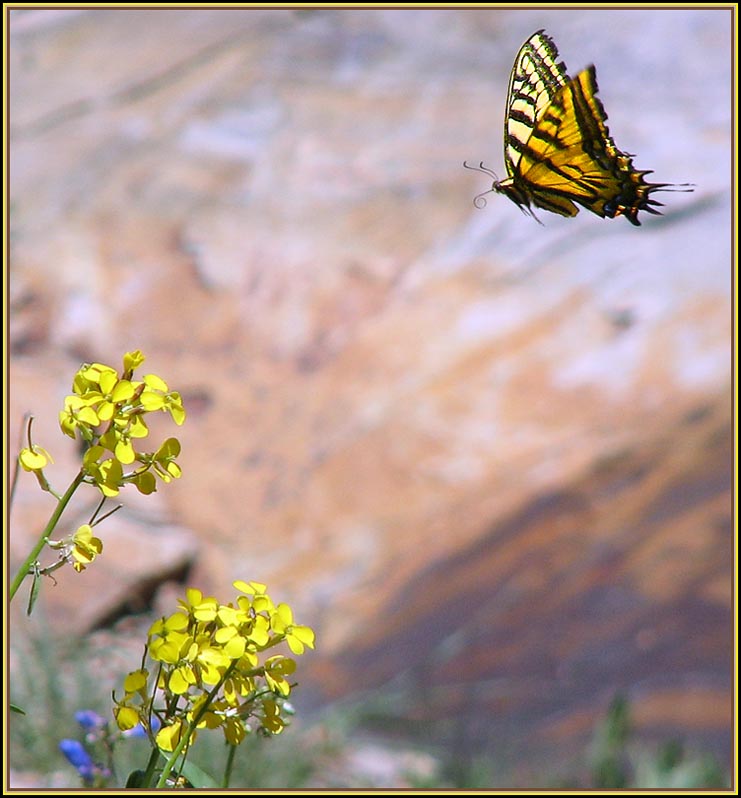
Même pour le simple envol d’un papillon,

tout le ciel est nécessaire.


(Even for the simple flight of a butterfly,

all of the sky is necessary.)

Paul Claudel

Finding our own depths

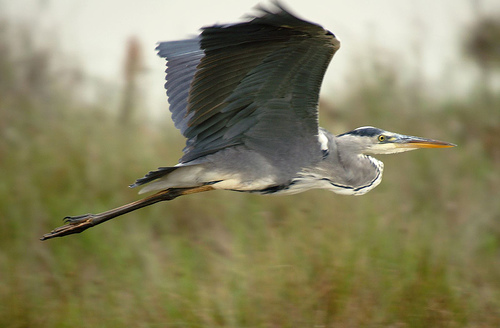
Last week, walking, I was startled by a  heron taking off. This beautiful large bird rose up with very graceful slow beats of its wings, its long neck folded into a “s” shape, and flew away,  letting out a loud squawk as it got further away. I looked after this bird as it vanished into the distance, leaving silence behind. Normally herons do not draw much attention to themselves, as they stand, solitary and still, for hours in fields or water, waiting to catch a frog or fish.

Because of this, for the ancient Celts  the heron symbolized independence, patience and intelligence. They saw them as special creatures, who dwelt between the different realms of land, water and sky. Maybe because of its solitary nature, the heron was also seen as a messenger from the gods. And moments when we come accross the beauty of nature close up often feel like blessed moments, especially as we stand in the silence looking after them.

I admire the heron’s  capacity to stand still, to stay focused, to draw on inner resources. It reminds me to trust myself, to nurture my own roots, ones that nothing and nobody can take away. I do not need to “produce” something in order to be happy. Looking at it standing there prompts me to see that I have a responsibility to befriend myself first of all, to be be comfortable my own solitude before any interactions with others and with the world. I see that I need to deconnect more,  to quieten the noise, to simplify this increasingly complicated life, and resist the truth advanced today that being always connected means being more fruitful.

It is only from this place of solitude, from having our own wells, that we can really listen to others and relate to their deepest needs.  As Mary Oliver reflected when she saw a heron rise up, new life rises up from the depths of the dark pools in which we stand. We have to descend before we can arise.

So heavy is the long-necked, long-bodied heron,
always it is a surprise
when her smoke-colored wings 

open
and she turns from the thick water,
from the black sticks

of the summer pond,
and slowly rises into the air
and is gone.

Then, not for the first or the last time,
I take the deep breath
of happiness, and I think how unlikely it is

that death is a hole in the ground,
how improbable
that ascension is not possible,
though everything seems so inert, so nailed

back into itself–
the muskrat and his lumpy lodge,
the turtle, the fallen gate.

And especially it is wonderful
that the summers are long
and the ponds so dark and so many,
and therefore it isn’t a miracle

but the common thing,
this decision,
this trailing of the long legs in the water,
this opening up of the heavy body

into a new life: see how the sudden
gray-blue sheets of her wings
strive toward the wind; see how the clasp of nothing
takes her in.

Mary Oliver, Heron rises from the Dark Summer Pond