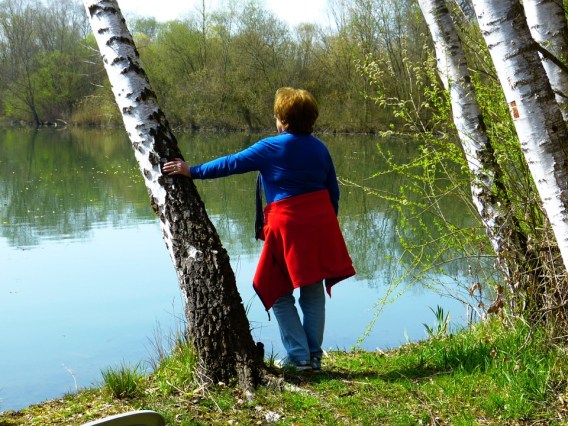
A dash of foolishness

Maybe because it’s the end of the working week, or people starting on holidays, or simply because its July….. but this post follows the same theme as other Fridays in this month: Let’s keep a capacity for play and for non-doing in our lives..

Each day, and the living of it, has to be a conscious creation

in which discipline and order

are relieved with some play and pure foolishness.

May Sarton

with thanks to Ben Naga for this lovely quote

and for being one of the longest and most faithful followers of this blog.


Do not resist

Life is a series of natural and spontaneous changes.

Don’t resist them; that only creates sorrow.

Let reality be reality.

Let things flow naturally forward in whatever way they like

attributed to Lao Tzu

Whichever happens, be patient

In Tibetan Buddhism there’s a set of teachings for cultivating compassion called mind training, or lojong. One of the lojong teachings is, “Whichever of the two occurs, be patient.” This means if a painful situation occurs, be patient, and if a pleasant situation occurs, be patient. This is an interesting point. Usually, we jump all the time; whether it’s pain or pleasure, we want resolution. So if we’re happy and something is great, we could also be patient then, and not fill up the space, going a million miles an hour — impulse shopping, impulse talking, impulse acting out.

Pema Chodron, Practicing Peace

Sunday Quote: A choice

We either make ourselves miserable,

or we make ourselves strong.

The amount of work is the same. 

Carlos Castenada, Journey to Ixtlan

Do not doubt your goodness

Often individuals who have experienced insecure attachments in childhood have high shame and self-criticism as companions in adulthood. The dominant role of their overdeveloped threat and protection system means that they have an underdeveloped capacity to use the soothing and safety system, whose function is to allow them feel safe and cared for.

In order to communicate very openly with the world, you need to develop fundamental trust. This kind of trust is not trusting “in” something, but simply trusting. It is very much like your breath. You do not consciously hold on to your breath, or trust in your breath, yet breathing is your very nature. In the same way, to be trusting is your very nature. To be trusting means you are fundamentally free from doubt about your goodness and about the goodness of others.

Dr. Jeremy Hayward, First Thought

Being driven is not always a good thing

On the day after being nominated among the 50 best blogs “on the planet”, these thoughts on striving and becoming which I had written for today seem even more apt…

One reason we practice mindfulness meditation is to strengthen our capacity to “be with” what is here,  rather than always nurturing the deep-seated dynamic of “becoming”.  And “being with” does not just mean that simplistic idea of mindfulness – being with this beautiful flower or cupcake –  but also being with the life or personality we have, rather than always wanting to be better or be like others –  “If only I was this….. if only he or she wasn’t like that – then I’d feel satisfied”. Ideals of perfect relationships, perfect holidays and even perfect wellness make it easy to feel that one isn’t good enough. These can be false friends, pushing us to do more and achieve more, rather than finding rest in who and where we are:

Perfectionism is a self-destructive and addictive belief system that fuels this primary thought: “If I look perfect, live perfectly, and do everything perfectly, I can avoid or minimize the painful feelings of shame, judgment, and blame.” Perfectionism is defeating and self-destructive simply because there is no such thing as perfect. Perfection is an unattainable goal. Additionally, perfectionism is more about perception – we want to be perceived as perfect. Again, this is unattainable – there is no way to control perception, regardless of how much time and energy we spend trying.

Perfectionism is addictive because when we invariably do experience shame, judgment, and blame, we often believe it’s because we weren’t perfect enough so rather than questioning the faulty logic of perfectionism, we become even more entrenched in our quest to live, look, and do everything just right.

Brene Brown, The Gifts of Imperfection