The importance of knowing that we are not capable of everything

File:Flat Tyre.jpg

The one who learns to live with his incapacity has learned a great deal. This will lead us to the valuation of the smallest things, and to wise limitation, which the greater height demands… . The heroic in you is the fact that you are ruled by the thought that this or that is good, that this or that performance is indispensable, … this or that goal must be attained in headlong striving work, this or that pleasure should be ruthlessly repressed at all costs. Consequently you sin against incapacity. But incapacity exists. No one should deny it, find fault with it, or shout it down.

Carl Jung,  The Red Book

What we consider enemies

File:WMUK board meeting November 2011.jpg

In the course of a day, certain events or how people behave can annoy or disturb us, leading us to consider them as “enemies”, working against our happiness. However, as the Buddha reminds us, it is not the things in themselves which are  the problem,  but how we react to them: 

Your worst enemy can not harm you

as much as your own unfiltered thoughts.

Dhammapada, ch. 3

photo mike peel

A Saturday morning walk along country lanes in Ireland

File:Prolećno cveće 3.JPG

This is the first, the wildest, and the wisest thing I know:

that the soul exists and is built entirely out of attentiveness.

Mary Oliver, Primroses

I thrive on long walks where I find myself slowing down to the rhythm of my own possibilities. That is my speed. There I find my breathing. I used to live in Thailand where the word for breathing, hai jai, is translated as ‘give your heart.’ This used to remind me that to breathe, and to simply be aware of that breath, is to give to your heart.

Jenny Kane, On Being Blog

photo : pokrojac

Hold things lightly

clouds-square

February has begun rainy and very wild and windy here in Ireland. I am reminded of how Ryokan worked with the mental energies, thoughts, feelings and moods which passed through his body-mind. We can learn a lot from these monks on how to work in a practical way with our daily experience:

Not being so attached to our facts,  or even our “alternative facts”, and how to let go of certain types of thoughts which are just not important.

If someone asks about 
the mind of this monk, 
say it is no more than a passage of wind 
in the vast sky. 

Ryokan, 1758 – 1831, Buddhist monk, hermit and poet.

Still the mind and practice freedom

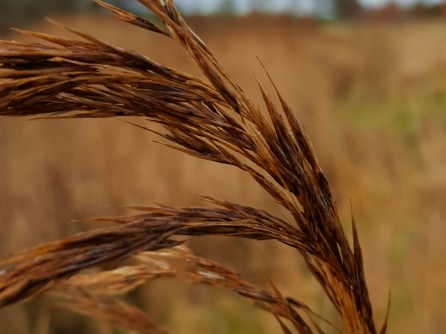
reeds

A new month.

A lot of anxiety and dysfunction all around. The challenge: Not to be a victim of the frantic world in which we live in, or of the way in which our nervous systems respond.

When despair for the world grows in me

and I wake in the night at the least sound

in fear of what my life and my children’s lives may be,

I go and lie down where the wood drake rests in his beauty on the water,

and the great heron feeds.

I come into the peace of wild things

who do not tax their lives with forethought of grief.

I come into the presence of still water.

And I feel above me the day-blind stars

waiting with their light. For a time

I rest in the grace of the world, and am free.

Wendell Berry

Being aware of our patterns

File:Mosaic - Mosquée de Paris.jpg

One reason we strengthen our awareness in meditation is to see more clearly the patterns laid down in our childhood, how we believe these to be our personality and the limiting stories which they often tell us about our abilities.

According to neuroscience, even before events happen the brain has already made a prediction about what is most likely to happen, and sets in motion the perception, behaviors, emotions, physiologic responses and interpersonal ways of relating that best fit with what is predicted. In a sense, we learn from the past what to predict for the future and then live the future we expect.

Regina Pally, The Predicting Brain

photo MarcCooperUK