
One step at a time

feet_walking_on_beach

We waste a lot of time seeking someone to tell us what life will be like once we live it. We drain ourselves of inner fortitude by asking others to map our way. At the end of all this stalling, though, we each have to venture out and simply see what happens. The instructions are in the living,

Mark Nepo, The Book of Awakening
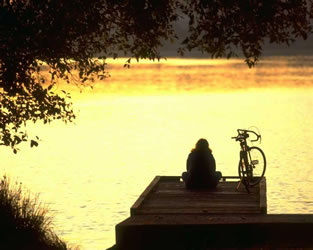
Time out

time33

There must be a time of day when the man who makes plans forgets his plans, and acts as if he had no plans at all.

There must be a time of day when the man who has to speak falls very silent.

And his mind forms no more propositions, and he asks himself: Did they have a meaning?

There must be a time when the man of prayer goes to pray as if it were the first time in his life he had ever prayed;

when the man of resolutions puts his resolutions aside as if they had all been broken,

and he learns a different wisdom

Thomas Merton, No Man is an Island

A good medallion

File:Rembrandt Harmensz. van Rijn - Old Man with a Gold Chain - Google Art Project.jpg

A skillful reflection is: ‘This is the way it is’. Venerable Buddhadasa Bhikkhu, the renowned Thai sage, said, “If there was to be a useful inscription to put on a medallion around your neck it would be ‘This is the way it is’.” This reflection helps us to contemplate: wherever we happen to be, whatever time and place, good or bad, ‘This is the way it is.’ It is a way of bringing an acceptance into our minds, a noting rather than a reaction. The practice of meditation is reflecting on ‘the way it is’ in order to see the fears and desires which we create.

Ajahn Sumedho, The Way it is

Observing what changes

File:Cliff of Moher.jpg

Sitting alone in peace before these cliffs
the full moon is heaven’s beacon
the ten thousand things are all reflections
the moon originally has no light

Han-shan

Peace

IMG_0561
Peace:
To accept what must be,
and to know what endures.
In that knowledge is wisdom.

Lao Tzu

No place for our doubts to land

File:LarusFishingD.jpg

The mind’s preference to fix things into a permanent form  even applies to how we see  our “flaws”.  We easily see ourselves as having enduring negative aspects to our personality – “I am very bad at ….” rather than recognizing the changing nature of our weaknesses.   That things are always changing is one of the fundamental truths which we try to understand at a deep personal level. The line from the Dhammapada – Anyone who understands impermanence ceases to be contentious – reminds us of a fundamental way to stop fighting with reality and with ourselves. We are continually changing. Our life path is continually changing. Sometimes agonizing about it only makes things worse.

The expounding, practising and realizing of impermanence

by the impermanent

themselves all must be impermanent

Dogen