Becoming grounded in the wind

I spent the last ten days on retreat in England, where the weather was far from what could be likened to Summer. They are calling it a European Monsoon, and certainly,  one day,  the wind blew strongly, breaking branches from the trees and even making standing still quite difficult. A bit like our ongoing,  daily,  experience of the mind:

Our minds are like flags in the wind, fluttering this way and that, depending on which way the wind blows. Even if we don’t want to feel angry, jealous, lonely, or depressed, we’re carried away by such feelings and by the thoughts and physical sensations that accompany them. We’re not free; we can’t see other options, other possibilities. The goal of attention, or shamatha, practice is to become aware of awareness. Awareness is the basis, or what you might call the “support,” of the mind. It is steady and unchanging, like the pole to which the flag of ordinary consciousness is attached. When we recognize and become grounded in awareness of awareness, the “wind” of emotion may still blow. But instead of being carried away by the wind, we turn our attention inward, watching the shifts and changes with the intention of becoming familiar with that aspect of consciousness that recognizes “Oh, this is what I’m feeling, this is what I’m thinking.” As we do so, a bit of space opens up within us. With practice, that space—which is the mind’s natural clarity—begins to expand and settle.

Yongey Mingyur Rinpoché

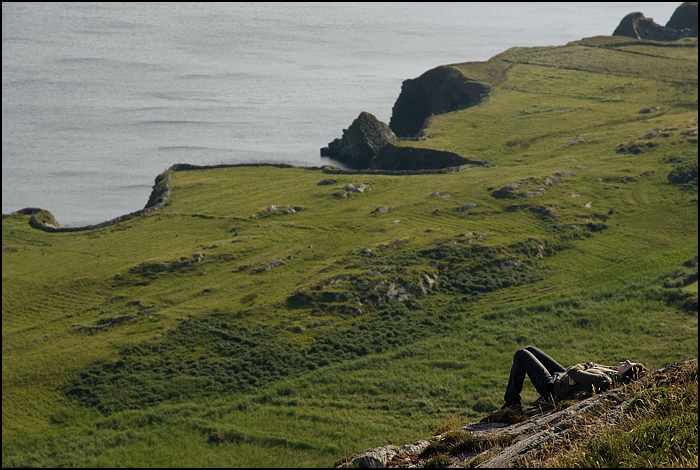
Image from http://www.freeimages.co.uk

Sunday Quote: The violence of our times

To allow oneself to be carried away by a multitude of conflicting concerns,

to surrender to too many demands,

to commit oneself to too many projects,

to want to help everyone in everything,

is to succumb to the violence of our times.

Thomas Merton

Working with the mind

Whatever our external circumstances, in the end happiness or unhappiness depends on the mind. Consider that the one companion whom we stay with, continually, day and night, is our mind. Would you really want to travel with someone who endlessly complains and tells you how useless you are, how hopeless you are; someone who reminds you of all the awful things that you have done? And yet for many of us, this is how we live – with this difficult-to-please, always-pulling-us-around, tireless critic that is our mind. It entirely overlooks our good points, and is genuinely a very dreary companion.

The point is that when our mind is filled with generosity and thoughts of kindness, compassion, and contentment, the mind feels well. When our mind is full of anger, irritation, self-pity, greed, and grasping, the mind feels sick. And if we really inquire into the matter, we can see that we have the choice: we can decide to a large extent what sort of thoughts and feelings will occupy our mind. When negative thoughts come up, we can recognize them, accept them, and let them go. We can choose not to follow them, which would only add more fuel to the fire. And when good thoughts come to mind – thoughts of kindness, caring, generosity and contentment, and a sense of not holding on so tightly to things any more, we can accept and encourage that, more and more. We can do this. We are the guardian of the precious treasure that is our own mind.

Jetsunma Tenzin Palmo, Into the Heart of Life

Responding or reacting

The two modes of living, Responsive and Reactive, are the foundation of human nature. We have no choice about the vital aims they serve – avoiding harms, approaching rewards, and attaching to others – nor about the brain’s capacity to be in either mode. Our only choice is which mode we’re in.

Happily, the Responsive mode is the resting state, the default, of body and mind. It’s what you return to when you’re not rattled. In the language of systems theory, the Responsive mode is the most fundamental “strange attractor” in the dynamic processes of your brain. Therefore, this mode is your underlying nature – not the Reactive one. You don’t have to scratch and claw your way to the mountaintop; if whatever is disturbing you comes to an end, you’ll soon come home to the lovely sunny meadow that has always been here – even if was hidden by the fogs and shadows of a troubled body or mind. Your deepest nature is peace not hatred, happiness not greed, love not heartache, and wisdom not confusion.

Rick Hanson

Sunday Quote: Taking time to refresh our vision

When your eyes are tired the world is tired also.

When your vision has gone no part of the world can find you.

Time to go into the dark where the night has eyes to recognize its own.

There you can be sure you are not beyond love.

David Whyte, Sweet Darkness

Simple instructions for staying present

Remember to use your body as a vehicle for awakening. It can be as simple as staying mindful of your posture. You are probably sitting as you read this. What are the sensations in your body at this moment? When you…stand, feel the movements of standing, of walking to the next activity, of how you lie down at the end of the day. Be in your body as you move, as you reach for something, as you turn. It is as simple as that.

Joseph Goldstein, Insight Meditation