Some neuroscience links to practice

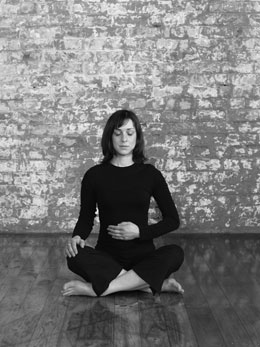
I was reading recently neuroscientist Antonio Damasio’s work on the development of our sense of self. I find his emphasis on the body harmonizes very well with our practice, especially with how we work with difficult emotions. We frequently carry into the present unworked material from the past,  which can be tied up with fearful emotions and inhibit our freedom. Our emphasis is on holding the emotions as they manifest in body sensations in awareness without feeling the need to fix them or judge them or push them away. This is because the body has a wisdom which is broader than the thinking, fixing part of the mind, and we can make use of the way our past manifests in the body, as it is the “pivot around which the conscious mind turns” and allow us get in touch with our primordial experience.

You may not yet be able to bring your unconscious mind activity into awareness as thoughts, but it will always be reflected in the body as an emotion, and of this you can become aware.

Eckhart Tolle

The body is a foundation of the conscious mind … the special kind of mental images of the body produced in body-mapping structures, constitute the protoself, which foreshadows the self to be … the body is best conceived as the rock on which the protoself is built, while the protoself is the pivot around which the conscious mind turns….I hypothesize that the first and most elementary product of the protoself is primordial feelings, which occur spontaneously and continuously whenever one is awake.  They provide a direct experience of one’s own living body, wordless, unadorned, and connected to nothing but sheer existence ……..all feelings of emotion are complex musical variations on primordial feelings.

Antonio Damasio, Self comes to mind.
Our overactive minds

Most times that I fret and chafe about an upcoming engagement, someone cancels; most times I dread a coming moment,  the moment never comes. It’s not the world that I need to change, but the mayhem that my overactive mind makes of the world. It’s more than capable of seeing a blue car stationary, and constructing out of it a six-act melodrama

Pico Iyer, The Folly of the Weather Forecast

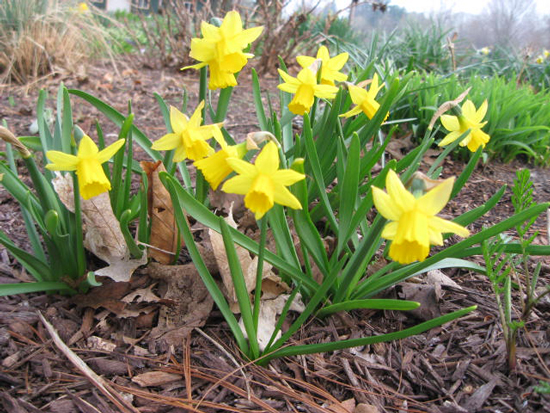
Learning from the return of Spring

If we were not so single-minded
about keeping our lives moving
and for once could do nothing
perhaps a huge silence
might interrupt this sadness
of never understanding ourselves
and threatening ourselves with death.
Perhaps the earth can teach us
as when everything seems dead
and later proves to be alive.

Pablo Nerudo, Keeping Quiet

Living in-between

We tend either to feel once removed from what is happening, or to become entirely lost in it. Both tendencies leave us with a sense of artificiality, however dramatic and sensational the situation may be. My understanding …is that it is possible to live in-between these two modes of limited being. We remain one with experience – not torn apart by a commitment to an image. Through abiding in the in-between we discover a subtle kind of personal confidence. It is not “my” confidence because it is a confidence that belongs to reality. The struggle of moving from finding security in false identities into realisation of limitless abiding beyond personality is difficult. It feels like it will cost us everything. But [instead]…we find there are more and more situations in which we remember ourselves more quickly. We are now more likely to be able to accord with whatever situation we are in as we move through the world – not because we have become more liberal or compromising, not at all, but because we don’t hold ourselves so tightly.

Ajahn Munindo, Unexpected Freedom

Holding the contradictions within

Ours is a time of anxiety because we have willed it to be so. Our anxiety is not imposed on us by force from outside. We impose it on our world and upon one another from within ourselves. Sanctity in such an age means, no doubt, traveling from the area of anxiety to the area in which there is no anxiety or perhaps it may mean learning….to be without anxiety in the midst of anxiety. Fundamentally, as Max Picard points out, it probably comes to this: living in a silence which so reconciles the contradictions within us that, although they remain within us, they cease to be a problem.

Contradictions have always existed in the soul of man. But it is only when we prefer analysis to silence that they become a constant and insoluble problem. We are not meant to resolve all contradictions but to live with them and rise above them and see them in the light of exterior and objective values which make them trivial by comparison.

Thomas Merton, Thoughts in Solitude

Being content to miss something

We cannot master everything, taste everything, understand everything, drain every experience to its last dregs. But if we have the courage to let almost everything else go, we will probably be able to retain the one thing necessary for us -whatever it may be. If we are too eager to have everything, we will almost certainly miss even the one thing we need. Happiness consists in finding out precisely what the ‘one thing necessary’ may be, in our lives, and in gladly relinquishing all the rest.

Thomas Merton.