Not always struggling with our sadness

As I have written before, modern society is not very comfortable with any nuances in happiness.  It invariably prefers to portray people’s lives as always happy and show that successful people have gotten it all together. There is  no real place for  a narrative that contains moments of struggle or periods when less obvious forms of growth are nurtured. This can mean that we fall in to the trap of interpreting all sadness or mundane moments as an indication that we are doing something wrong, or that our life is on the wrong track. Frequently we fail to see that a lot of the models presented to us are not valid representations of our lives. And many images we see can easily turn into thoughts of an idealized future where we will be happier, thinner, more popular, and these thoughts may undermine the place we are actually called to be. This can be especially present in the weeks after Christmas and New Year,  moments that some people find tough and when the media is full of  strategies, advice and initiatives to improve our life and achieve greater success. A different strategy is cultivated in mindfulness practice, based on staying close to where we actually are, acknowledging that a sense of groundlessness or loneliness is normal in humans,  and that part of practice is learning to sit with this.

If we are feeling unhappy, what is called for is a willingness to simply be with that unhappiness. If we’re not careful, we say something’s wrong, though it doesn’t really help to say that. We say it either inwardly or outwardly. This projecting of blame is a consequence of having made an inner mistake of misperceiving our unhappiness, sadness or suffering as being something wrong. We don’t receive it just as it is. We don’t acknowledge it and feel it, allowing it to happen; we don’t have the ‘knowingness’ to see it as activity taking place in awareness.  Because we don’t have that perspective, we struggle to do something about our suffering, to deal with it in some way. To say that something has gone wrong and that it’s somebody’s fault is a heedless way of dealing with our unpleasant experiences. The habit of consistently doing this is a symptom of what I call the compulsive judging mind.

Ajahn Munindo

The Beauty in the cracks

The world breaks everyone, and afterward many are strong at the broken places. Hemingway

Most of us are trying to live an authentic life. Deep down, we want to take off our game face and be real and imperfect. There is a line from Leonard Cohen’s song “Anthem” that serves as a reminder to me when I get into that place where I’m trying to control everything and make it perfect. The line is, “There is a crack in everything. That’s how the light gets in.” So many of us run around spackling all of the cracks, trying to make everything look just right. This line helps me remember the beauty of the cracks (and the messy house and the imperfect manuscript…). It reminds me that our imperfections are not inadequacies; they are reminders that we’re all in this together. Imperfectly, but together.

Brene Brown, The Gifts of Imperfection

Distracting ourselves

Thomas Merton once said that the biggest spiritual problem of our time is efficiency, work, pragmatism; by the time we keep the plant running there is little time and energy for anything else.  Neil Postman suggests that, as a culture, we are amusing ourselves to death, that is, distracting ourselves into a bland, witless superficiality.  Henri Nouwen has written eloquently on how our greed for experience and the restlessness, hostility, and fantasy it generates, block solitude, hospitality, and prayer in our lives.  They are right.

What each of these authors, and countless others, are saying is that we, for every kind of reason, good and bad, are distracting ourselves into spiritual oblivion.  It is not that we have anything against God, depth, and spirit, we would like these, it is just that we are habitually too preoccupied to have any of these show up on our radar screens.  We are more busy than bad, more distracted than nonspiritual, and more interested in the movie theater, the sports stadium, and the shopping mall and the fantasy life they produce in us than we are in church.  Pathological busyness, distraction, and restlessness are major blocks today within our spiritual lives.

Ron Rolheiser, The Holy Longing.

Why resolutions can often just increase problems

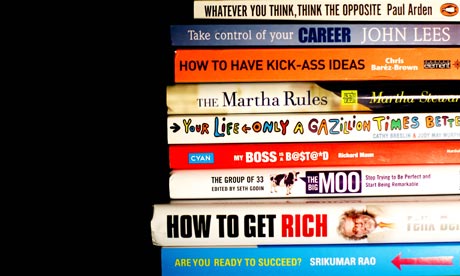
Carl Rogers suggested that a lot of the distress or anxiety in our lives comes when there is incongruence between the ideal image of the self which we have,  and our actual lived experience. This anxiety is expressed differently in each person, due to the many ways that the self-image is formed. Around New Years Day we are encouraged, even on some well-meaning sites, to form resolutions for the coming year, to look at the many ways in which we need to change. Now,  reflecting on the discipline needed to establish healthy practices in our lives is a good thing, as is being inspired by other people. And there is often a desire in the winter months to reflect on what brought the deepest joy over the past year and  shed dead wood in preparation for new growth  – or symbolically throw old plates out the window, as the Italians do. So working at our edge gently is always necessary in our lives.  However, over the years, I have come to believe that, instead of helping, a lot of these notions –   and the pre-digested strategies offered –  actually feed the problem, by strengthening the thoughts about an ideal self which we wish to have, and our need to fix ourselves to get it. Ironically, continually setting expectations of sudden growth – frequently encouraged in today’s society – can introduce a subtle violence in how we relate to ourselves and prevent us from deeper happiness, because it feeds three tendencies which our minds have. The first is the temptation to believe that there is a magic time in the future – maybe next year – when we are going to get it “all together”, and our lives will be perfect,  once we do such and such a practice or adopt some latest idea. Second, it encourages us to move away from the life which we actually have , and spend our time in thoughts about the life we would like to have. And,  as we notice again and again in practice, the mind prefers to spend more time in thinking about life than in working with what is actually in front of us, right now.  Thirdly, it stimulates the “comparing mind”, which is happy to evoke a better version of ourselves, which seems a good thing but frequently triggers discouragement and fear rather than a real ability to change. Often making expectations for the future is just a way of running away from relating to the life we actually have.  So,  maybe the best “resolution” is to give up on this notion of fixing oneself, and  rather focus on how we can deepen our lived experiences right now, with all their imperfections.  For most of us, that is where we are called to grow, and our slow commitment to more conscious living is better served by that, rather than by seeking magic changes in the coming weeks which will bring us suddenly to perfection.

Give up on yourself. Begin taking action now, while being neurotic or imperfect, or a procrastinator, or unhealthy, or lazy, or any other label by which you inaccurately describe yourself. Go ahead and be the best imperfect person you can be and get started on those things you want to accomplish before you die.

Shoma Morita

Replacing our myths

Society today prides itself at times at having thrown out some of the outdated myths that guided our forefathers and grandparents. We have progressed and base ourselves on more rational forces now. However, we are always guided by some myths, whether we are aware of it or not. We simply replace one philosophy by another, and worship in a different type of temple.

The collective fantasies of the modern world are that the old myths can be revived by acts of will, or that by acts of will new myths will be generated. While we have suffered the loss of the old, tribal myths, by and large,  we cannot generate new ones – though for sure many have tried. We transfer the need for the experience of the transcendent onto persons, objects, and causes and wonder why they disappoint.

Another way of putting this is that when the gods are not experienced inwardly, they will be projected outwardly. The energy we project onto the things of our world – objects, causes, ideologies, relationships – possess a kind of autonomy, for they momentarily carry spirituality for us. As Jung warns “Our consciousness only imagines that it has lost the gods; in reality they are still there and it only needs general conditions to bring them back in full force”.  Whenever the level of personal attention is lowered…the tendency of the ego to project what is not addressed in the inner life increases its fascination with the outer.

James Hollis, Finding Meaning in the Second Half of Life

Opening to the sacred in each moment

Pause practice can transform each day of your life. It creates an open doorway to the sacredness of the place in which you find yourself. The vastness, stillness, and magic of the place will dawn upon you, if you let your mind relax and drop for just a few breaths the storyline you are working so hard to maintain. If you pause just long enough, you can reconnect with exactly where you are, with the immediacy of your experience.

When you are waking up in the morning and you aren’t even out of bed yet, even if you are running late, you could just look out and drop the storyline and take three conscious breaths. Just be where you are! When you are washing up, or making your coffee or tea, or brushing your teeth, just create a gap in your discursive mind. Take three conscious breaths. Just pause. Let it be a contrast to being all caught up. In any moment you could just listen. In any moment, you could put your full attention on the immediacy of your experience. When you are completely wound up about something and you pause, your natural intelligence clicks in and you have a sense of the right thing to do. This is part of the magic: our own natural intelligence is always there to inform us, as long as we allow a gap. As long as we are on automatic pilot, dictated to by our minds and our emotions, there is no intelligence. It is a rat race. So, what is the most important thing to do with each day? With each morning, each afternoon, each evening? It is to leave a gap.

Pema Chodron